


Tennis Court Resurfacing Services
Restore performance and safety with ASBA member tennis court contractors serving 25+ states, with 1,000+ successful projects.
Why choose pro track tennis for tennis court resurfacing
With over 1,000+ successful tennis court resurfacing projects since 2005, Pro Track and Tennis leads the industry with superior results, professional execution, and exclusive technology.
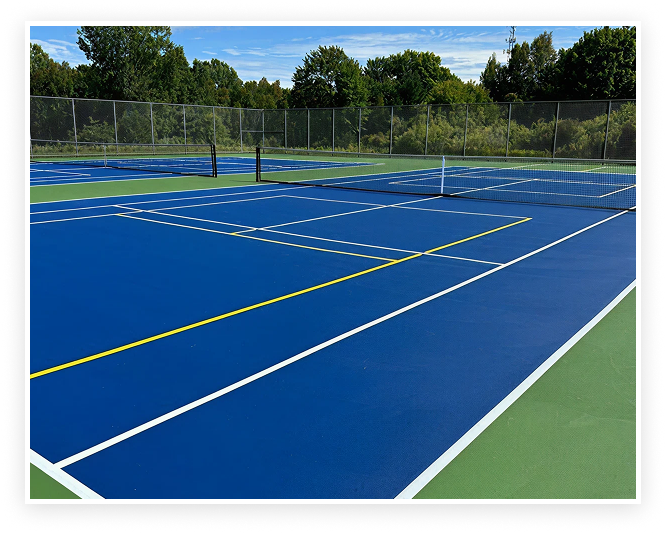

Proven Results
1,000+ successful resurfacing projects completed since 2005.
Consistency & Professionalism
No subcontractors – only our experienced in-house teams.
144 Color Combinations
Create unique courts with 144 exclusive color options.
Specialized Equipment & Techniques
Founder Lance Laurent’s specialized equipment ensures precision
in every surface.
ASBA Member
Meet educational facility standards with certified tennis court contractors.
Tennis Court Resurfacing Services
Let us make your courts as good as new. A quality resurfacing job improves playability, extends the lifetime of your facility, and sets you apart.

State-of-the-Art Resurfacing
Methods For Your Courts
We use specialized equipment to bring you the best in modern resurfacing.
RiteWay Crack Repair System
Our specialized technology repairs cracks and prevents them from coming back for longer.
Armor Crack Repair
We’re a certified installer of the leading crack prevention technology.
Proud Partners of Nova Sports
We offer premium Novacrylic® systems with 30+ years proven performance.
The PTT Advantage: Technology & Expertise Others Can’t Match
How Pro Track and Tennis is different from other tennis court resurfacing contractors:
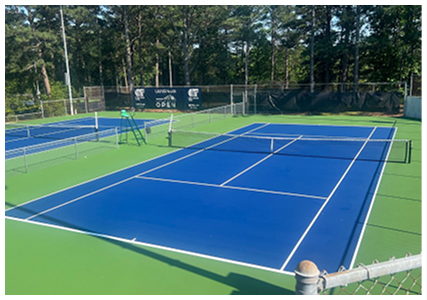
Advanced Innovation
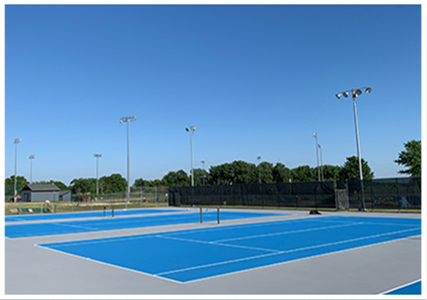
Premium Materials
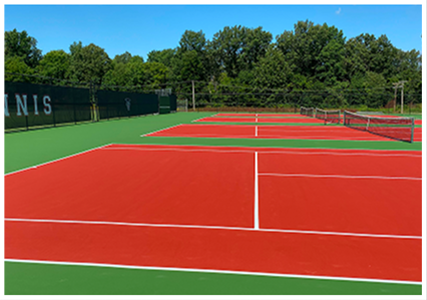
Regional Expertise
Our Tennis Court Resurfacing Process
Resurfacing projects are typically completed in 5-10 days (weather dependent), and we can plan everything
around your schedule.

Step 1:
Free on-site assessment
and evaluation.
We’ll come to you and
inspect your facility’s current
condition to create a
custom quote.

Step 2:
Let’s talk about
your vision
We’ll put together a proposal,
including your selection from our 144 color options, bringing your dream facility to life.

Step 3:
Professional installation using our advanced technology
All projects are completed by our experienced, in-house teams, who raise the bar for communication, professionalism, and quality.

Step 4:
Final quality inspection
and warranty coverage.
We’ll let you know when your
courts are ready for use, guiding you through the next steps to ensure a long lifespan.
Starting to think about your next project?
Over 1,000+ Professional Tennis Court Resurfacing Projects
With 1,000+ courts resurfaced across 25+ states, we’re trusted by schools, clubs, and communities for our consistent quality and reliable results.
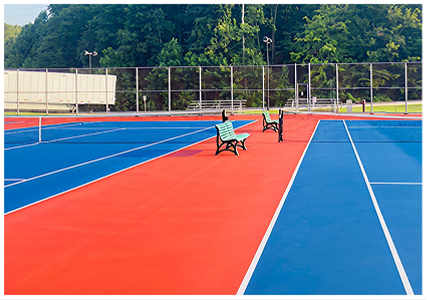
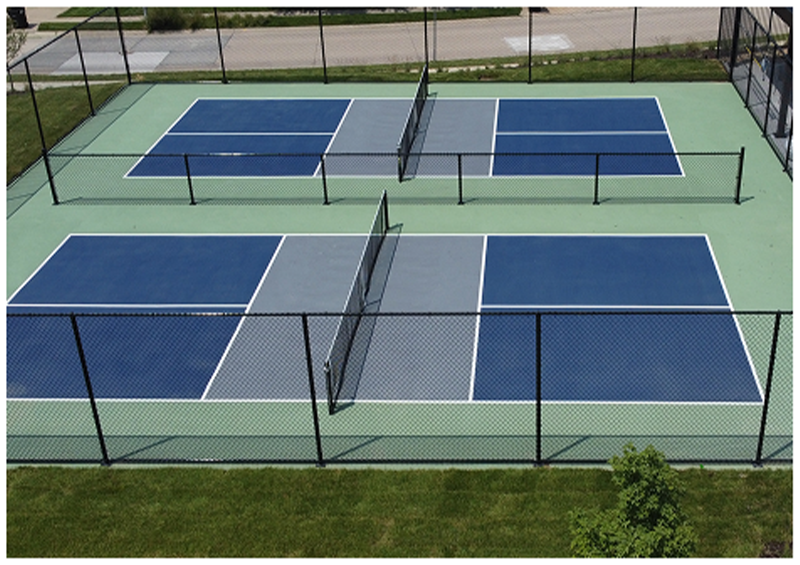
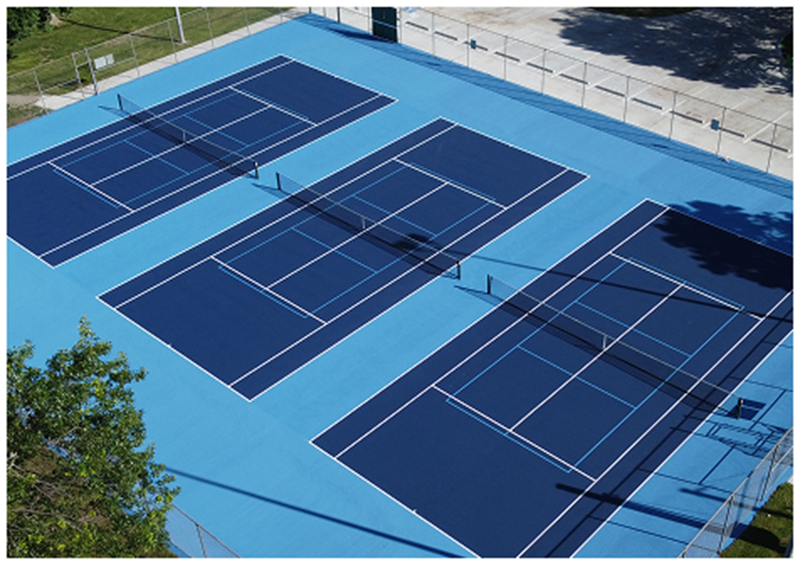
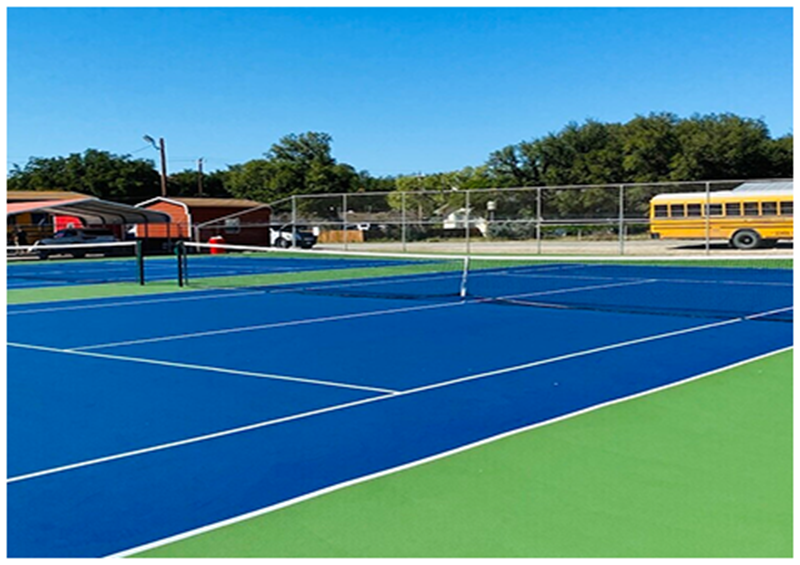
Evansville, IL Tennis Courts
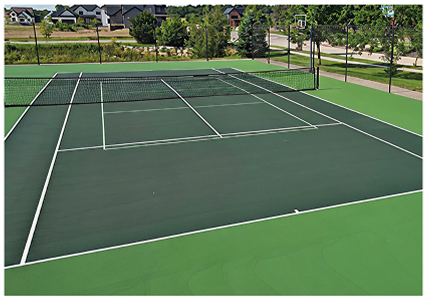
Waunakee, WI Tennis Courts
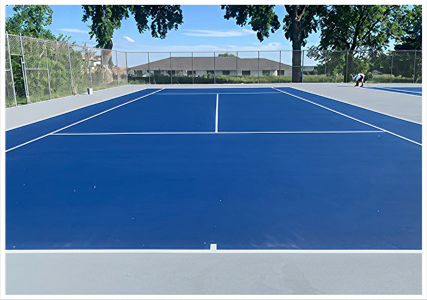
Kearney, NE Tennis Courts
What Our Partners Say
“We couldn’t be happier with the new courts installed by Pro Track and Tennis. The team was professional, knowledgeable, and dedicated to delivering a flawless surface. Our players and community members have noticed the difference, and we appreciate the commitment to
long-term quality.”

Lisa Rodriguez
Parks & Recreation Director,
City of Oakwood
“Pro Track and Tennis exceeded our expectations with the resurfacing
of our tennis courts. The team’s craftsmanship and attention to detail were evident throughout the project. The new surface looks amazing and plays beautifully, providing a
top-quality experience for our athletes and community.”
Karen Mitchell
Tennis Program Director,
Lakeview Sports Complex
“From start to finish, the experience with Pro Track and Tennis was exceptional. Their innovative approach and use of patented equipment ensured our project was handled with the utmost precision. We now have a top-tier facility that rivals any in the region, and we owe it all to their expertise.”
Michael Adams
Head Coach,
Central State University
Tennis Court Resurfacing is an Investment in your Facility
Resurfacing isn’t an empty cost – it’s a long term investment that will extend your court’s lifespan, reduce future maintenance needs, and improve your facility’s reputation.
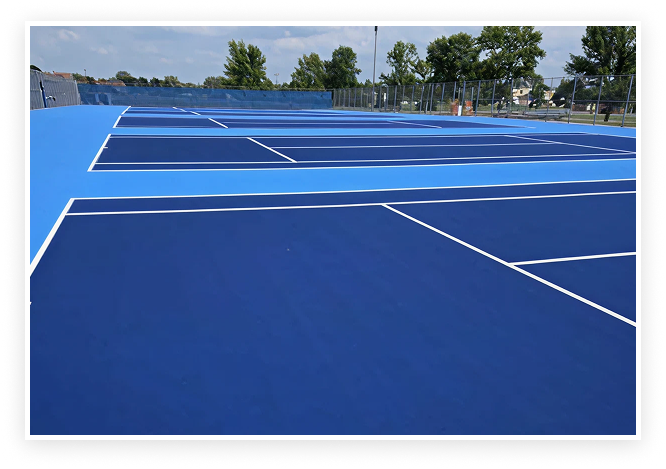
Investment Overview
Standard acrylic resurfacing starts around $15,000 per court. Cushioned acrylic systems, which provide additional shock absorption and player comfort, typically cost more depending on the level of cushioning. Multi-court projects benefit from economies of scale — for example, four courts may run approximately $48,000 total.
Resurfacing vs. Reconstruction
Save up to 80% when you resurface compared to complete reconstruction. Resurfacing provides 8-10 years of reliable performance at $15,000+ per court vs. $75,000+ for reconstruction.
Financing Options
We can help you plan and budget for your project
Find Court Services in Your Area
Click below to view resurfacing and construction services by state.
Professional Tennis Court Resurfacing Contractors
Serving Your Area

25+ States Served
Across the Midwest, South, and Mountain West

Climate Considerations
Built into every court surface

Travel Capabilities
We’ll come to you
Get in touch to start planning your next project.
Frequently Asked Questions (FAQs) About Tennis Court Resurfacing
How much does tennis court resurfacing cost?
Tennis court resurfacing typically starts around $15,000 for a single court, with final costs varying based on your facility’s size, current surface condition, customization requirements, and material selection. Multi-court projects benefit from economies of scale, making larger installations more cost-effective per court.
Factors affecting your project cost:
- Number of courts being resurfaced
- Current surface condition and prep work required
- Material selection (standard acrylic vs. cushioned systems)
- Custom color combinations and line configurations
- Geographic location and site accessibility.
Resurfacing vs. Reconstruction Value
Resurfacing delivers exceptional value compared to complete reconstruction. While resurfacing typically starts around $15,000 per court, full court reconstruction costs $75,000+. This means resurfacing can save you up to 80% while extending your court’s performance and safety for another 8-10 years.
How long does tennis court resurfacing take?
Tennis court resurfacing takes 5-10 days to complete, weather permitting. Project timelines vary depending on surface condition, materials, and scope of work. For example, two tennis courts may take 5 to 10 days if they require extensive prep work like coating removal or RiteWay installation.
Read More
How often should tennis courts be resurfaced?
Tennis courts should be resurfaced every 4-8 years depending on usage, climate conditions, and maintenance quality. Regular resurfacing ensures player safety, maintains consistent play quality, and extends your court’s overall lifespan.
Read More
Do you offer a warranty on resurfacing work?
Yes, Pro Track & Tennis provides warranties on all resurfacing and construction projects. Warranty details vary based on surface type and materials used, which we’ll explain during your consultation.
What's the difference between resurfacing and reconstruction?
Tennis court resurfacing repairs and reapplies the top surface layers to restore smoothness and safety. Reconstruction involves completely removing and replacing all court layers, including the base. Resurfacing costs 60-70% less than reconstruction and is suitable when the court base remains structurally sound.
Read More
Which states do you serve?
Do you offer free quotes or inspections?
Yes, we provide free on-site assessments and detailed quotes. Our experienced team will visit your facility, evaluate current conditions, and provide honest recommendations for resurfacing or replacement. You can schedule through our website or call us directly.
What materials and systems do you install?
Pro Track & Tennis installs acrylic hard courts, cushioned acrylic systems, and both EPDM and SBR rubber for running tracks. We are certified installers of advanced systems like ARMOR Crack Repair and RiteWay, and we’ll help you choose the best option based on your sport, usage patterns, and local climate.
Can you customize court colors during resurfacing?
Yes! We offer 144 unique color combinations for both inbounds and out-of-bounds areas. Our UV-resistant pigments ensure long-lasting aesthetics that withstand harsh weather conditions. We’ll help you create a custom design that matches your branding and aesthetic goals.
View Gallery
How do I know if my court needs resurfacing or full replacement?
Courts with cracks, faded lines, pooling water, or uneven areas typically need resurfacing. If the base is failing or has major structural damage, full replacement may be required. Our free assessment will provide an honest evaluation and walk you through all available options.
Do you work with residential courts or just schools and public facilities?
We primarily work with schools, parks, and municipalities, but also take on select residential projects. If you’re a homeowner looking to build or resurface a court, we’re happy to help with a consultation and quote.
What types of sport surfaces do you work with?
Pro Track & Tennis specializes in tennis courts, pickleball courts, basketball courts, multi-use courts, and running tracks. We also provide court conversions, such as transforming a tennis court into multiple pickleball courts with custom line configurations.
Do you build new courts or just resurface existing ones?
We primarily specialize in resurfacing existing courts, but we do handle new court construction in select areas, especially around Omaha. If you’re outside that region, contact us to discuss what’s possible for your location.
What climate conditions are best for resurfacing?
Tennis court resurfacing can be completed in most climate conditions with proper planning. We design solutions to withstand Midwest winters, Southern heat, and Mountain West extremes. Our materials and techniques are specifically chosen based on your local environmental stresses.
How do I choose a tennis court resurfacing contractor?
Choose an experienced, professional contractor with a proven track record. Look for ASBA certification, industry partnerships, and comprehensive warranties. Pro Track & Tennis has completed 5,000+ projects using in-house teams, demonstrating consistent results and customer satisfaction across 24 states.
When is the best time of year to resurface a tennis court?
Late spring through early fall is ideal for most regions, as resurfacing requires temperatures above 60°F and dry conditions for proper curing. In southern states, work can often be scheduled nearly year-round. We’ll help you plan around your athletic calendar and local weather patterns.