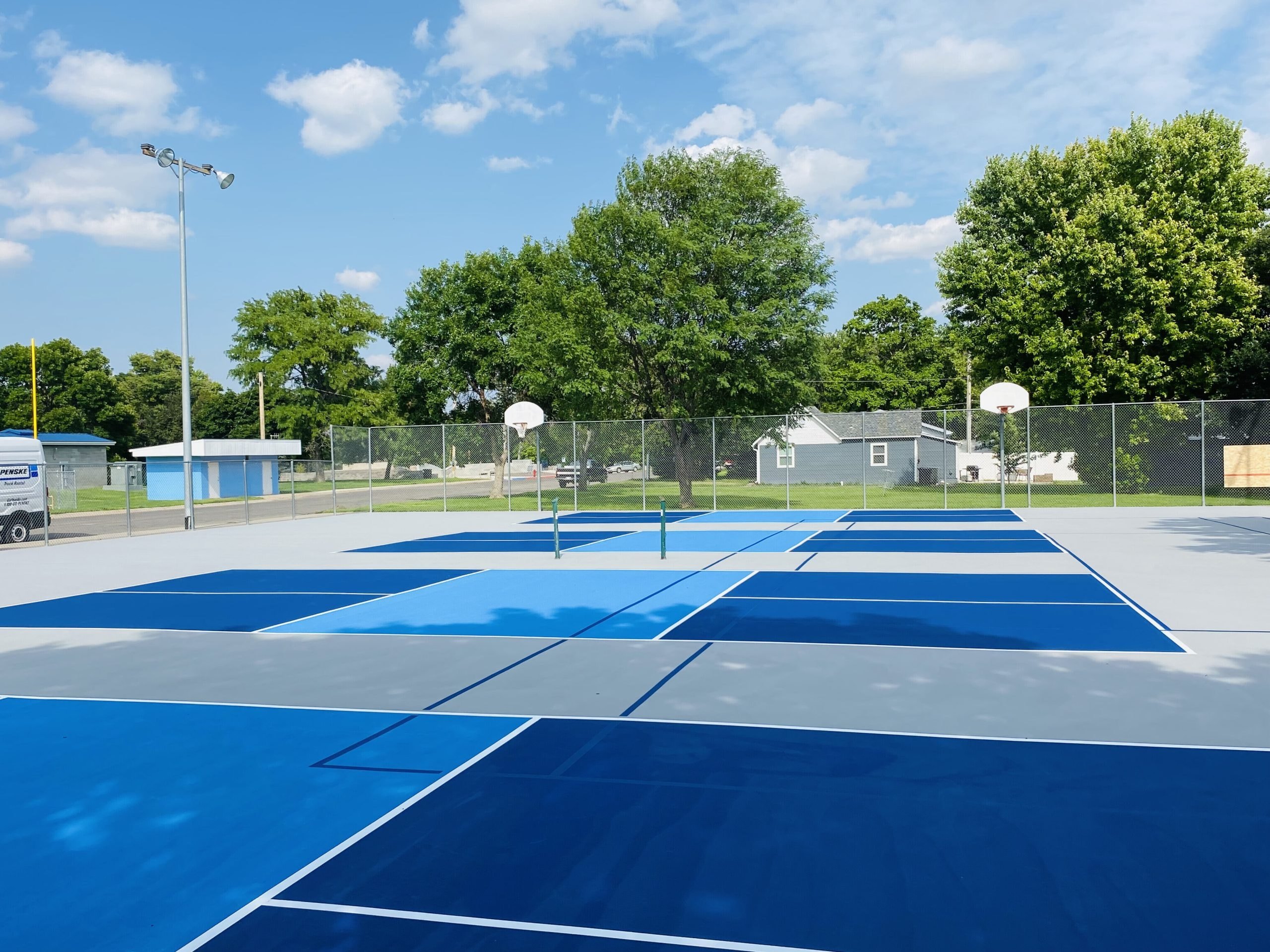
Pickleball is taking the sports world by storm, blending the best elements of badminton, tennis, and table tennis into a fast-paced, accessible game. Played on a court similar in size to a badminton court but with a slightly modified tennis net, pickleball is easy to pick up for players of all ages and skill levels. This universal appeal has fueled a surge in demand for new pickleball courts and high-quality pickleball court surfaces nationwide.
As more communities, schools, and private homeowners invest in pickleball, understanding the different types of court surfaces becomes essential. From cushioned pickleball court surfaces that enhance player comfort to durable acrylic surfaces that offer consistent play, the right choice can make all the difference in performance and longevity. Whether you’re building a new court or upgrading an existing one, knowing your surface options ensures your pickleball court will deliver years of enjoyable play.
Why Pickleball Courts Are a Smart Investment for the Future
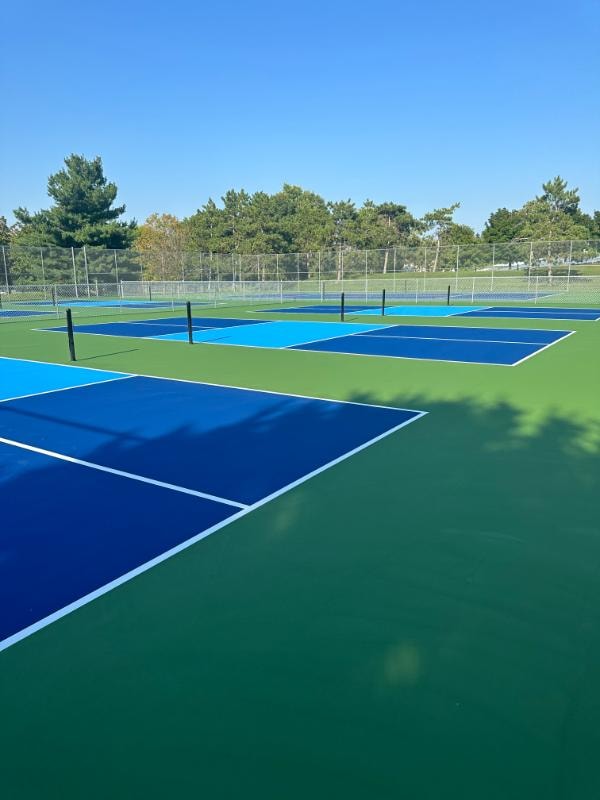
For the fourth year in a row, pickleball won the title as America’s fastest-growing sport. Following its massive popularity, courts are popping up at schools and parks across the country as facilities look to expand activity and engagement in their communities.
If you’re looking to jump on the trend and build quality pickleball courts for the future, look no further. If your facilities have an existing base, resurfacing can be a smart and efficient route to maximize value. When planning your project, it’s important to consider the total cost, including installation, materials, and long-term maintenance, as these factors all contribute to your overall budget. Our team at Pro Track and Tennis consistently builds durable pickleball surfaces with long-lasting court materials, and professional installation is key to ensuring quality and longevity, helping you deliver lasting value to your community.
In this article, we’ll discuss how you can get the best pickleball court ROI.
Trend Watch: What’s Shaping the Future of Pickleball Courts
The numbers show no signs of slowing – projections suggest pickleball may continue growing well beyond 2030.
It’s an exciting time. Pickleball facilities are getting lots of play, and they’re evolving to reflect greater demand, community expectations, and industry standards.
Here’s some of the expansion we’re seeing:
- Multi-Court Complexes: More cities and schools are opting for multiple dedicated courts to support programming, lessons, and tournaments – even at the recreational level.
- Multipurpose Courts: Shared spaces are on the rise, with overlays combining pickleball and tennis or basketball courts. These maximize square footage and increase usage across demographics.
- Inclusive, Thoughtful Design: ADA-accessible routes, shaded spectator areas, and built-in seating are becoming baseline expectations, not upgrades.
- LED Lighting: Energy-efficient lighting extends playable hours and keeps operational costs low, especially in community parks and campus settings.
- Sustainable Surfacing: Eco-conscious materials, such as low-VOC coatings and permeable bases, help facilities reduce their environmental impacts without sacrificing performance.
Certain surfacing options, such as modular tiles and asphalt, are ideal for high traffic areas, ensuring durability and minimal maintenance for facilities with frequent use.
Pickleball’s rise has sparked a wave of facility growth, and the communities that lean into these trends are the ones best positioned to meet demand now and in the future.
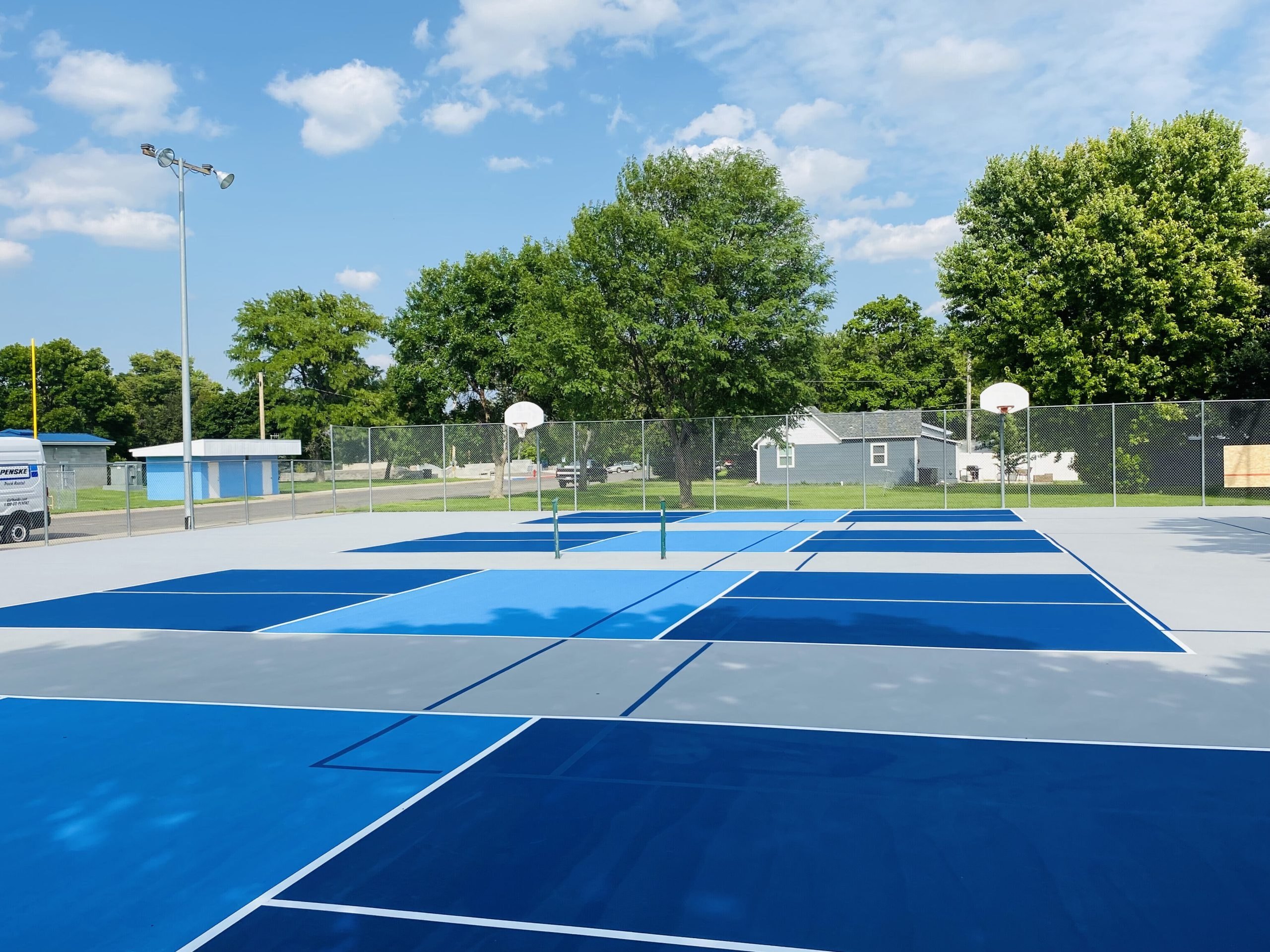
See more pickleball court layout resources.
Pickleball Court ROI: More Than Just a Game
Building pickleball courts isn’t just about adding a new amenity. It’s about making a low-barrier, high-return investment that will introduce new activity to your community or campus for years.
Well-built courts:
👟 Draw consistent foot traffic to parks and rec centers
😀 Increase student and resident satisfaction
🏆 Enable new programming like clinics, tournaments, and events
❤️ Reduce liability with modern, safer surfaces
🏃 Help meet wellness and engagement goals across age groups
New court construction often brings the fastest results in terms of visibility and participation.
For a more affordable alternative, converting an existing surface, like an underused tennis court, can deliver the same ROI at a fraction of the upfront cost. Resurfacing existing courts is a cost-effective way to add pickleball facilities, especially when you want to upgrade or protect current surfaces without permanent modifications. The initial cost of resurfacing existing courts is typically much lower than building new courts from scratch, making it an attractive option for budget-conscious projects.
Surface Longevity: Building Courts That Last
The longevity of your pickleball court comes from using the right materials, proper prep work, and keeping the court in good condition through regular maintenance. We can guide you through selecting the right court surfacing system based on your climate, usage, and budget.
While surfacing options vary, acrylic coatings over asphalt or post-tension concrete remain the gold standard for durability and playability:
- Acrylic on Asphalt: Popular and cost-effective, especially for mild climates. Requires a solid subbase and regular upkeep to maximize lifespan.
- Post-Tension Concrete: More expensive upfront, but significantly more resistant to cracking, warping, and weather-related damage, especially in harsh climates.
When properly maintained, these courts can last 10–15 years or more. Our resurfacing plans, cleaning guidance, and annual checkups keep your surface in game-ready condition for the long haul, ensuring your court surfacing remains durable and high-performing.
Indoor Courts and Surfaces: Expanding Play Beyond the Seasons
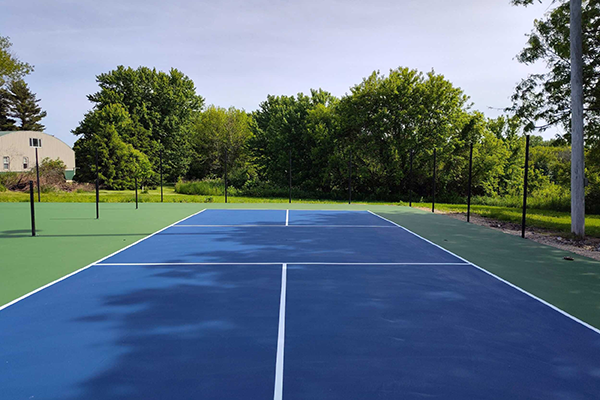
One of the biggest advantages of indoor pickleball courts is the ability to play year-round, no matter what the weather brings. When designing indoor courts, the choice of surface is crucial for both playability and player comfort. Acrylic surfaces, such as those from SportMaster, are a top pick for indoor courts thanks to their durability, easy maintenance, and reliable ball bounce. These surfaces provide a smooth, consistent playing experience that stands up to frequent use.
For those seeking extra comfort, cushioned pickleball court surfaces like the ProCushion System add a layer of shock absorption, reducing fatigue and the risk of injury during long matches. Modular tile surfaces, such as those offered by Sport Court, are another excellent option for indoor courts. They’re known for their resilience, low maintenance requirements, and ability to deliver a high-quality playing surface that’s easy to clean and maintain. With the right surface, indoor pickleball courts can offer a professional-level experience and keep players coming back all year long.
Resurfacing vs. Rebuilding: What’s Smarter Long-Term?
Deciding between resurfacing an aging court or rebuilding from scratch depends on the condition of your subbase, drainage systems, and structural integrity.
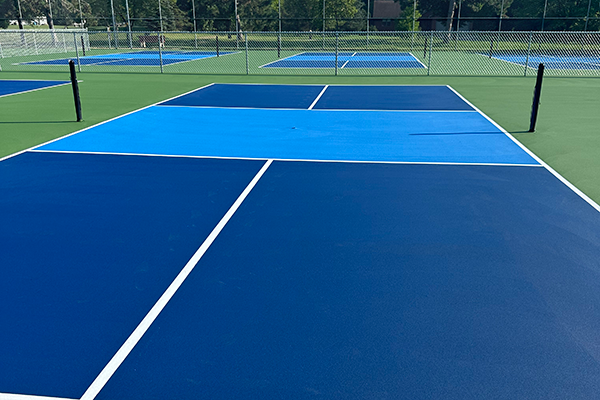
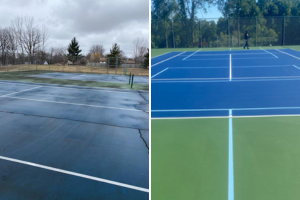
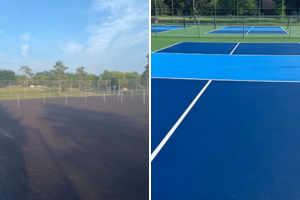
If the foundation is intact and level, resurfacing can be a budget-friendly option that restores safety and playability with minimal downtime. Resurfacing can also serve as a temporary solution to extend the life of your court before a full rebuild is necessary. When it comes to materials, using factory mixed coatings offers the advantage of easy application and ensures consistent, high-quality results.
But if cracks run deep or drainage is failing, rebuilding may be the better long-term investment, particularly if you’re planning to expand or modernize.
👉 Not sure which one you need? Contact us for a free on-site assessment to evaluate your options and get expert recommendations – with zero obligation.
Climate Considerations for Midwest & Southern U.S. Courts
Outdoor pickleball courts in the Midwest and South face year-round weather challenges, so choosing the right materials and precise construction are essential for long-lasting outdoor pickleball courts.
- Midwest climates often deal with freeze-thaw cycles, which can damage poorly constructed bases or trap water under the surface.
- Southern states face UV damage, heat expansion, and high humidity that can break down cheaper coatings quickly. Outdoor courts in these regions must be built with materials that withstand the elements and resist weather-related wear.
Our in-house teams have built hundreds of outdoor courts across both regions, and we know which materials tend to perform best in each environment and design accordingly. Choosing the right surfacing for your outdoor court is essential for durability and optimal performance. We’ll advise you to keep your courts in top shape no matter what the forecast says.
Color Coatings and Aesthetics: Designing Courts That Stand Out
A pickleball court isn’t just a place to play—it’s a visual centerpiece for your facility or backyard. Color coatings and thoughtful design can transform a standard court into a standout feature. The official court surface of USA Pickleball, PickleMaster, offers a wide palette of color options, allowing you to customize your court to match your brand, school colors, or personal style.
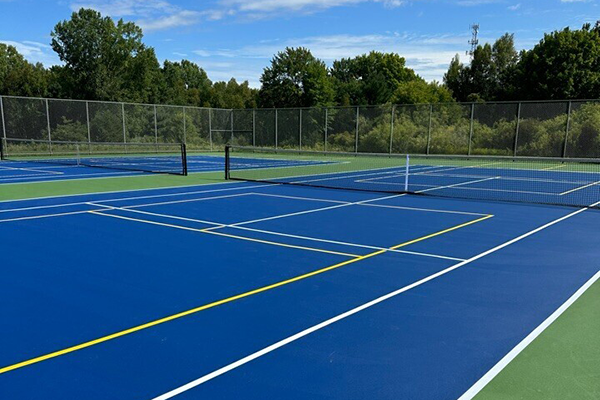
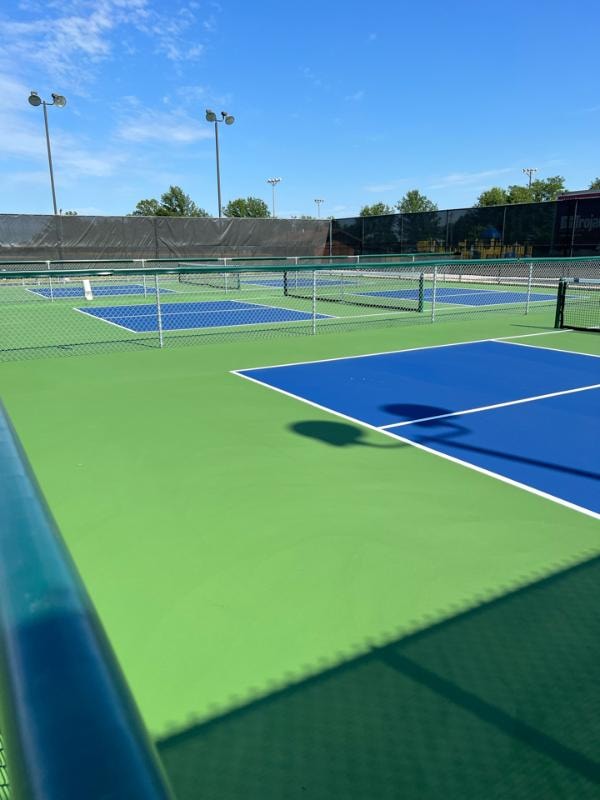
Acrylic surfaces are especially versatile, as they can be finished in various colors and patterns. This flexibility lets you highlight key areas of the court, such as the non-volley zone or serving area, with contrasting color coatings for better visibility and a professional look. When selecting your court’s color scheme, consider how it will complement the surrounding environment and enhance the overall appeal of your facility. With the right coatings, your pickleball court will not only play great but look great, too.
Future-Proof Features to Consider in Your Court Design
The bottom line is, if you’re going to invest in a new court, it makes sense to prepare for the future. Smart design features will help you scale, upgrade, or adapt without major reconstruction down the road.
You can future-proof your courts with:
- Modular layouts that allow for future expansion
- Engineered subbases with integrated drainage for long-term surface health
- Permanent post sleeves and lighting stubs to simplify future upgrades
- Fencing layouts designed for both security and visibility, and to help contain balls within the court area
- Tournament-ready striping and branding options. For professional play, use nets made from quality mesh material and ensure the top edge of the net is reinforced with a cord or cable covered by tape for durability.
- ADA-accessible paths and play zones for full community access
Incorporating these features not only makes your court more functional, but also helps you avoid costly retrofits in the future.
Private and Residential Courts: Bringing the Game Home
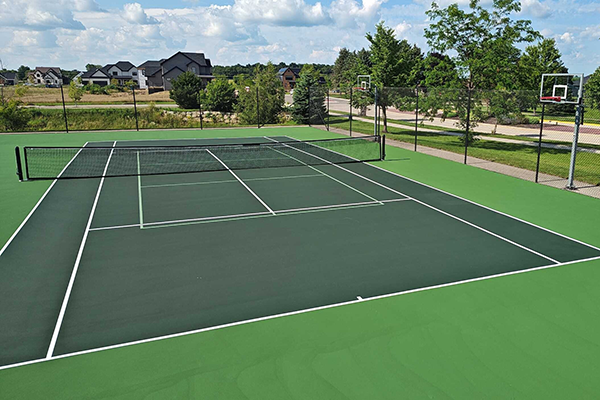
The popularity of private and residential pickleball courts is on the rise, giving enthusiasts the chance to enjoy the game without leaving home. When planning a home pickleball court, it’s important to weigh your surface options carefully. Acrylic surfaces are a common choice for their durability and low maintenance, while cushioned pickleball court surfaces provide added comfort for frequent play. Modular tile surfaces are also gaining traction for their easy installation and minimal upkeep.
Beyond the playing surface, consider the court’s orientation, size, and safety features. Proper lighting ensures you can play day or night, and quality fencing keeps balls in play and adds a layer of security. Regular maintenance, such as cleaning and inspecting the surface, will keep your private court in top condition for years to come. With thoughtful planning and the right materials, you can create a residential pickleball court that’s both functional and fun.
Why Communities & Schools Trust Pro Track and Tennis
We’ve spent over 20 years helping schools, parks, HOAs, and municipalities create pickleball courts that balance their budget, performance, and long-term durability. We have installed courts for a variety of clients across different regions.
Want to know what sets us apart?
- Expert In-House Crews: We don’t use subcontractors. Our crews are all in-house, trained professionals who take pride in the details. Professional installation by our experts ensures your pickleball court is set up for optimal quality, safety, and longevity.
- Custom-Tailored Solutions: We match our materials, layout, and finish to your goals, never a one-size-fits-all package.
- 5-Star Service: From the first call to the final walkthrough, we’re known for our communication and reliability.
- Regional Expertise: We’ve worked across 24 states and understand how to build for your climate.
We believe our job is more than just installing courts. It’s about serving our communities, getting the project done right, and being the kind of contractor that earns your business over and over again.
Ready to Build a Pickleball Court That Lasts? Let’s Talk.
If you’re a municipal planner, athletic director, or facilities manager exploring options for your next pickleball project, we’re ready to help you bring it to life.
At Pro Track and Tennis, we offer:
- Free consultations and on-site evaluations
- Custom design support, including evaluating your court area to ensure optimal layout and functionality. Work with us to find the best solution tailored to your specific needs and site conditions.
- Honest, detailed quotes based on your real conditions
👉 Schedule a free on-site assessment and get started today – we’ll come to you!
Additional Resources and References
If you’re looking to dive deeper into pickleball court construction and maintenance, there are plenty of resources to guide you. The USA Pickleball Association provides comprehensive guides, including the USAPA Court Construction Manual, which covers everything from site selection to surfacing details. Leading manufacturers like SportMaster and Sport Court offer detailed product information and installation tips for a variety of pickleball court surfaces.
Online communities, such as the Pickleball Forum, are also valuable for sharing experiences, asking questions, and learning from other court owners and players. By tapping into these resources, you’ll be well-equipped to make informed decisions about your pickleball court project, ensuring a surface that meets your needs and stands the test of time.