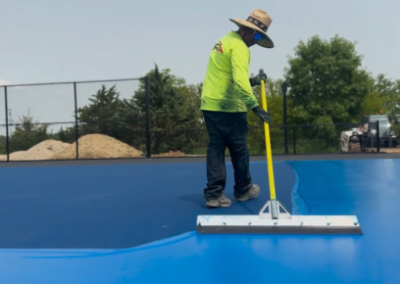
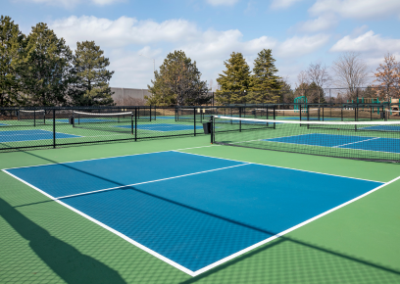
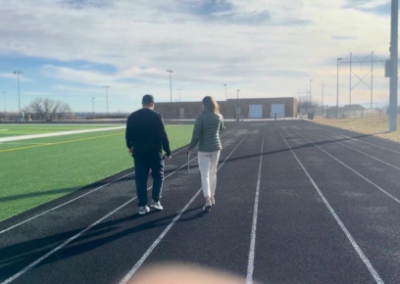
Direct answer: For most facilities, fall is when a court or track project gets scheduled. The build itself usually happens later, once temperatures allow. Acrylic and track coatings still need surface temperatures above 60°F to cure, so fall usually means locking in a written assessment, a signed contract, and a crew commitment now, with installation timed to your region's actual weather ...
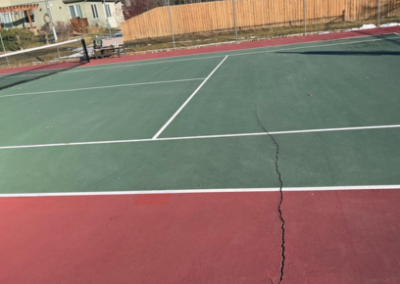
The short answer: If your resurfaced tennis court cracked again in the same spot, the resurface did not fail. The base underneath it did. A crack that starts in the asphalt or concrete slab does not disappear because you coated over it. It moves with the base, and when nothing interrupts that movement, the old crack works its way back up through the new surface. Contractors call this ...
Direct answer: The safest window for tennis court resurfacing timing is whenever your region can guarantee consecutive dry days with surface temperatures holding above 60°F, including overnight. For most of the country, that's late spring through early fall. Northern states get a shorter stretch, mainly summer. Minimizing downtime comes down to sequencing: phasing multi-court facilities in ...
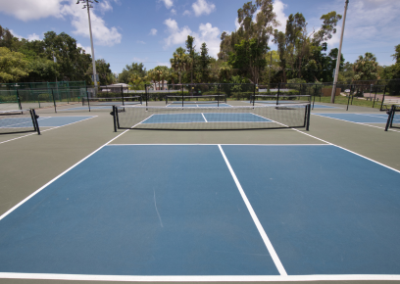
TYPTI and pickleball run on the identical court, the identical net, and often the identical membership base. For facility owners weighing a TYPTI vs. pickleball decision for their clubs, the court itself isn't where the two sports separate. The equipment, the rules, and the programming math are. Full replacement of pickleball rarely makes sense yet. Adding TYPTI as a second bookable activity ...
Hosting TYPTI at your club takes three things: a pickleball court in sound condition, a small equipment order for rackets and balls, and a programming plan built around open play, ladder leagues, and beginner clinics. No new construction. Most clubs can go live inside a week.
That's the short version. The longer version covers what to buy, what it costs, how two real clubs are running it, ...
The short answer: Running track certification in the US follows a five-class system developed by the American Sports Builders Association (ASBA). Class 1 and 2 apply to international competition and require World Athletics documentation. Classes 3, 4, and 5 cover national collegiate, state high school, and general accuracy standards. Most high school and university tracks fall into Class 3, ...