


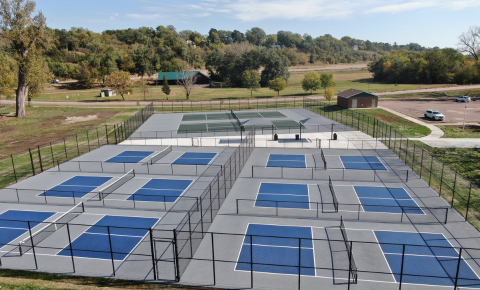
TYPTI is a new racket sport played on standard pickleball courts that uses a channeled foam ball producing almost no sound. For facilities navigating noise complaints from neighbors or HOA boards, it offers a near-silent pickleball noise complaints alternative built on the same court infrastructure already in place. No new construction required.
The Noise Complaint Didn’t Start Yesterday
Martinez, California permanently closed eight pickleball courts in March 2026. Those courts had opened just over a year earlier. Braintree, Massachusetts installed a sound barrier at its courts after neighbor complaints mounted. Nantucket’s planning board proposed an island-wide ban on new pickleball courts.
The pattern across these communities is consistent: pickleball’s acoustic profile caught facilities off guard. A standard pickleball is a perforated plastic ball driven by a solid composite paddle. The contact produces a sharp, high-pitched crack that carries. On a 20-foot-by-44-foot court, players pack tightly near the net and sit close to surrounding properties, so sound concentrates at the source rather than dispersing across open ground. The pop travels farther than the courts’ footprint would suggest.
For parks and recreation directors, country club managers, and HOA boards, this is no longer theoretical. It’s a facilities management challenge with real political weight, and in some cities, legal consequence.
What Is TYPTI?
TYPTI is a racket sport created by Steve Bellamy, founder of the Tennis Channel. The sport has attracted backing from former NFL quarterback Drew Brees and actor Chris Pine. It runs on existing pickleball courts, using the same 20-foot by 44-foot layout and the same net setup.
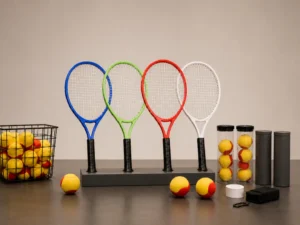
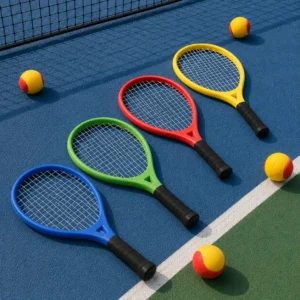
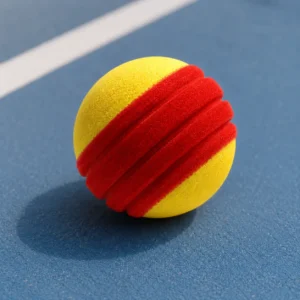
The equipment differs from pickleball in two significant ways. Players use a 22-inch strung racket rather than a solid paddle. They play with a channeled foam ball rather than a perforated plastic one. That foam ball bounces significantly higher than a standard pickleball and produces almost no sound on contact with the strings.
The rules also shift. There is no kitchen zone. Players can volley from anywhere on the court. If the ball hits the net on your side and hasn’t bounced twice, the point stays live, and players can redirect it with a racket, a hand, a foot, or any other body part to continue the rally.
It runs on the same concrete as pickleball. The game itself plays differently.
The TYPTI Noise Level: What Quiet Actually Means
The difference in noise output between standard pickleball and TYPTI is not subtle.
A plastic pickleball striking a solid composite paddle produces a hard, percussive crack that radiates outward from the point of contact. Because pickleball courts measure 20 feet by 44 feet and players compress near the net during play, that pop carries well past the court’s edge. In residential settings, it reaches homes and yards at a range that surprises facilities that didn’t assess the acoustic footprint before opening.
TYPTI’s foam ball absorbs impact rather than reflecting it. The strung racket takes in energy rather than bouncing it back. The contact sound is close, muffled, and stays near the court. Coverage of the sport has framed it directly as a possible fix for pickleball’s noise problem, and the comparison most often drawn is to the ambient sound of a casual tennis match, a sport communities have lived alongside for decades without the volume of complaints pickleball now generates.
So why did pickleball’s noise profile catch facility planners off guard? Part of the answer is programming density. Multiple courts running simultaneously for extended hours compound whatever sound each individual court produces, and neighborhoods feel that multiplication.
The Court Angle No One Is Talking About
Here’s the part most TYPTI coverage skips.
Across 1,000+ projects, we’ve watched clubs invest in pickleball court installation or conversion only to face noise complaints within months of opening. The response becomes acoustic fencing, buffer landscaping, or restricted operating hours. All of those add cost. None of them eliminate the underlying friction.
TYPTI changes that calculus without changing the concrete.
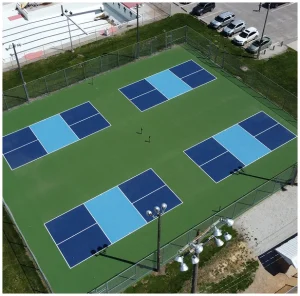
The sport runs on the same 20-by-44-foot dimensions as pickleball and uses the same net setup. A facility that already invested in pickleball infrastructure has TYPTI infrastructure today. No resurfacing needed. No new construction required. The court is ready. The only decision is whether to add TYPTI to the programming mix, or to position it as the primary offering in zones where noise has become a formal complaint.
That is a rare position for any emerging sport. TYPTI enters the market with existing infrastructure already waiting at facilities across the country.
What HOA Boards and Facility Directors Actually Want to Know
Facility managers dealing with complaints typically face one question from the board: what’s the plan?
The response has historically been incremental. Quiet paddles reduce noise output on individual contact. Quieter balls soften the plastic pop. Acoustic fencing blocks some sound transmission, though it carries significant installation cost and doesn’t fully resolve the problem. Restricted hours reduce complaint exposure but cut programming value at the same time. These measures help at the margins.
They don’t resolve the structural issue with how standard pickleball sounds.
“You have to figure out what do they need, what do they want, and what is the pain associated with whatever the problem is.” Lance Laurent, President, Pro Track & Tennis
The facilities responding most effectively to noise pressure are treating this as a programming and surface decision rather than a noise management problem in isolation. TYPTI gives them a path that doesn’t require ongoing acoustic mitigation. For an HOA board presenting options to residents, or a parks director going before a city council, that’s a materially different conversation to walk into.
Quiet Equipment Options and Their Limits
USA Pickleball maintains an approved Quiet Category list for paddles and balls specifically designed to reduce noise output. Quiet paddles cut the per-contact sound level measurably. Specialty foam balls soften the sharp plastic pop. In lower-density environments where complaint pressure is mild, these measures may be sufficient.
Honest answer: in dense residential settings where neighbors have filed formal complaints, quiet equipment is a patch. The contact sound is reduced, not eliminated. Running multiple courts simultaneously for extended blocks still produces cumulative noise that carries past the fence line. Acoustic fencing and sound barriers add a physical mitigation layer, but they carry significant installation cost, require ongoing maintenance, and often involve local permitting coordination. They are reactive solutions built around a problem that, with TYPTI, may not need to exist.
What a TYPTI-Ready Court Actually Looks Like
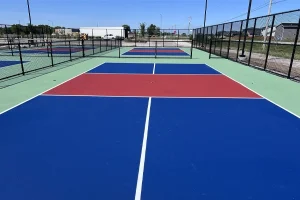
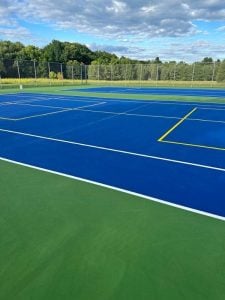
No special surface treatment is required for TYPTI. A court that handles pickleball at acceptable quality is ready for TYPTI. The practical considerations are net compatibility, which carries over directly from pickleball, and court striping, which some facilities update to distinguish dedicated TYPTI courts from shared-use courts.
Where surface condition becomes critical is the same place it always does: court quality underneath the sport. Significant cracking, drainage pooling, or surface irregularities affect both sports. The higher-bounce TYPTI foam ball makes those inconsistencies more noticeable to players, not less. Courts that have been deferred on maintenance will play poorly for TYPTI just as they do for pickleball.
We’ve worked on courts across 25+ states where deferred surface work had turned a moderate drainage issue into a real playability problem. The ball finds every flaw. Addressing the surface before expanding programming is the correct sequence.
Pro Track & Tennis handles pickleball court installation and pickleball court conversion projects across 25+ states, with in-house crews on every job and 30+ years evaluating surface condition. Our written assessments cover surface integrity, drainage, base condition, and court striping in one documented report.
Planning Ahead: Noise, Sport, and Court Strategy
The facilities getting ahead of this aren’t waiting for a formal complaint to land.
Pickleball’s growth trajectory has been steep and sustained. TYPTI is early-stage but drawing serious capital and national media attention. Tennis holds steady across club-based demographics. Multi-purpose court surfacing allows a single footprint to serve multiple racket sports, which matters when space is constrained and member demand shifts across age groups. Tennis court resurfacing projects we’ve helped plan often prompt the question of whether adding pickleball or TYPTI courts to the same footprint fits the facility’s long-term programming strategy.
Does this mean every facility needs to shift entirely to TYPTI? Not necessarily. The sport is still developing its competitive structure and organized play. But facilities that fail to think through the noise and programming question before the first formal complaint arrives will have fewer options when the pressure lands.
The clubs and parks systems that fare best in noise-sensitive environments share one planning approach: they made the programming decision and the surface decision at the same time, rather than building for one sport and retrofitting for another after complaints began. There is a measurable cost difference between designing for flexibility upfront and adapting reactively. If your facility operates near residential housing, the time to work through the court portfolio is before that pressure shows up on a city council agenda.
Frequently Asked Questions
What makes TYPTI quieter than pickleball?
TYPTI uses a channeled foam ball rather than a perforated plastic ball and a strung racket rather than a solid composite paddle. The foam absorbs impact energy rather than reflecting it, which eliminates the sharp high-frequency crack that makes standard pickleball audible at distance. The result is near-silent contact that doesn’t carry past the court boundary.
Can TYPTI and pickleball be played on the same court?
Yes. TYPTI uses identical court dimensions to pickleball: 20 feet by 44 feet. The same net setup is compatible with both sports. Facilities can run both on the same courts without surface modification, though some operators add dedicated TYPTI striping to reduce player confusion between the two sports.
Do I need to resurface my pickleball courts to accommodate TYPTI?
No specific resurfacing is required for TYPTI. A court in good condition for pickleball is ready for TYPTI. Courts with significant cracking, drainage problems, or deteriorating surfaces should be addressed before expanding programming, since the higher-bounce TYPTI ball amplifies surface irregularities that standard pickleball play might not expose.
How are HOAs responding to TYPTI versus standard pickleball?
TYPTI is new enough that formal complaint data is still limited. The reason facilities expect it to help is acoustic: the foam ball doesn’t generate the high-frequency crack that travels beyond the court perimeter, which is the specific characteristic driving most pickleball noise complaints. Remove that sound at the source and the most common trigger goes with it.
Is TYPTI sanctioned by a governing body?
TYPTI operates through Typti Inc. It is not governed by USA Pickleball or an international federation. Facilities adopting it now are making a programming decision rather than entering an established competitive structure, though organized play is developing as the sport grows.
What should I evaluate before adding TYPTI to my facility?
Start with court surface condition. Confirm net compatibility with your existing posts and hardware. Think through how you’ll introduce the sport to current members or users, since TYPTI’s rules differ from pickleball enough that orientation sessions reduce on-court confusion. If your courts need assessment before you expand programming, a written evaluation establishes baseline condition before any commitments get made.
Add a Quieter Option Without Building New Courts
Acoustic fencing and quiet equipment address the symptoms. TYPTI addresses the source.
For facilities that have already built pickleball courts, adopting TYPTI is a programming decision, not a construction one. For facilities still planning court infrastructure, building with multi-sport flexibility in mind from the start reduces the risk of noise conflict before it begins.
Pro Track & Tennis provides written court assessments covering surface condition, base integrity, drainage, and striping across 25+ states. With 1,000+ completed projects and in-house crews on every job, we evaluate what the court actually needs before any programming or surface decision gets made.
Call 800-498-4395 or email info@protrackandtennis.com to schedule an assessment.
Sources
Noise-complaint examples and TYPTI facts in this article are drawn from the following coverage:
- Martinez, CA court closure – ABC7 San Francisco
- Braintree, MA sound barrier – CBS Boston
- Nantucket proposed pickleball-court ban – The Boston Globe
- What is TYPTI / noise solution – CBS Boston
- TYPTI – official site
TYPTI is a trademark/name associated with TYPTI Inc. Pro Track & Tennis is not affiliated with or endorsed by TYPTI Inc. This article is for facility planning and educational purposes only.