Direct answer: The safest window for tennis court resurfacing timing is whenever your region can guarantee consecutive dry days with surface temperatures holding above 60°F, including overnight. For most of the country, that’s late spring through early fall. Northern states get a shorter stretch, mainly summer. Minimizing downtime comes down to sequencing: phasing multi-court facilities in groups, booking crack repair before it competes with peak season, and planning backward from your first tournament or league date.
Why Tennis Court Resurfacing Timing Determines Your Downtime
Most facility managers planning a tennis court resurfacing project treat timing as a calendar question. What month should we book this? Wrong question. The real constraint is chemistry, not the calendar.
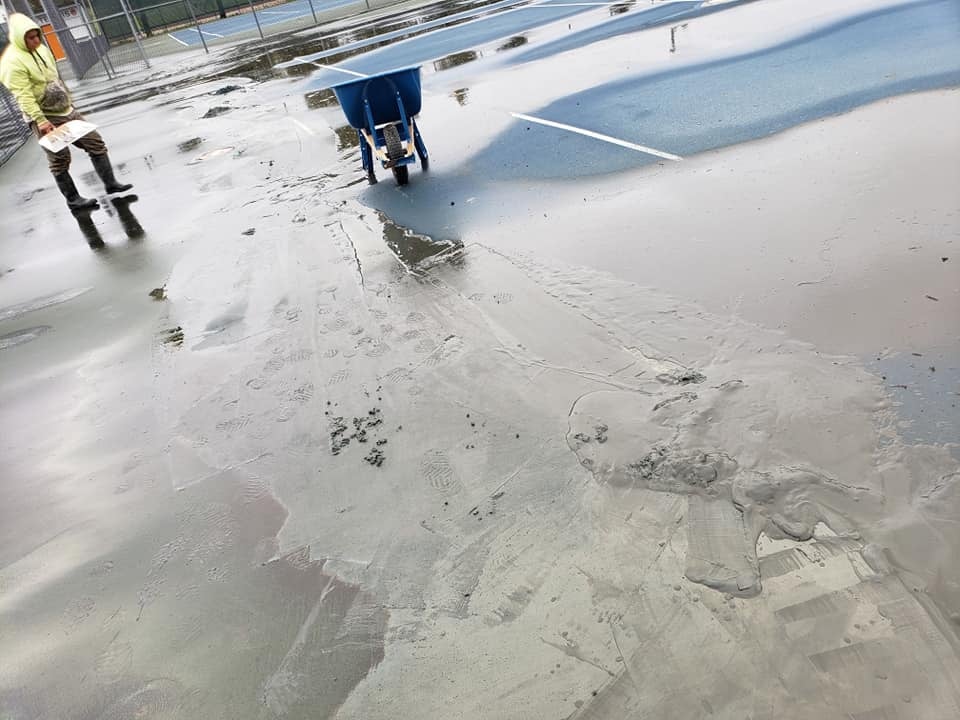
Acrylic coatings won’t cure correctly below 60°F, and they won’t cure at all on a damp surface. That single rule narrows the window more than court availability or contractor scheduling ever will. A “spring” resurfacing booked for a week with overnight lows still in the 50s can fail the same way a January job would. The crew shows up, the forecast doesn’t cooperate, and a five-day project stretches out with nothing to show for it.
Across 1,000+ completed projects, the pattern that costs facilities the most days is a simple one. A facility takes the first slot its contractor has open, and nobody checks whether the coating will actually set that week. PTT is an ASBA member with 30+ years in this work across 25+ states, and the pattern holds regardless of region. Chemistry sets the boundary, and the calendar has to fit inside it.
The Weather Window That Actually Matters
Regional climate sets the real boundaries of your resurfacing calendar, and it varies more than most facility managers expect.
“We can’t install coatings below 60 degrees or on damp surfaces. For northern states, that means work windows are much shorter, mainly summer.”
Lance Laurent, President, Pro Track & Tennis
A club in the Southeast might have several months of usable weather to work with. A school district in Minnesota or upstate New York gets a much shorter stretch, mainly summer, and that’s if the weather cooperates. Same country. Different math entirely. That gap matters because a contractor quoting every client the same timeline hasn’t actually looked at their map. If you manage courts in a northern climate, that short window is exactly why booking early matters more for you than for a facility in Florida. Waiting until late spring to request a quote for a midsummer project is workable in some regions. In a short-window state, it can mean losing the season.
Once you’ve got a resurfacing date on the calendar, PTT’s guide to preparing your facility for summer resurfacing covers the pre-project checklist, from clearing the court to lining up access for the crew.
How Long Resurfacing Actually Takes
You can’t plan around downtime you can’t estimate. Here’s the math on what a resurfacing project actually consumes, based on scope.
| Project type | Typical duration | Key timing constraint |
|---|---|---|
| Single court resurfacing | 5-7 days | Needs consecutive dry days, surface above 60°F |
| Country club or multi-court facility (per group) | About a week to just under two weeks | Depends on how many courts are phased together |
| ARMOR crack repair (before surface coating) | Roughly 300 linear feet of crack per day | Adds time ahead of resurfacing based on total crack footage |
A single court running 5-7 days is a manageable closure for most facilities. What catches people off guard is crack repair. If a court has significant cracking, the repair crew can spend several days on the base alone before any coating goes down. That work sits ahead of the resurfacing clock and extends the closure by however long it takes.
Sequencing a Multi-Court Facility Without Closing Everything
Most of the real downtime reduction happens here, in how the work gets sequenced across the property.
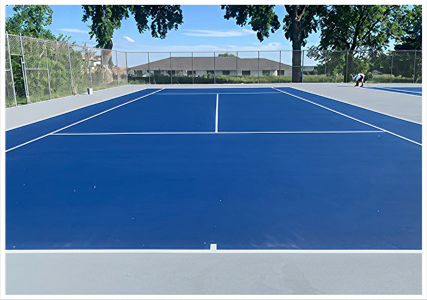
Country clubs and multi-court facilities rarely need to close every court at once. Phasing courts in groups, rather than resurfacing the whole facility in one push, keeps some courts open for members or teams while the rest cycle through. A club might run one group per week to just under two weeks, moving to the next group only once the first is playable again.
Phasing works better than a single big push because members and teams don’t need every court back on the same day. They need enough courts open to keep programming running. A facility that closes a portion of its courts at a time keeps more usable capacity available than one that shuts the whole property down at once.
This only works with contractors running their own crews. When work is subcontracted out, group-to-group handoffs get inconsistent, and the “quick” second phase stretches. Crews that know the site from phase one move faster on phase two. We’ve built phasing plans for facilities that came to us planning to close everything at once.
Scheduling Around Peak Season and Tournaments
Start from the date courts need to be playable and work backward toward the booking.
If a tournament, league, or peak membership season starts in June, the resurfacing conversation should start well before spring. That gives room for weather delays, crack repair discovery, and the reality that a “quick job” in April can slide two weeks if a cold front rolls through.
Rushing a project into a narrow pre-season window, just to have it “done” before opening day, sometimes means accepting a shorter dry-and-cure margin than ideal. Sometimes the better call is resurfacing one season later, after the current one, rather than gambling on marginal cure conditions right before your busiest weeks. PTT would rather name that trade-off than sell around it.
What Crack Repair Adds to the Timeline
Crack repair is the piece most facility managers underestimate when they build a resurfacing timeline. If you’re weighing whether a court is even a good repair candidate before you get to scheduling, PTT’s tennis court lifespan guide covers how that repair-versus-rebuild decision gets made.
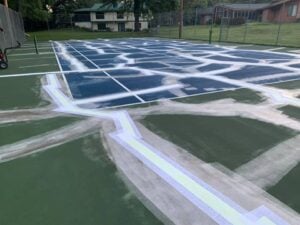
The ARMOR Crack Repair System installs at roughly 300 linear feet per day. On a court with scattered hairline cracking, that might be a single day of work. On a court with a network of cracks running corner to corner, you’re looking at several days of repair before the resurfacing clock even starts. A facilities manager mapping out a closure window should ask the contractor for a crack assessment alongside the resurfacing quote, because the two numbers combine into the real closure length.
Building a Timing-Focused Assessment Into Your Planning
A resurfacing quote on its own tells you the price and leaves the downtime question open. A written assessment closes it. The assessment accounts for crack footage, court count, base condition, and the realistic weather window for your specific location instead of a generic seasonal guess.
Three things belong in that conversation before a date gets locked in. Linear footage of cracking from the base assessment. How many courts can run in one phase without overloading the crew. And the latest start date that still leaves a weather buffer before peak season. A contractor running in-house crews on every project can answer all three from firsthand site knowledge, because the schedule sits with the same team doing the work.>
Frequently Asked Questions
What is the best time of year to resurface a tennis court?
Late spring through early fall works for most of the country, when consistent dry weather and surface temperatures above 60°F are most likely. In northern states, that window narrows mainly to summer.
Can courts be resurfaced in phases to stay partially open?
Yes. Multi-court facilities can phase resurfacing in groups, closing a portion of courts at a time rather than the entire facility. Country club groups typically run about a week to just under two weeks each.
What happens if weather delays a resurfacing project?
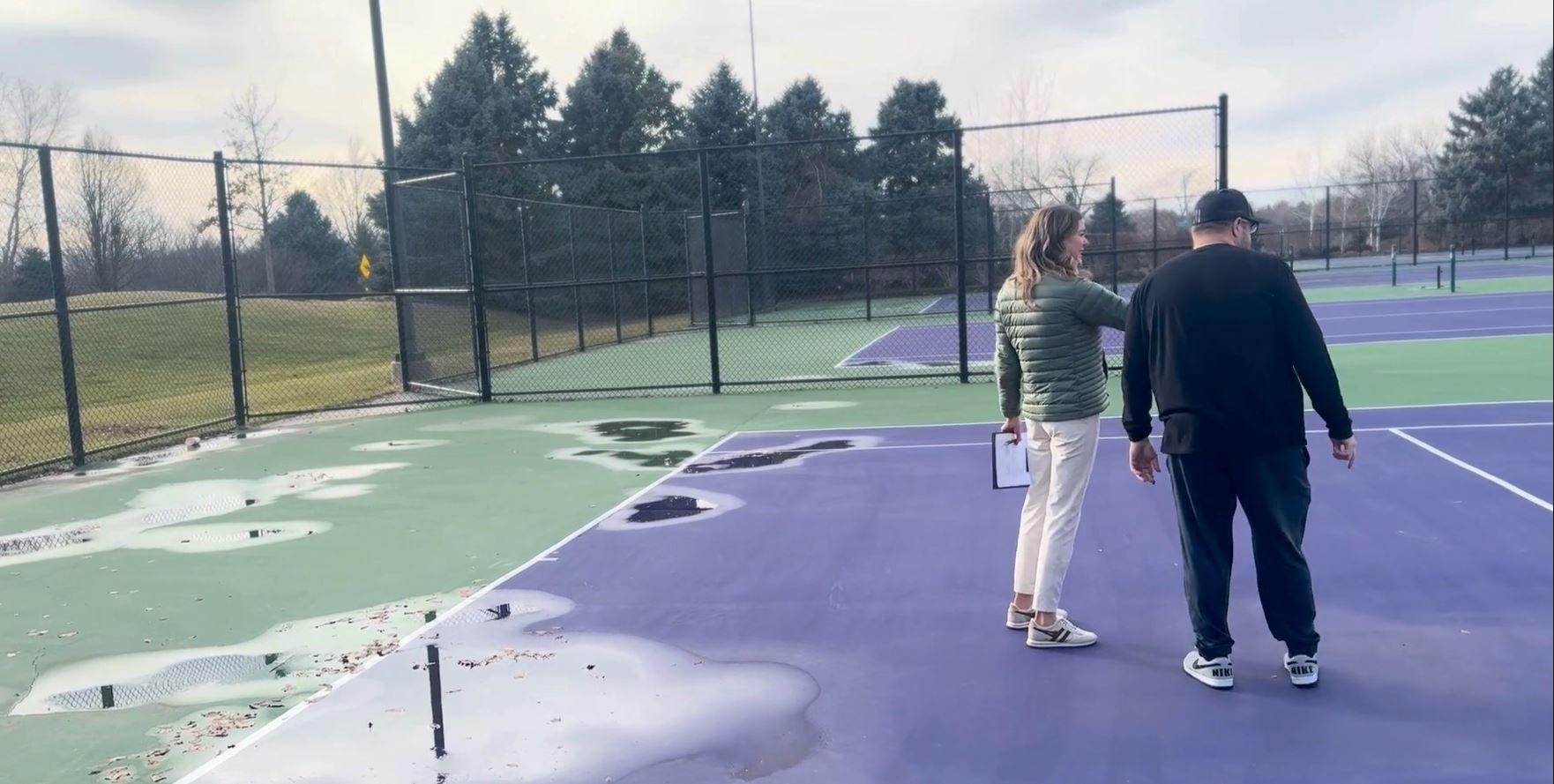
Coatings can’t be applied below 60°F or on a damp surface, so crews wait out the conditions rather than apply a coating that will fail. In practice that means a project booked with no slack can drift past the date you promised your members or your athletic director. Booking with a buffer ahead of peak season absorbs the delay instead of passing it on to whoever has to reschedule around it. This is the most common reason a resurfacing timeline slips.
How far in advance should a facility book resurfacing?
Earlier in short-window northern climates, since the usable season narrows mainly to summer. In longer-season regions there’s more flexibility, though booking ahead of peak season still avoids scheduling conflicts with other facilities competing for the same contractor windows.
Does resurfacing ever work in cooler weather?
Not reliably. The 60°F threshold applies to overnight lows too, in any season.
How does crack repair affect the resurfacing timeline?
It adds time ahead of the coating work. ARMOR crack repair moves at roughly 300 linear feet per day, so a court with extensive cracking needs that work factored into the closure window before resurfacing even begins.
Planning Your Resurfacing Window
Good tennis court resurfacing timing is a scheduling decision that gets made months before a crew arrives. By the time the crew is on site, most of the downtime has already been locked in by the booking date and the crack footage nobody measured. If your courts are still in the early “should we resurface yet” stage, PTT’s tennis court maintenance schedule guide covers when to stop patching and start planning.
If you’re not sure how much closure your facility actually needs, that’s exactly what a written assessment is for. Call 800-498-4395 or email info@protrackandtennis.com to schedule one before your next planning cycle.