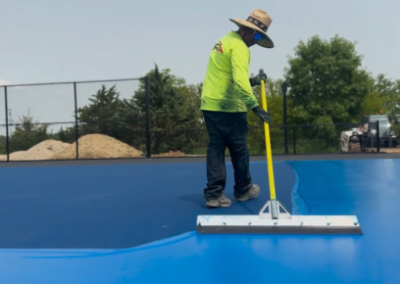
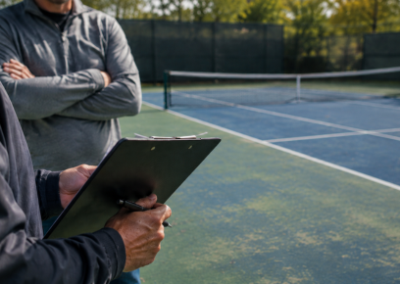
Direct answer: For most facilities, fall is when a court or track project gets scheduled. The build itself usually happens later, once temperatures allow. Acrylic and track coatings still need surface temperatures above 60°F to cure, so fall usually means locking in a written assessment, a signed contract, and a crew commitment now, with installation timed to your region's actual weather ...
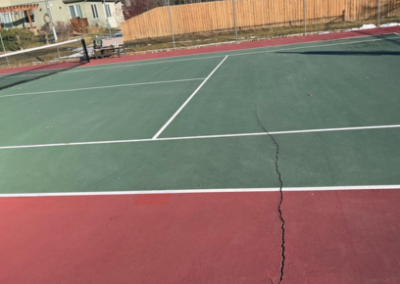
The short answer: If your resurfaced tennis court cracked again in the same spot, the resurface did not fail. The base underneath it did. A crack that starts in the asphalt or concrete slab does not disappear because you coated over it. It moves with the base, and when nothing interrupts that movement, the old crack works its way back up through the new surface. Contractors call this ...
Direct answer: The safest window for tennis court resurfacing timing is whenever your region can guarantee consecutive dry days with surface temperatures holding above 60°F, including overnight. For most of the country, that's late spring through early fall. Northern states get a shorter stretch, mainly summer. Minimizing downtime comes down to sequencing: phasing multi-court facilities in ...
Most facilities don’t get burned by obviously unqualified contractors. They get burned by bids that look professional on paper and fall apart on court.
The failure mode is rarely outright fraud. More often it’s a contractor who prices accurately for what they’ve scoped, then scopes far less than the project actually demands. An RFP that doesn’t force specificity invites that kind of bid. ...
Key Takeaways
Budget before diagnosis is the most expensive mistake club managers make
Timing is the biggest cost lever. Resurfacing at the right time is predictable and scalable. Waiting until reconstruction is required can multiply the cost several times over.
Drainage and base condition determine whether your investment holds
Country clubs are judged to a higher standard ...
Key Takeaways
The base (asphalt or concrete) can last 20 to 30 years or more when it stays dry and stable. The surface system on top needs ongoing maintenance and periodic resurfacing on a schedule that depends on usage, climate, and how well the court is maintained.
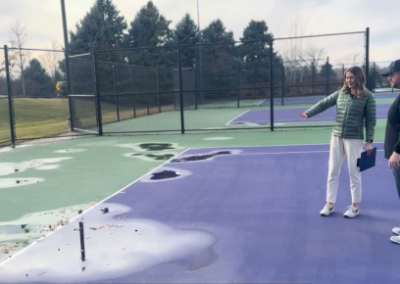
Water is the biggest threat to a tennis court. Most premature failures trace back to drainage problems, not ...