


Direct answer: For most facilities, fall is when a court or track project gets scheduled. The build itself usually happens later, once temperatures allow. Acrylic and track coatings still need surface temperatures above 60°F to cure, so fall usually means locking in a written assessment, a signed contract, and a crew commitment now, with installation timed to your region’s actual weather window. Facilities managing both a court and a track project face an extra decision: which one gets the assessment first. The fall planning window is when that scheduling and sequencing gets sorted out, before board approval and contractor calendars both run out of room.
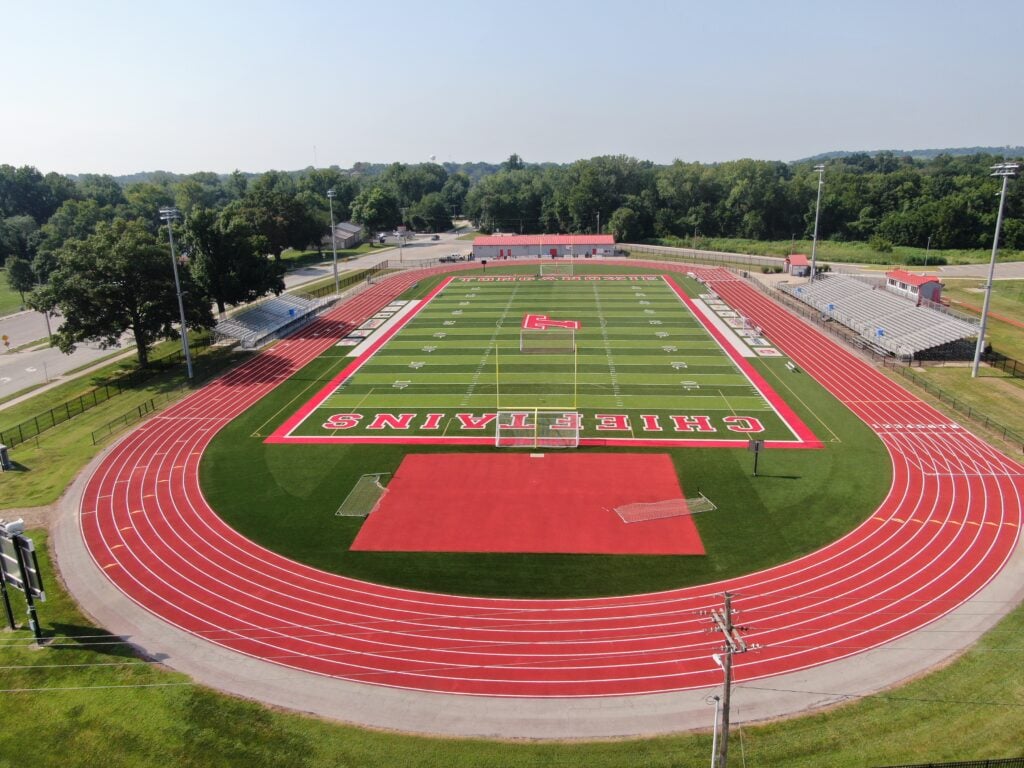
Why Fall Is a Planning Season, Not Always a Construction Season
Most facility managers ask the wrong question first. They want to know the best month to get a crew on-site. The real first question is simpler: what work can even happen on your calendar, given the surface chemistry involved?
Acrylic court coatings and track surface systems won’t cure correctly below 60°F, including overnight lows, and they won’t cure at all on a damp surface. That single rule does more to set your real window than anything on a construction calendar. For most of the country, that leaves late spring through early fall as the workable stretch. Northern states get less. PTT’s tennis court resurfacing timing guide breaks down exactly how that window narrows by region, and the running track installation timeline article covers the same ground for track projects, if you want the full mechanics.
Here’s what that means for fall specifically. If your facility sits somewhere the weather window is already closing by October, fall becomes your planning season for next year’s window. If you’re in a region where late-season work is still viable, fall might be your last real shot before winter shuts the door entirely. Either way, the fall conversation is about locking in a date, a contract and a place on a contractor’s schedule. Whether coatings go down this month is a separate question, and in much of the country the answer is no. Nobody wins by guessing which category they fall into.
The Real Scheduling Timeline: From “We Need This Fixed” to “It’s Scheduled”
A resurfacing quote and a resurfacing plan do different jobs. A quote tells you a number. A plan tells you what happens between now and the day crews show up, and that’s the part most facilities underestimate.
The process usually runs in a predictable order: a site visit and assessment, a written proposal based on what that assessment finds, a signed contract, then a slot on the crew calendar. Skipping the assessment step to save time is the single most common reason a fall booking turns into a spring scramble. A quote based on square footage alone can’t account for crack density, base condition, or drainage problems that only show up once someone is standing on the surface.

“You have to figure out what do they need, what do they want, and what is the pain associated with whatever the problem is.”
Lance Laurent, President, Pro Track & Tennis
That’s the starting point of every PTT proposal, and it’s worth insisting on from any contractor you’re evaluating. A number without an assessment behind it is a guess dressed up as a quote.
Sequencing When You Have Both a Court and a Track Project
Some facilities only have one surface to worry about. Athletic complexes, country clubs, and multi-sport school campuses often don’t have that luxury. If a tennis program and a track program are both asking for are both asking for tennis court resurfacing in the same budget cycle, someone has to decide which comes first.
Three things usually drive that decision: which surface has the more urgent safety or liability issue, which program has a harder deadline, whether that’s a meet, a season opener, or a tournament, and which project has a shorter weather window this year. A track needing running track resurfacing in a northern state with a short season might need to jump the line ahead of a court that can wait until next spring without much risk.
Across 1,000+ completed projects, the sequencing mistake we see most often is running both projects through the same crew at the same time, which stretches both timelines instead of finishing either one. A contractor running in-house crews on every project, rather than subbing pieces out, can usually tell you honestly whether both projects fit in one season or whether one needs to wait.
Ask that question directly before you assume the answer is yes.
How Budget and Board Approval Cycles Intersect With Fall Planning
Committees don’t move at contractor speed. A school board, a parks and recreation commission, or a country club’s facilities committee often needs weeks between a proposal landing on the agenda and a vote. Fall is frequently when that cycle starts, well ahead of a spring or summer install.
The timing is what trips people up. If board approval runs several weeks, and a signed contract needs to happen before a contractor’s spring calendar fills, waiting until January to start the conversation can mean missing the early booking slots entirely. Starting the assessment and proposal process in fall gives a committee something concrete to vote on while there’s still room on next season’s schedule.
We’ve sat in on enough of these committee timelines to know the assessment step is what gets skipped first when everyone’s in a hurry. Every institution runs its own approval process on its own calendar. Fall is where this usually starts because there’s still enough runway to fit the assessment, the vote and the contract signature in before anyone has to rush.
What Slows a Fall Booking Down (And How to Avoid It)
A few things push a fall project into the following year. Crack repair is the biggest one. The ARMOR Crack Repair System installs at roughly 300 linear feet per day, which sounds fast until a court or track shows up with cracking nobody measured ahead of time.
A short run of hairline cracks might mean a single day of repair work. A court or track laced with cracks corner to corner can turn into most of a week before any coating goes down. We’ve walked facilities through fall bookings where the crack assessment changed the whole schedule once someone actually measured the damage.
Incomplete site information does the same thing from a different angle. Drainage problems, base condition, and prior repair history all change what a project actually requires. A facility that can hand a contractor as-built drawings, prior repair records, and honest notes on known trouble spots moves through the assessment stage faster than one starting from scratch.
Weather is the other obvious one, and it’s the one nobody controls. A contract signed in September can still hit a cold snap in October that pushes a job. If overnight temperatures slip into the 50s before a coating fully cures, it can set wrong, and that shows up on the surface within days. Building a buffer into the schedule, rather than booking the absolute latest possible date, is the difference between a delay you can absorb and one that bumps the whole project to spring.
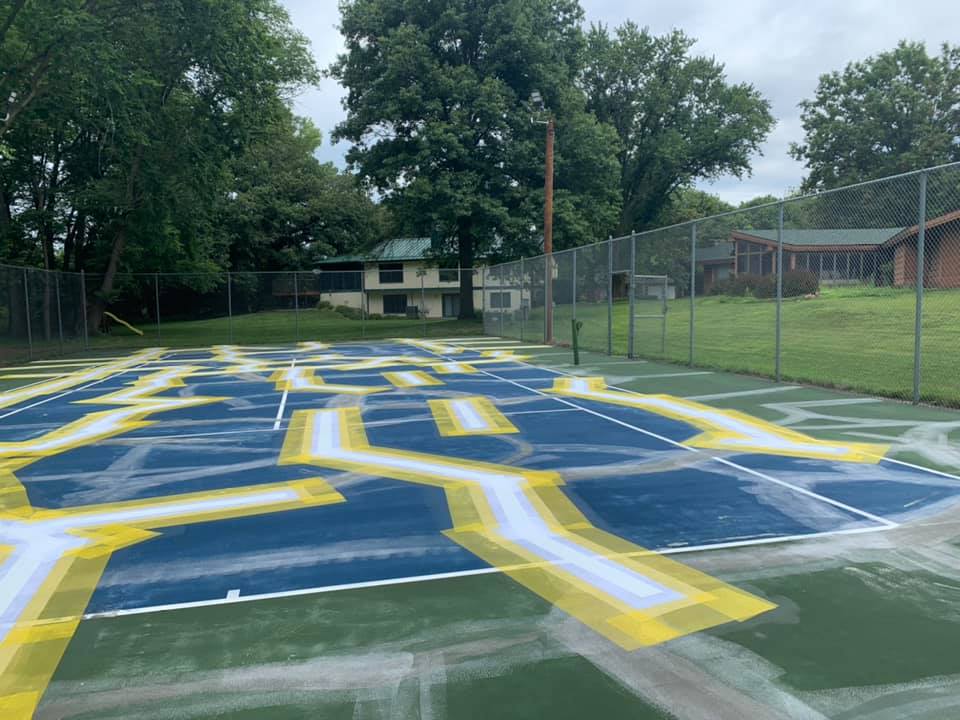
Regional Timing: What Fall Booking Looks Like by Climate
Fall means something different depending on where the facility sits.
In the Southeast and warmer regions, fall can still be genuine install season, sometimes with more flexibility than a crowded summer calendar. In northern states, the work window is already mainly a summer story, and fall is almost entirely a planning and booking period for the following year. Same country. Very different calendar.
That regional gap is exactly why a facility in Minnesota should start the fall conversation earlier than a facility in Georgia. Waiting until the ground freezes to request an assessment in a short-window state risks more than a delay. It can mean losing an entire season.
A Simple Fall Planning Checklist for Court and Track Projects
Use this as a starting sequence. Every facility’s timeline shifts based on committee schedule, surface condition, and region.
| Step | What It Covers | Typical Timing |
|---|---|---|
| Request a written assessment | Site visit, crack and drainage evaluation, base condition check | Start in fall for a spring or summer install |
| Get a written proposal | Scope, sequencing if multiple surfaces are involved, realistic timeline | Follows the assessment, based on what it finds |
| Bring it to committee or board | Budget approval, sign-off from athletic department or facilities committee | Allow weeks for this step |
| Sign the contract | Locks a crew slot on the calendar | Before the near-term calendar fills |
| Confirm the weather buffer | Realistic start window with room for a delay | Set with the contractor, by region |
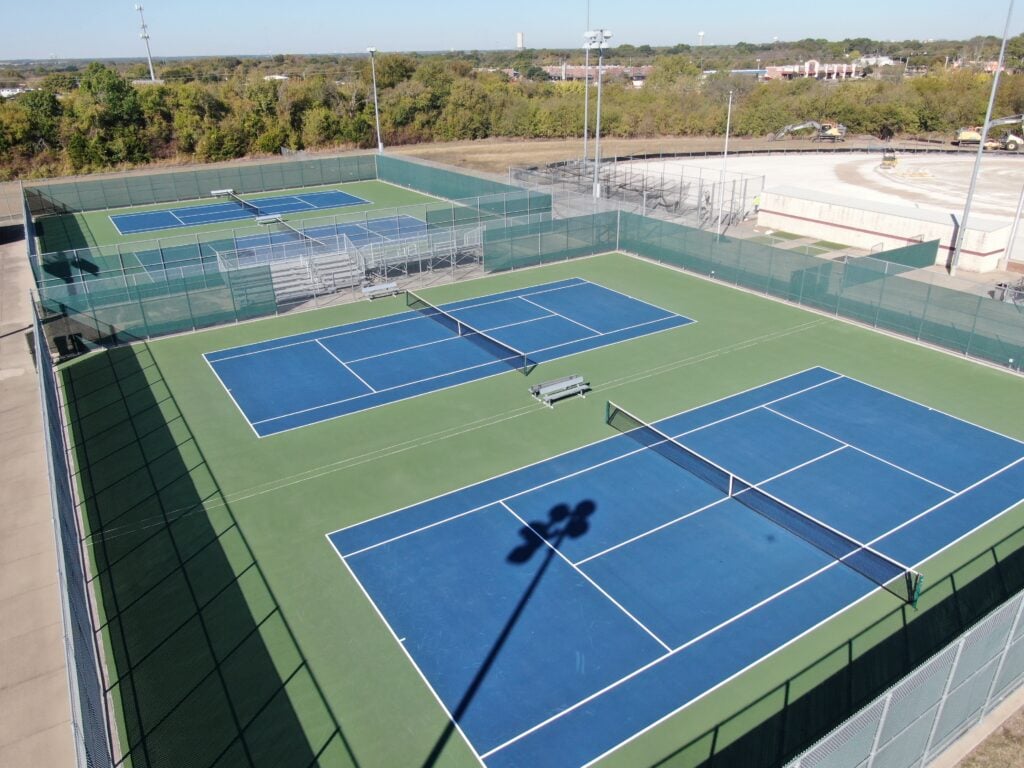
Frequently Asked Questions
When should we start the conversation about a fall court or track project?
As soon as you know work is needed for the following season. In short-window northern climates, starting in early fall protects your spot before the contractor’s spring calendar fills. In longer-season regions, there’s more flexibility, but earlier is still safer than later.
Can a project be booked in fall but installed the following spring?
Yes, and for many northern facilities that’s the normal pattern. A signed contract in fall holds a place on the schedule. Installation happens once temperatures and moisture conditions cooperate, which for many regions means the following spring or summer.
What’s the difference between requesting a quote and requesting an assessment?
A quote based only on square footage is a rough estimate. An assessment includes a site visit that checks crack density, base condition, and drainage, and it’s what an accurate proposal should be built on.
If we need both a court and a track resurfaced, should we do them at the same time?
Not necessarily. It depends on urgency, deadlines, and whether one project has a shorter weather window this year. A contractor running in-house crews on every project can usually tell you honestly whether both fit in one season.
Does booking in fall guarantee a specific installation date?
It secures a place in the schedule and narrows the likely window, but weather still has the final say. Building a buffer into the plan protects against a delay pushing the whole project into the next season.
How does crack repair affect the fall planning timeline?
It adds time ahead of the coating work. ARMOR crack repair moves at roughly 300 linear feet per day, so a surface with significant cracking needs that added into the schedule before an installation date gets locked in.
Booking a Fall Project Without the Scramble
A court or track project rarely gets built the day it gets scheduled. It gets built somewhere down a chain that starts with an honest assessment and ends with a crew on-site during a window the weather actually allows. Fall is where that chain usually starts, whether the work happens this year or next.
The facilities that avoid the spring scramble are the ones that start the assessment conversation while there’s still time for a committee vote, a contract signature and a weather buffer, in that order.
If you’re managing a tennis court, a running track, or both, and you’re not sure where to start the fall conversation, that’s exactly what a written assessment is for. Call 800-498-4395 or email info@protrackandtennis.com to get one scheduled before next season’s calendar fills.