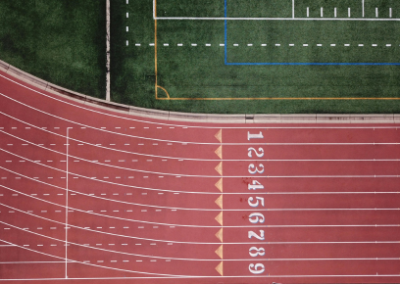
Direct answer: For most facilities, fall is when a court or track project gets scheduled. The build itself usually happens later, once temperatures allow. Acrylic and track coatings still need surface temperatures above 60°F to cure, so fall usually means locking in a written assessment, a signed contract, and a crew commitment now, with installation timed to your region's actual weather ...
The short answer: Running track certification in the US follows a five-class system developed by the American Sports Builders Association (ASBA). Class 1 and 2 apply to international competition and require World Athletics documentation. Classes 3, 4, and 5 cover national collegiate, state high school, and general accuracy standards. Most high school and university tracks fall into Class 3, ...
Key Takeaways
Most running track warranties don't cover the problems that actually cause failure, namely drainage and base issues
There are two separate warranties in play on every project: material and workmanship. They cover different things and come from different parties.
Resurfacing warranties are inherently limited because the contractor is building on an existing base with ...
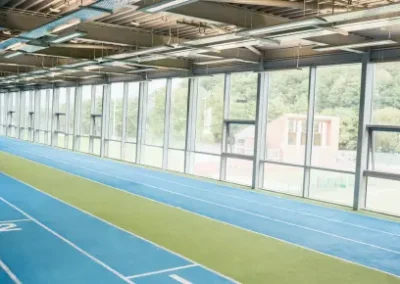
Most indoor competition tracks measure 200 meters in Lane 1, which is half the length of a standard outdoor track. That's not arbitrary. It's the distance that fits inside most athletic buildings while still allowing for sanctioned competition under NCAA and World Athletics standards.
But here's what matters more practically: indoor tracks are harder to get right than outdoor tracks, ...
Key Takeaways
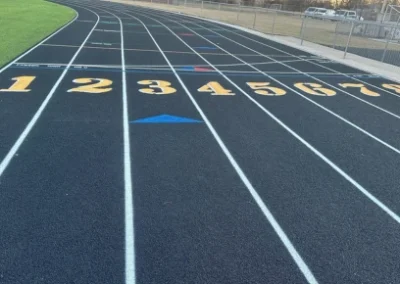
A standard outdoor competition track measures 400 meters in Lane 1, with lanes typically 1.22 meters (4 feet) wide and most high school facilities using 6-8 lanes.
NFHS and World Athletics standards define track geometry, lane markings, surface systems, and drainage requirements.
Most track failures originate from poor base construction or inadequate ...
Key Takeaways
Running track installation timelines range from a couple of weeks for targeted repairs to several months for new construction, but calendar time almost always exceeds working days due to weather and cure windows.
Base condition is the single biggest variable in your schedule. Hidden drainage failures or asphalt problems discovered mid-project cause the longest ...