Facility Maintenance
UV Resistant Tennis Courts: When Sun Exposure Means It’s Time to Resurface
Updated on
·
6 min read

Published by

UV-resistant tennis courts still take a beating from the sun. That chalky film that rubs off on shoes? The brittle texture that cracks every spring? That’s not “old paint.” That’s UV damage chewing through your coating, and it’s quietly costing you thousands in premature resurfacing.
Facilities in high-sun states often resurface every 4 to 5 years when they could get the full 5 to 7 with the right timing and maintenance. That’s an unnecessary $20,000 mistake, twice a decade. The fix isn’t magic chemistry. It’s smart timing, the right spec, and consistent court maintenance for outdoor courts.
This guide shows how sun exposure breaks down a tennis court surface, how to spot the tipping point, and how to decide using real numbers when to resurface before the budget pain starts.
Quick Context: Who We Are
Pro Track & Tennis resurfaces and rebuilds tennis courts across 25+ states. We don’t sell coating “upgrades.” We help schools, clubs, and commercial facilities decide when UV exposure has moved from cosmetic to structural, and when resurfacing is the smarter financial call.
What UV Exposure Actually Does to a Tennis Court Surface
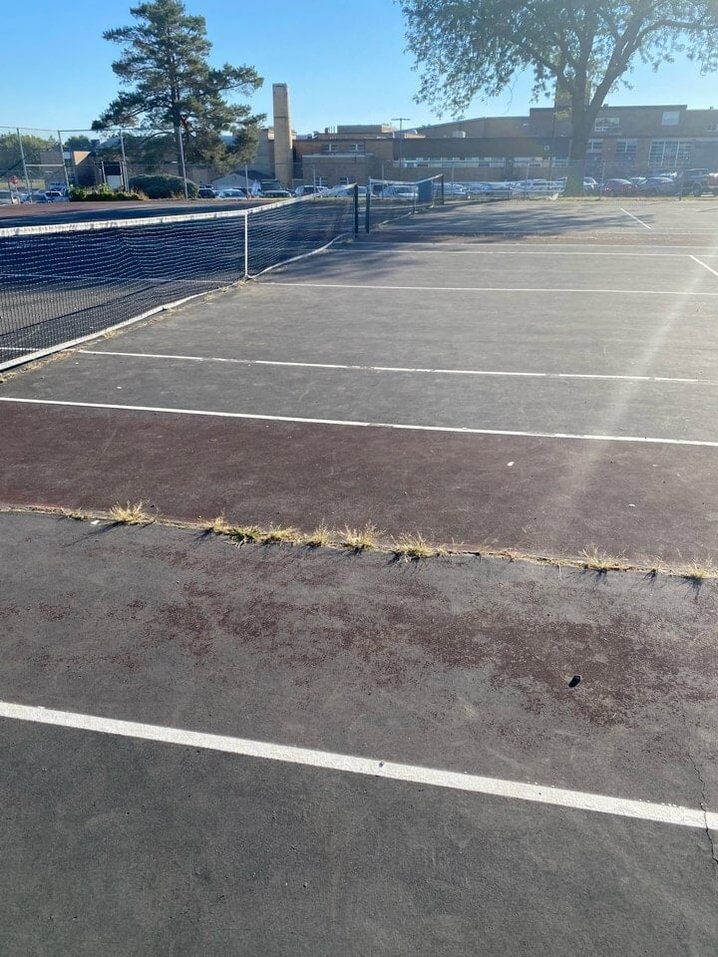
Sunlight doesn’t just fade color. UV radiation breaks down the acrylic binder that holds a tennis court surface together. Once that binder weakens, flexibility and traction disappear. Cracks follow soon after.
The breakdown, in plain terms:
UV weakens the acrylic resin that binds pigment and sand.
The surface hardens and loses elasticity; tennis balls start to skid instead of gripping.
Pigments fade; aesthetic appeal drops fast on darker colors.
Micro-cracks let in water.
Freeze-thaw or heat expansion finish the job.
Regional realities:
Desert Southwest: Constant sun. Tennis courts chalk and fade in 3 to 4 years.
Southeast: UV plus humidity softens coatings. Peeling starts sooner on high-use sports courts.
Midwest/North: UV-weakened coatings crack faster through winter cycles.
Coastal regions: Salt, rain, and sun equal fastest fading and edge erosion on outdoor courts.

The $30,000 UV Mistake
Here’s how facilities lose money without realizing it:
Year 2: “Just fading.” Year 3: Chalking. Add a color coat ($3,000). Year 4: Cracks. Patch ($2,000). Year 5: More fading. Another coat ($3,000). Year 6: Surface fails. Emergency resurface ($20,000).
Total: $23,000 in six years with worse playability most of that time.
Smarter plan: Schedule a planned resurface around Year 5 with proper UV protection (~$20,000). Keep your tennis courts on a 5 to 7 year cycle instead of living on patches.
Three Signs UV Damage Means “Resurface Soon”
1) The Chalk Test
Rub your hand across the court. If color dust transfers to your palm, the binder is failing.
A few spots: monitor and document.
Widespread chalking: plan resurfacing within 12 months.
2) The Brittle Bounce
Drop a tennis ball from shoulder height. On a healthy surface you get a clean, even bounce. On UV-hardened tennis courts the ball skids or pops. Stiffness means cracks are coming.
3) The Color Map
Compare photos from two years ago. If you’ve lost roughly 25 to 30% color depth, UV has compromised the acrylic layer. Dark green and blue courts show this first.
Decision rule:
Two or more signs = resurface within a year.
All three = act now, before cracking adds structural costs.
Why Patches and Color Coats Don’t Work
UV damage is system-wide, not spot-specific.
Color coats peel off brittle bases.
Crack fillers detach as the surface moves.
Patches highlight fading and fail after the next extreme weather swing.
Each “quick fix” costs more and lasts less.
“Every surface has a lifespan. You can patch it for a while, but if the base is moving or the coating is hardened, those cracks will reopen. That’s when you need to look at resurfacing or rebuilding.” — Lance, President, Pro Track & Tennis (30+ years experience)

Your Real Options (and What They Cost)
1) Resurface Now (~$20,000 per court)
Best for:
Courts 5+ years old with visible fading or chalking.
High-sun or humid climates.
Prior patches or recolors already failed.
What you get:
Full coating system with UV-stabilized materials.
5 to 7 years of dependable play.
Consistent bounce, safe traction, and renewed color.
2) Wait and Monitor
Best for:
Minor fading only.
Courts under 4 years old in moderate weather conditions.
Inspect twice a year, budget for resurfacing, and don’t miss the window. Waiting too long turns a $20K plan into a $25K scramble.
3) Rebuild (~$75,000 per court)
Needed when base failure shows up (soft spots, heaving) or drainage issues compound UV degradation. Rebuilds are rare and avoidable if you time resurfacing correctly.
Climate-Specific Resurfacing Timelines
Region | Sun Exposure | Typical Resurfacing Cycle |
|---|---|---|
Southwest (AZ, NM, TX) | Extreme | 5-6 years |
Southeast (FL, AL, GA, SC) | High + Humid | 5-7 years |
Midwest/Plains | Variable | 5-7 years |
Northern | Moderate | 5-7 years |
Coastal | High + Salt | 5-6 years |
“We can’t install coatings below 60°F or on damp surfaces. For northern states, that means work windows are much shorter – mainly summer.” — Lance, Pro Track & Tennis
These ranges help plan budgets for UV-resistant tennis courts across different climates and weather conditions.

When to Include UV Protection During Resurfacing
Every professional resurface should include UV inhibitors. They’re part of a modern, ASBA guidelines-compliant system. The goal isn’t buying a product. It’s selecting the right coating system for your region and sunlight exposure.
Standard process:
Clean and prep the base.
Apply acrylic resurfacer with UV stabilizers.
Add color coats with fade-resistant pigments.
Stripe with UV-stable line paint.
Optional: clear UV topcoat in very high-sun regions.
The cost difference for added protection is modest compared to resurfacing early. It extends surface life and improves color stability.
Maintenance That Actually Slows UV Damage
You can’t stop sunlight, but the right court maintenance slows its effects.
Monthly:
Rinse debris and dust (they trap heat).
Keep edges clear so water doesn’t sit on outdoor courts.
Quarterly:
Check for chalking, slick areas, and color change.
Photograph the same locations for comparison.
Annually:
Schedule a professional assessment.
Repaint worn lines with UV-stable paint if needed.

Quick FAQ: UV and Tennis Courts
Does UV protection extend court life?
Yes. UV-stabilized systems slow binder breakdown, extend resurfacing cycles, and keep courts playable longer, especially in high-sun or coastal climates.
What causes fading on tennis courts?
UV radiation breaks down pigments and binders in the coating. Darker colors show it first.
Do UV additives make courts last forever?
No. They slow damage, but timing and climate-matched systems matter more than labels.
Can I spot-coat UV-damaged areas?
You can, but it won’t hold if the base is brittle. Systemic damage means a full resurface.
What about other sports courts?
Basketball and pickleball courts face the same UV breakdown. The same resurfacing principles apply.
Your On-Court Checklist
Walk your tennis courts on a sunny afternoon and note:
□ Chalk on your hand.
□ Hard or slick texture.
□ Darker color under windscreens vs. exposed areas.
□ Fine cracking near lines.
□ Excess glare on bright days.
□ Player feedback about slipperiness.
Three or more boxes checked = resurfacing window.
Stop Letting the Sun Eat Your Budget
UV damage is inevitable on outdoor sports courts. Premature resurfacing isn’t. The key is knowing when surface wear turned structural and acting before repairs multiply.
During an on-site assessment, we’ll show you:
How much UV damage your tennis court surface has.
Whether resurfacing now saves future cost.
Which coating system fits your region and weather conditions.
A maintenance timeline that avoids surprises.

Book a UV damage assessmentwith Pro Track & Tennis. Stop patching sun-baked courts. Get a practical resurfacing plan that lasts.
The Bottom Line
UV damage isn’t just fading. It’s the breakdown of your surface. Once the binder fails, every patch is temporary. Smart facilities resurface before structural failure, not after.
Pro Track & Tennis. Resurfacing tennis courts across 25+ states. Practical plans. Honest costs. In-house crews.
Get a Free Assessment for Your Court or Track
Our in-house crews have completed 1,000+ projects across 25+ states. Tell us about your facility and we will inspect the surface and give you a straight plan and quote.
Get Free Assessment
»
About the Author
Marketing Manager, Pro Track & Tennis
Recent Blog Posts
Discover More →
•
8 min read
Plan your fall court and track resurfacing project: when to book, how budget cycles fit in, and how to sequence multiple surfaces.
•
8 min read
Your tennis court cracked again after resurfacing? Learn why reflective cracking happens and what actually stops an old crack from reappearing.
•
7 min read
Learn how tennis court resurfacing timing affects downtime, from weather windows to phasing multi-court facilities without closing everything at once.
•
7 min read
TYPTI vs. pickleball for clubs: court, equipment, and rules differences, plus a decision framework on adding TYPTI or switching entirely.
•
10 min read
How to host TYPTI at your club: equipment, court readiness, programming, marketing, and the revenue model, compared to pickleball benchmarks.