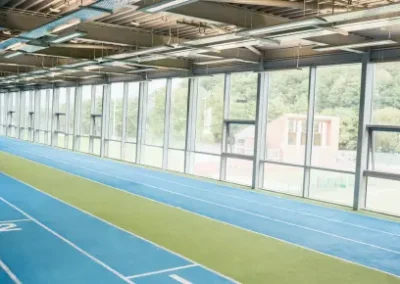
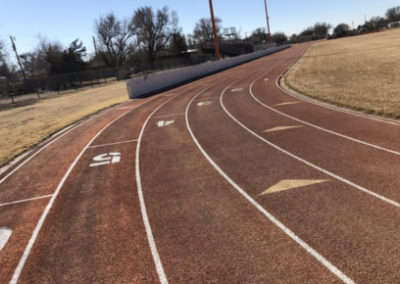
Most indoor competition tracks measure 200 meters in Lane 1, which is half the length of a standard outdoor track. That's not arbitrary. It's the distance that fits inside most athletic buildings while still allowing for sanctioned competition under NCAA and World Athletics standards.
But here's what matters more practically: indoor tracks are harder to get right than outdoor tracks, ...
Key Takeaways
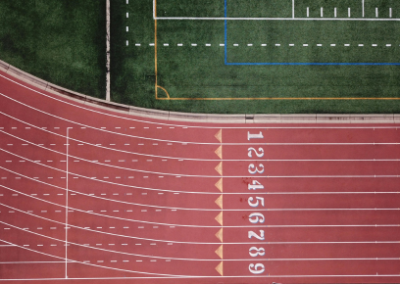
A standard outdoor competition track measures 400 meters in Lane 1, with lanes typically 1.22 meters (4 feet) wide and most high school facilities using 6-8 lanes.
NFHS and World Athletics standards define track geometry, lane markings, surface systems, and drainage requirements.
Most track failures originate from poor base construction or inadequate ...
Key Takeaways
Running track installation timelines range from a couple of weeks for targeted repairs to several months for new construction, but calendar time almost always exceeds working days due to weather and cure windows.
Base condition is the single biggest variable in your schedule. Hidden drainage failures or asphalt problems discovered mid-project cause the longest ...
Key Takeaways
A Mondo track is a premium surface brand, but performance depends far more on base condition, drainage, installation quality, and maintenance discipline than on the logo on the top layer.
Facility managers are not just buying a surface. They are committing to a long-term maintenance cycle and future budget exposure. Lifecycle planning matters more than brand ...
Key Takeaways
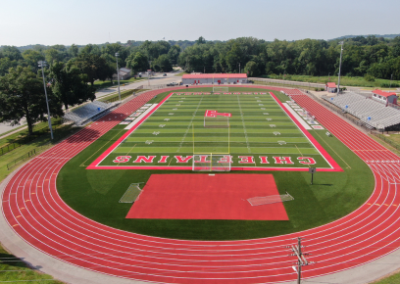
A standard high school outdoor track measures 400 meters in Lane 1, and most U.S. high schools follow this format.
Typical high school tracks have 6 to 8 lanes, each about 1.22 meters (4 feet) wide, usually built around a football or soccer field.
Some schools use 300 m or other non-standard tracks due to space or budget limits, which affects meet ...
Key Takeaways
Water intrusion and base movement cause most track failures, not surface wear
Early intervention through routine inspections protects your investment and extends usable life
Drainage problems must be fixed before any surface work
Planned maintenance costs a fraction of emergency repairs or premature rebuilds
Knowing when to repair, ...