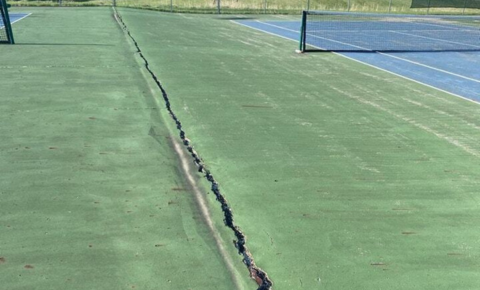
Every tennis court cracks. The question isn’t if, but when; and more importantly, whether you’ll keep throwing money at patches that don’t hold, or invest once in repairs that actually work.
The most expensive pattern we see? Facilities spending year after year on quick fixes, scrambling before events, then facing the same cracks again. After five years, many facilities have spent about what a proper resurface would have cost — without the reset, without the warranty, and without the improved play.
This guide explains why cracks happen, how to evaluate the risk, and what to do next — so you can decide when to patch, when to resurface, and when a rebuild is the responsible choice.
Pro Track & Tennis resurfaces and rebuilds courts across 25+ states. We don’t sell DIY kits. We help facility managers make smart, defensible budget decisions and deliver work that lasts.
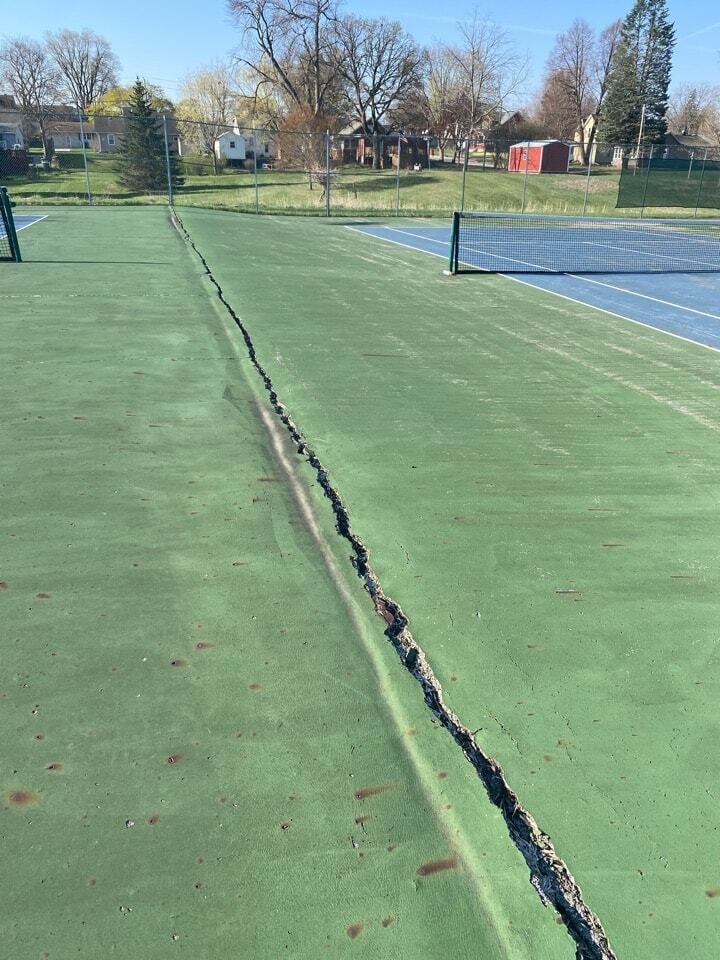
Why Tennis Courts Crack
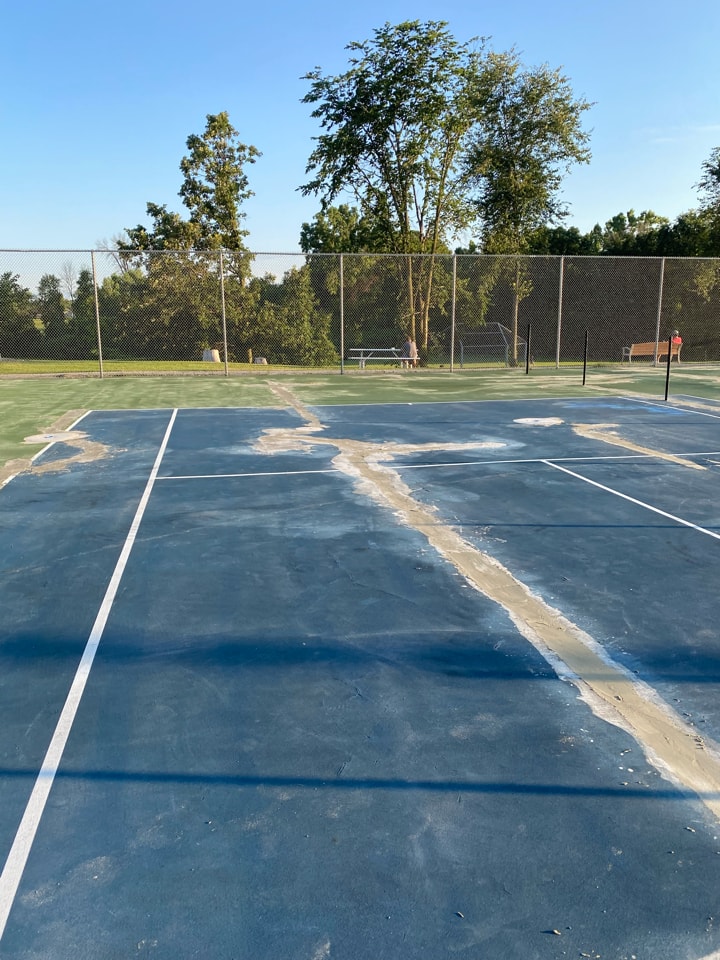
Cracks aren’t just cosmetic. They’re the surface telling you what’s happening underneath. Most causes fit into three buckets.
Environmental stress
- Freeze–thaw (northern states): Water enters micro-cracks, expands about 9% when frozen, and widens the damage. A hairline in October can become a ¼-inch lip by April.
- Extreme heat (southern states): Asphalt expands in high heat and contracts when temperatures drop. Acrylic coatings lose flexibility with age and eventually split.
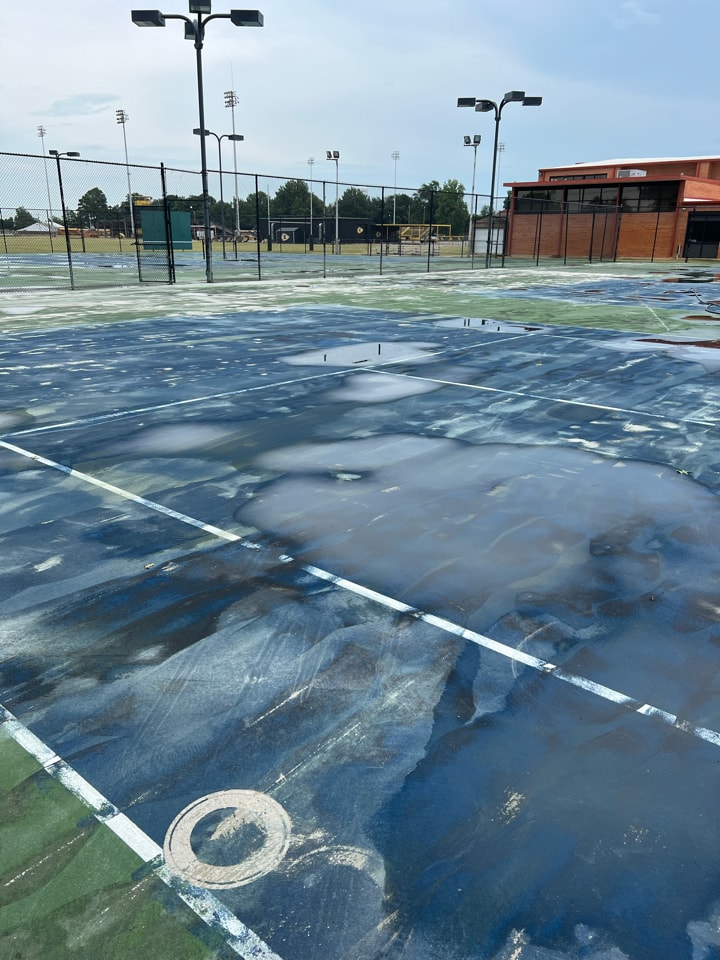
- Moisture (rain, humidity, groundwater): Persistent water undermines coatings and the base. It drives bubbling, peeling, and algae growth that accelerates cracking.
- UV exposure: Sunlight degrades binders, fades coatings, and makes surfaces brittle — easier to fracture under stress.
Structural issues
- Subgrade instability: Poorly compacted soils move; the surface follows.
- Base/asphalt problems: Thin lifts or weak mixes become long stress lines that telegraph to the surface.
- Drainage flaws: Water under or along the slab destabilizes the base and opens seams.
- Missing or ineffective expansion joints (concrete): Without controlled movement, temperature swings create structural cracks.
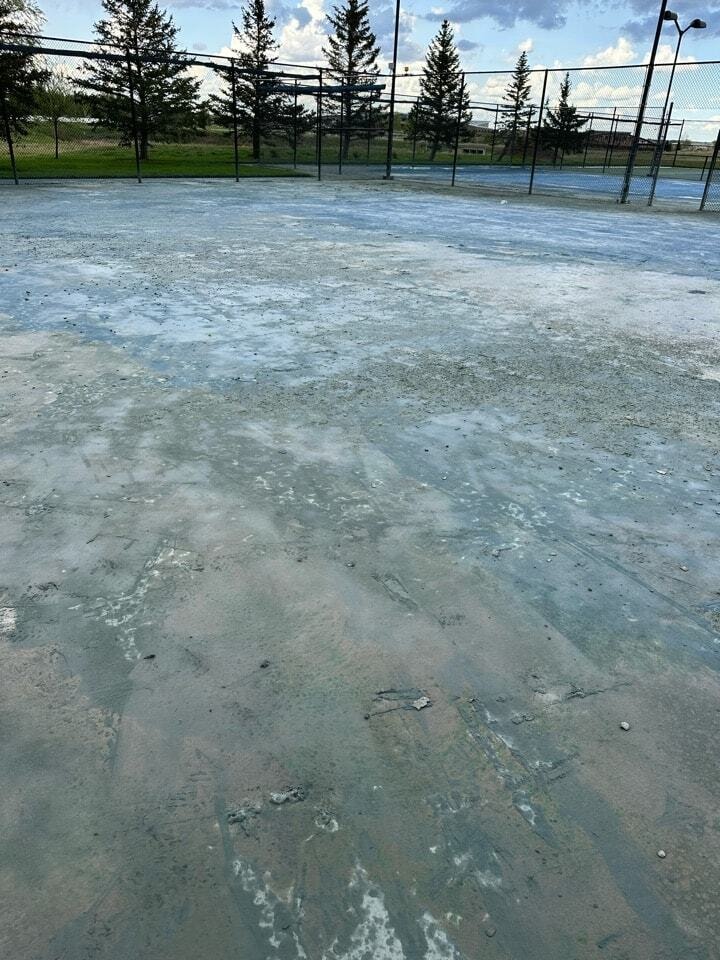
Age and wear
Even a well-built court hardens with time. After about 8–10 years, many coatings lose elasticity, so routine movement begins to fracture the surface.
“Every surface has a lifespan. You can patch it for a while, but if the base is moving or the coating is hardened, those cracks will reopen. That’s when you look at resurfacing or rebuilding.”
— Lance, Pro Track & Tennis
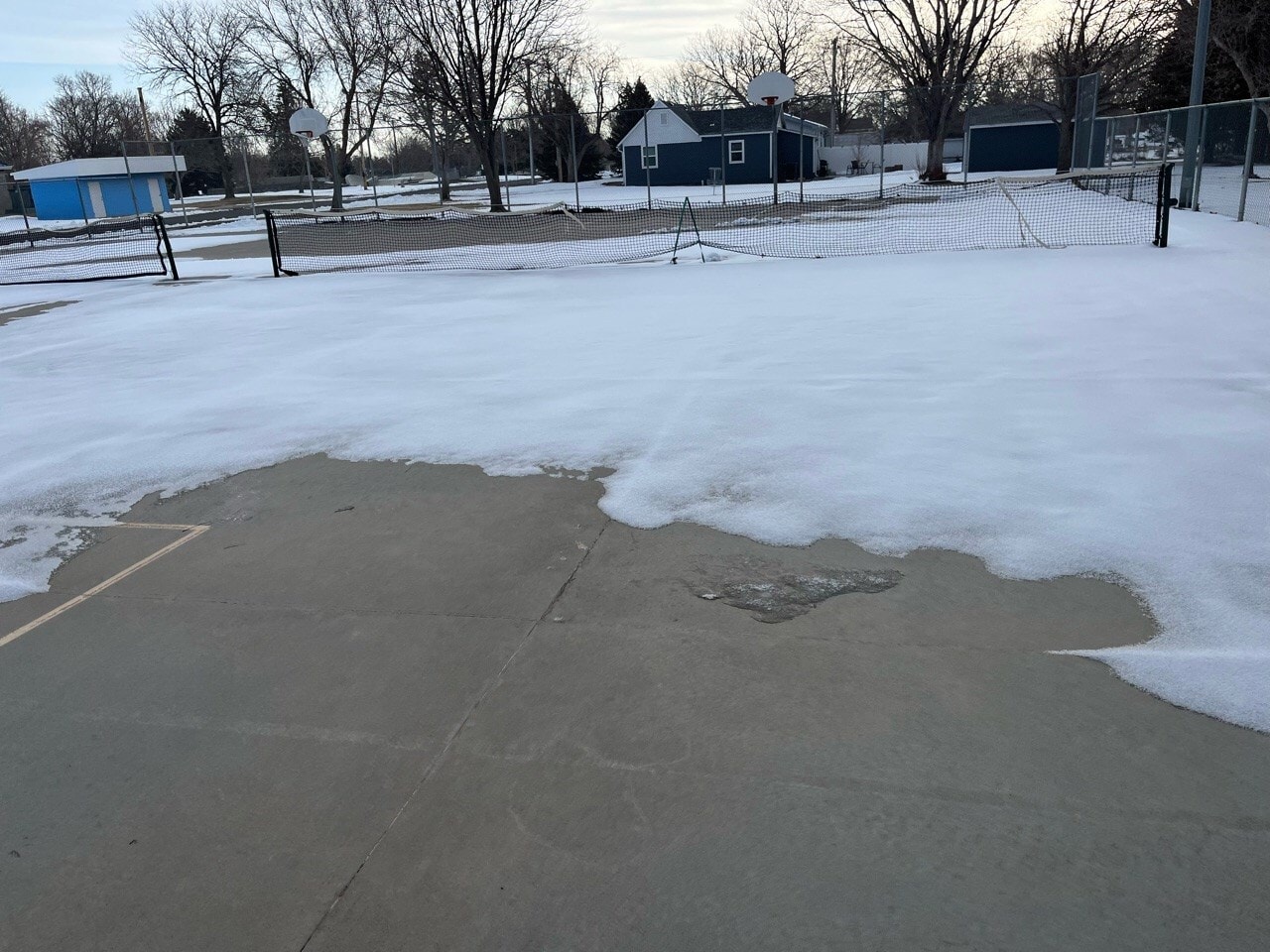
Effects of Sub-Zero Temperatures
Sustained sub-zero conditions are especially punishing. The surface contracts, existing cracks widen, and freeze–thaw cycles turn hairlines into lips and spalls. Preventive steps — sealing cracks before winter, keeping drains clear, and avoiding salt — minimize damage. Scheduling major work in the warm, dry window ensures materials cure correctly and hold.
How Cracks Affect Playability and Safety
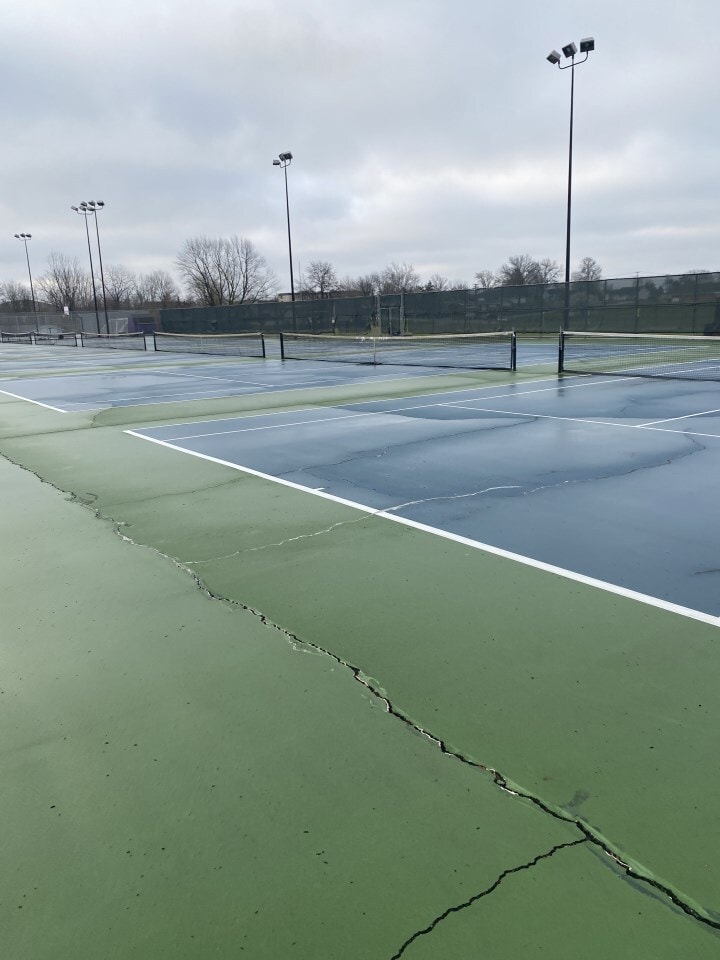
- Ball bounce: Lips and gaps change the bounce and frustrate play.
- Traction: Birdbaths and algae create slick zones.
- Line visibility: Cracks through lines make calls harder.
- Safety & liability: Lips over ¼ inch and chronic slick areas are recognized hazards.
- Accessibility: Uneven surfaces can intersect with ADA concerns — another reason to plan a proper reset.
Bottom line: cracked courts impact user experience, scheduling, and risk.
The Real Problem: Wasted Budgets
The cracks themselves are just symptoms. The real problem is the money you’re losing on fixes that don’t last.
- Year 1: $1,000 in patching
- Year 2: Another $2,500 when cracks reopen
- Year 3: $4,000 more in pre-event emergency work
- Year 5: Around $20,000 spent total — with no warranty, no fresh surface
Resurfacing once is about $20,000 per court and includes warranty coverage. If your repair spend climbs every year, you’re paying for a resurface the slow way.
Three Signs It’s Time to Stop Patching
You don’t need to memorize crack taxonomy. Watch for these decision points.
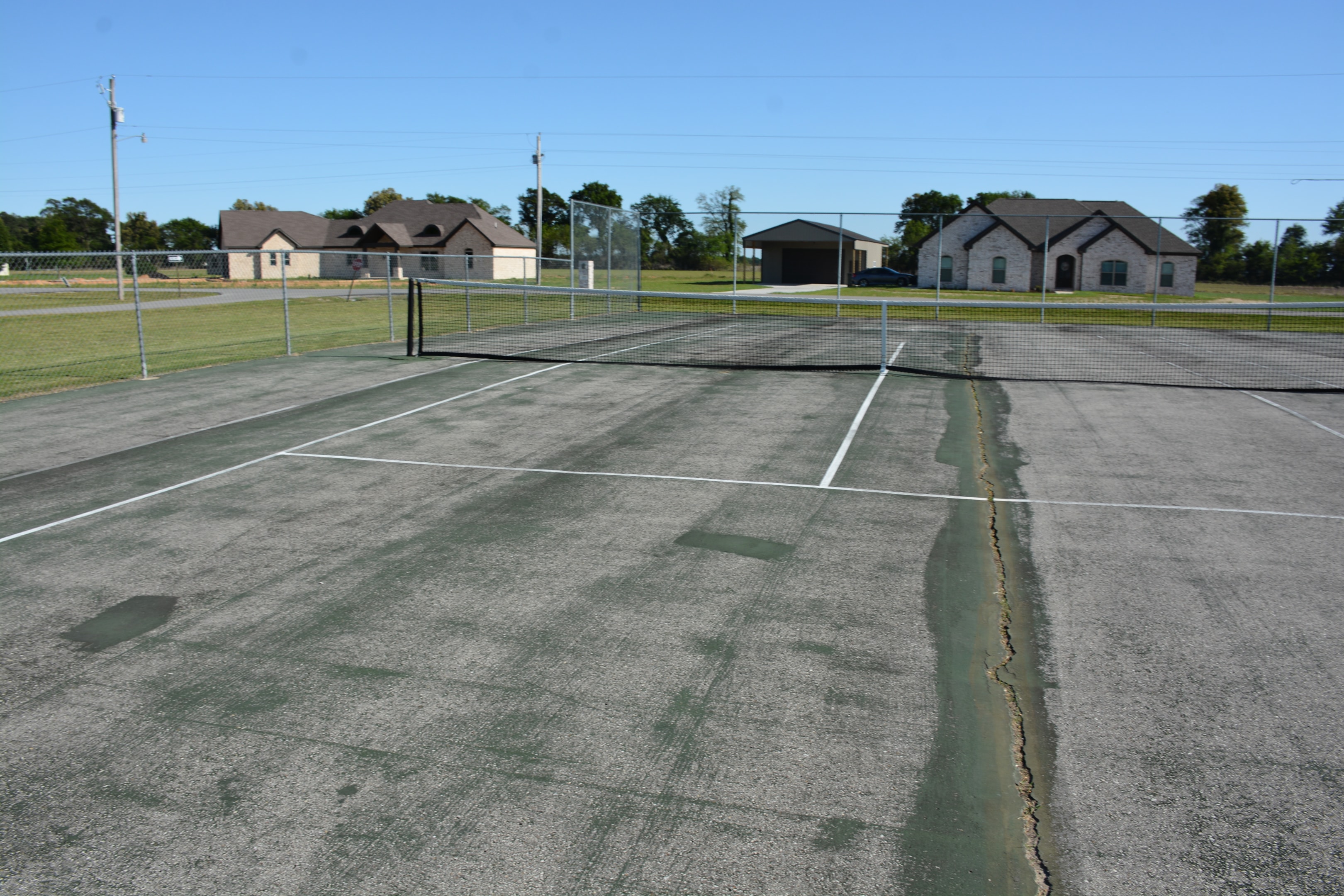
1. The same crack keeps coming back
If you’ve sealed a crack twice and it returns, the base is moving. Surface-only fixes won’t hold.
- Another patch: $500–$1,000
- Resurfacing with integrated crack work: ~$20,000 per court
2. Multiple problems at once
When cracking overlaps with ¼-inch lips, standing water, and widespread failures, patching is throwing good money after bad. Bundling crack repair and resurfacing reduces total cost and disruption versus piecemeal projects.
3. Repair costs are escalating
If you’re laying out $8,000–$12,000 over five years with no lasting result, you’re funding part of a resurface without getting the reset or the warranty.
The Moisture Problem: Fix This First
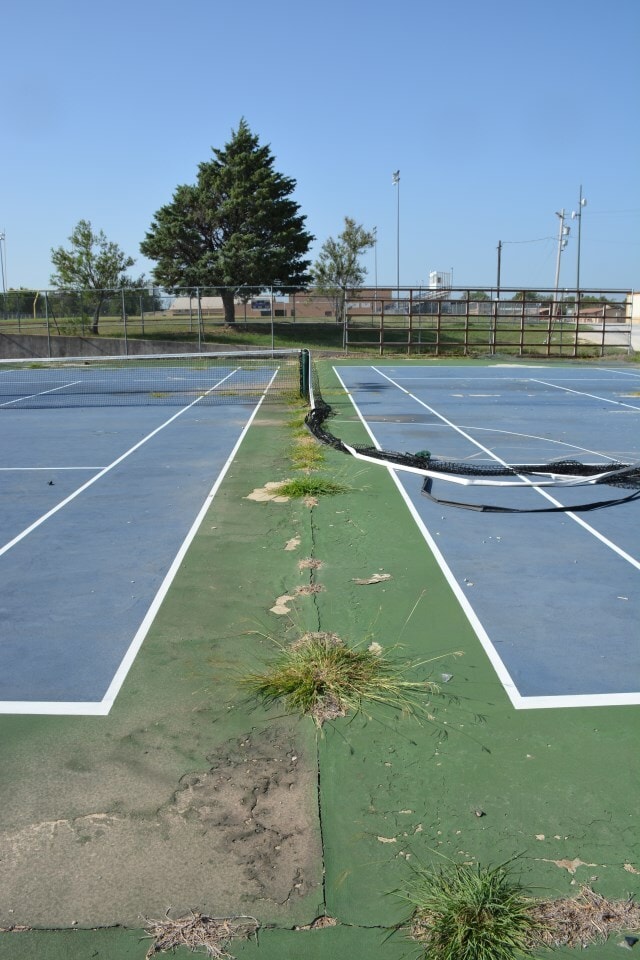
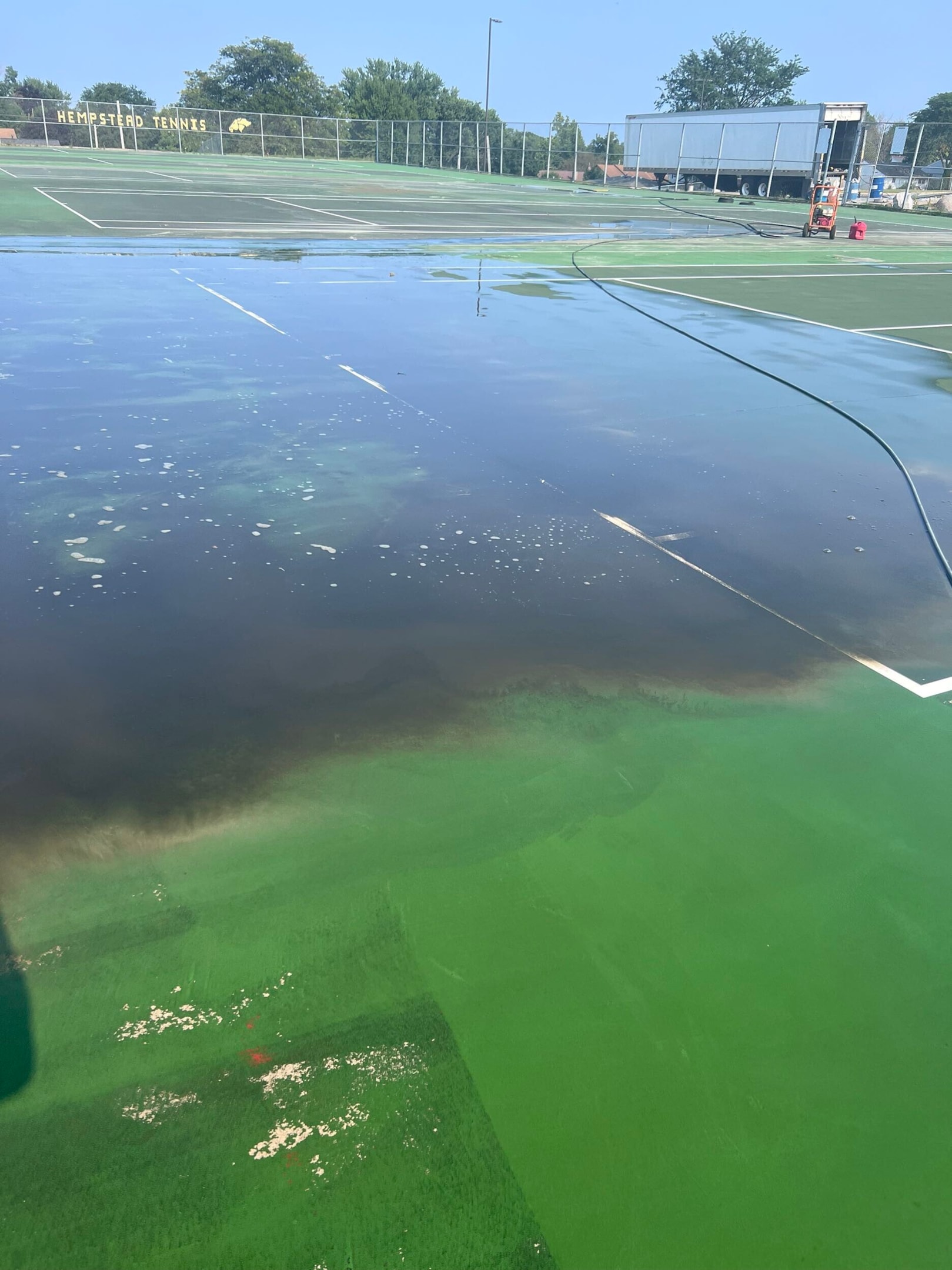
Moisture is the #1 reason surface repairs fail. Water pressure from below will bubble coatings, reopen sealed cracks, and create chronic slick zones.
What to look for
- Dark spots that never fully dry
- Bubbling or peeling after rain
- Algae or biofilm in shaded corners
- Courts near slopes or low areas that push water toward or under the slab
“If you’ve got serious water issues, fix the drainage first. Otherwise, you’re just wasting money on surface fixes that won’t last.”
— Lance, Pro Track & Tennis
Drainage fixes that work
- French drains along edges to intercept groundwater
- Regrading to move runoff away from the slab
- Trench drains or swales to clear low-point ponding
- Subgrade improvement/compaction where soils stay wet
Drainage upgrades often cost a few thousand dollars and can prevent many times that in failed surface work.
Why Quick Fixes Don’t Last
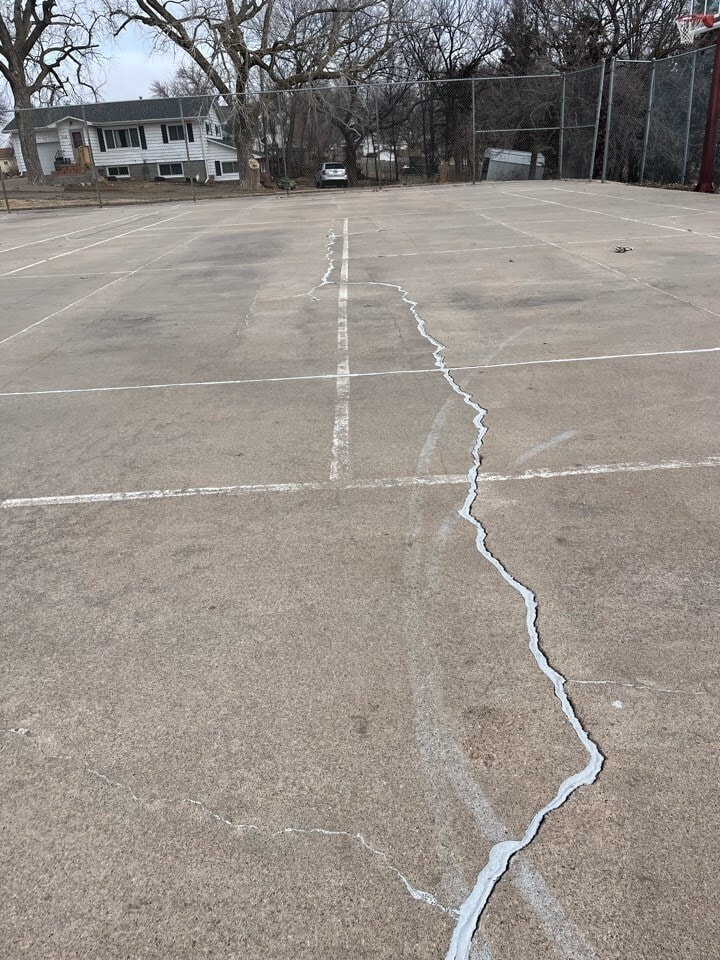
It’s tempting to reach for acrylic crack patch or a pourable crack sealant. They can temporarily stabilize small, non-moving cracks when applied with a putty knife. But they don’t address base movement or moisture and typically fail under freeze–thaw or thermal cycling.
- Acrylic crack patch: blends hairlines, tends to re-crack with movement.
- Pourable sealants: flexible at first, but traffic, UV, and weather shorten lifespan.
- Annual patch kits: low upfront cost, but add up over time — without giving you a reset surface or warranty.
Treat these materials as what they are: stopgaps, not solutions.
Professional Crack Repair Systems (When You’re Not Ready to Resurface)
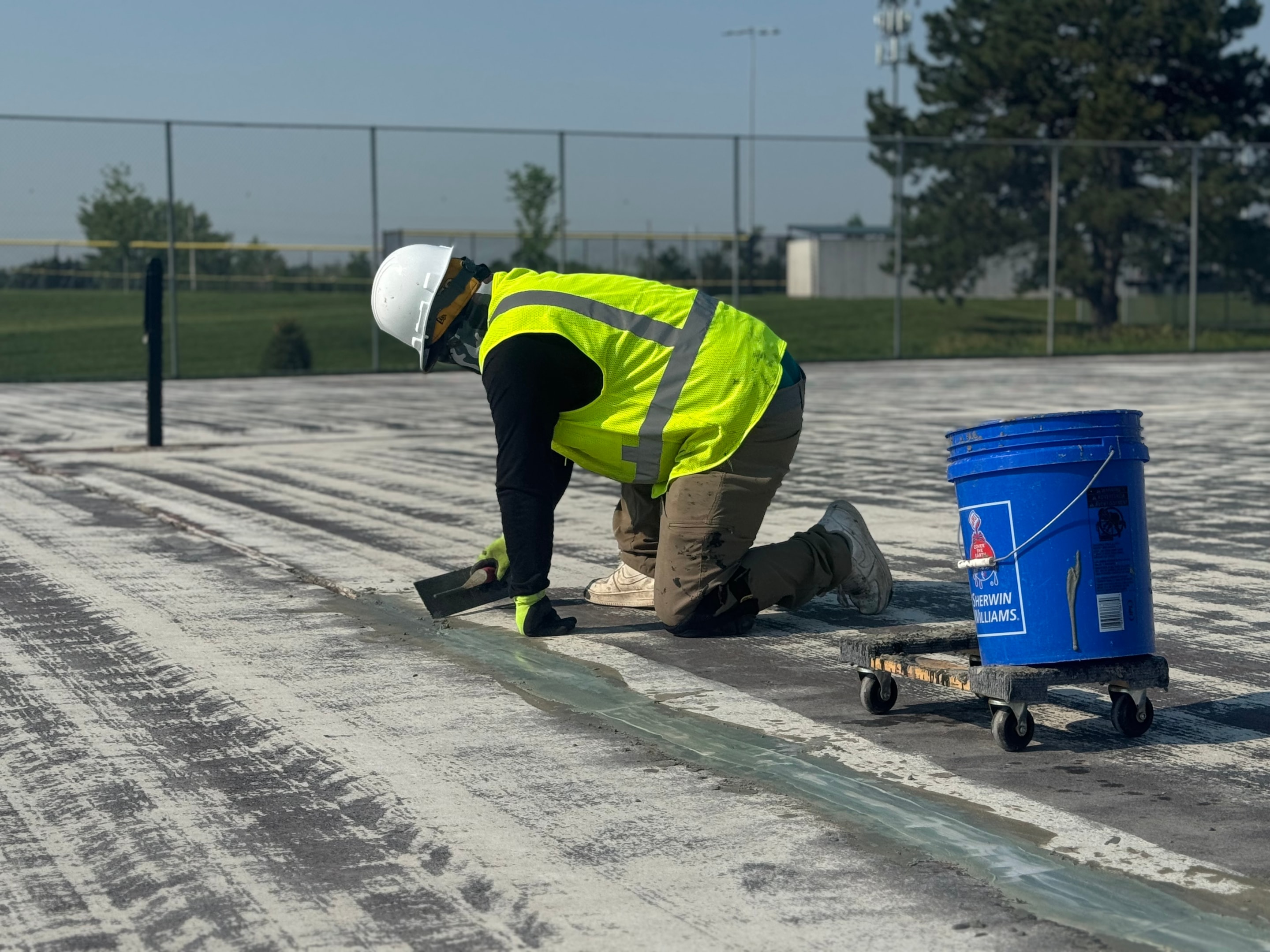
When cracking is localized and the base is stable, professional systems can extend court life 3–5 years and buy time for a planned resurface.
ARMOR Crack Repair
- Flexible membrane bridges the crack and tolerates slight movement
- Often adds ~5 years before a full resurface
- Knitted, expandable fabric overlay distributes stress across a larger area
- Installed on millions of linear feet nationally
- Holds longer than surface-only fillers
Prep that improves hold
- Foam backer rod fills deep voids before sealant, improving adhesion and longevity
These are intermediate solutions. If the base is failing — or moisture is significant — prioritize drainage and plan resurfacing (or a rebuild).
How to Choose Repair Materials That Actually Work
Different cracks and substrates respond to different solutions.
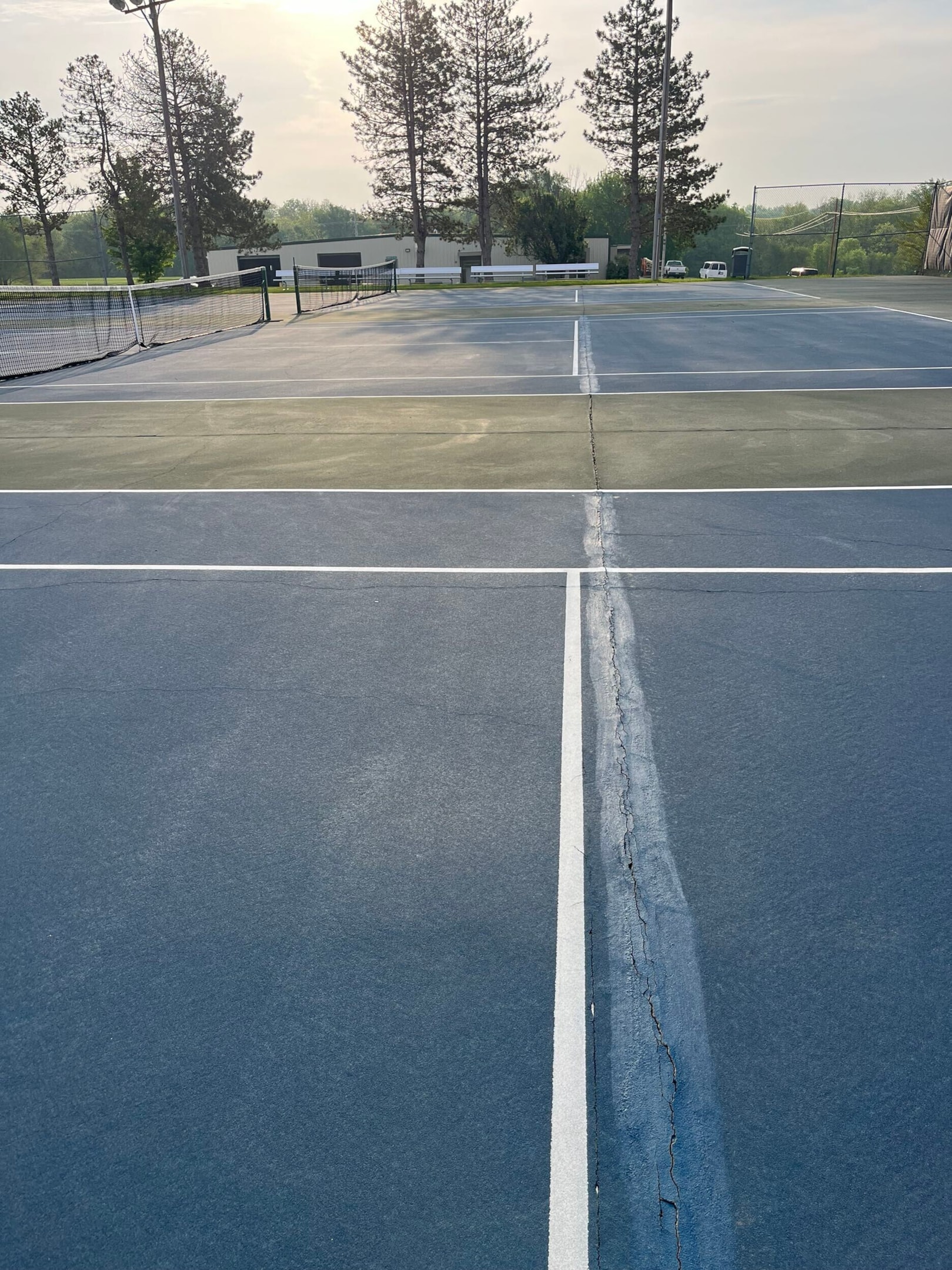
- Asphalt courts (most common): flexible but age-hardening leads to linear or spider cracking. Respond well to resurfacing cycles and membrane systems where the base is sound.
- Concrete courts: stiffer; when cracks appear, they’re often wider. Expansion joints matter. Repairs can require specialty treatments; coatings can perform well if movement is controlled.
- Acrylic resurfacer + color coats + line striping: deliver a smooth, durable finish when the foundation and drainage are right. High-contrast lines improve visibility and play.
Choose materials based on your actual problems — base stability, moisture, drainage — not what a product label promises.
Preventive Measures That Actually Work
You can’t stop every crack, but you can slow them down and protect your budget.
- Blow debris weekly so grit doesn’t act like sandpaper.
- Clean shaded corners to prevent algae and moisture retention.
- Quarterly inspections to measure lips, check lines, and log changes.
Drainage upkeep
- Clear drains and swales before winter and after big storms.
- Check grades so landscaping doesn’t backflow toward the slab.
- Add French or trench drains anywhere water consistently pools.
Resurfacing cadence
- Resurface every 5–8 years (climate and usage dependent). Skipping cycles invites adhesion issues and shortens the life of new coatings.
“Facilities that stick to a resurfacing cycle spend less over time. Skipping cycles just means bigger problems later.”
— Lance, Pro Track & Tennis
Regional Realities (Timing Matters)
Your climate affects both how cracks evolve and when to schedule work.
- Northern states: Freeze–thaw accelerates crack growth. Best install window: June–August (warm, dry cures).
- Southern states: Heat hardens coatings faster; fall or winter installs cure better and extend life.
- Coastal regions: Salt accelerates corrosion and coating fatigue — use corrosion-resistant hardware and inspect more frequently.
- Western states: Intense UV degrades coatings quickly, and minor seismic activity can open hairlines overnight — monitor more often and plan refresh cycles accordingly.
The $20,000 vs. $75,000 Decision
Your biggest choice is whether to resurface or rebuild.
Resurface (~$20,000 per court) when:
- The base is stable
- Total cracking is limited (under ~1,000 linear feet)
- Drainage is under control or easily corrected
- Court age is 5–15 years
Rebuild (~$75,000 per court) when:
- The asphalt base is failing or crumbling
- Multiple resurfacings have already failed
- Moisture is destroying the substrate
- Repair spend is approaching resurfacing without lasting results
“Sometimes the math says stop resurfacing and rebuild. If we can get you another 5–10 years with resurfacing, that’s the smarter play. Our job is to help you make the right call for your budget.”
— Lance, Pro Track & Tennis
Practical Assessment: Walk Your Courts Today
Take 30 minutes and a tape measure. If you check three or more boxes, it’s time for a professional evaluation.
- Cracks wider than ¼ inch
- The same crack reopening after repairs
- Standing water after rain
- Lips creating trip hazards
- Lines faded or hard to see
- Persistent moisture spots (dark areas, bubbling, algae)
Document everything with photos and dates. A paper trail helps with budgets, boards, and grant applications.
Frequently Asked Questions
Can cracks be repaired without resurfacing?
Yes. Systems like ARMOR can extend life 3–5 years if the base is stable and moisture is controlled.
How long do repairs last?
Basic patches may last months. Professional systems typically last 3–5 years. A full resurface usually delivers 5–8 years of play (climate and usage dependent).
Will resurfacing fix cracks permanently?
No surface is permanent. Resurfacing resets playability and, with good drainage, slows new cracks significantly.
Does surface color affect cracking?
Indirectly. Darker colors absorb more heat and can accelerate hardening and cracking in hot climates. Cushion systems absorb stress better than basic acrylic.
Asphalt vs. concrete — what’s the difference for cracking?
Asphalt is flexible but age-hardens and shows linear or spider cracking. Concrete resists some movement but when it cracks, fractures are often wider and more complex to treat. Movement control (joints) and drainage are key on concrete.
Are acrylic crack patch or pourable crack sealant useful?
Yes, they can temporarily fill small, stable cracks when applied with a putty knife. But for recurring or structural cracks, they won’t hold. Think of them as stopgaps, not solutions.
How often should we inspect?
Quarterly, and after major weather events. Early detection is cheaper than emergency work.
What’s a realistic annual crack-maintenance budget?
Many facilities spend $1,000–$3,000 per year on patching. If that trend climbs, resurfacing is usually the smarter spend.
Stop Guessing. Get Real Numbers.
In one assessment, we’ll tell you:
- Whether your cracks are fixable or terminal
- Exact costs for ARMOR vs. resurfacing vs. rebuild
- Risk if you keep patching
- The right timeline for your climate and courts
We’ve resurfaced 2,000+ courts across 25+ states. Facilities that bundle crack repair with resurfacing typically save 40–60% versus tackling problems separately.
📞 Contact Pro Track & Tennis for a no-obligation crack assessment.
Stop wasting money on patches that don’t last. Make the decision that protects your budget — and your courts — for the long term.
Pro Track & Tennis: Resurfacing, rebuilding, and solving problems nationwide. No gimmicks, no scare tactics — just results that hold. For insights from top coaches and athletic directors, tune in to our Building a Champion Podcast.