


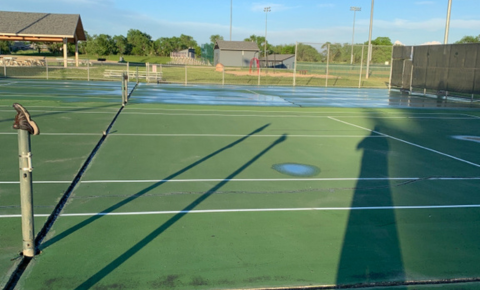
Those puddles on your tennis court after rain aren’t just annoying, they’re expensive warnings. What starts as standing water becomes coating failure, cracks, and eventually a $20,000 repair bill when ignored.
The root causes are usually predictable: poor drainage design, base compaction issues during construction, or natural settling over time. But here’s what matters: knowing whether you’re dealing with a simple surface fix or a structural problem that patches can’t solve.
“You can fill isolated birdbaths easily, but if the overall slope is off, you’re just moving the water somewhere else.” — Lance, Pro Track & Tennis
At Pro Track & Tennis, we resurface courts across 25 states. We fix birdbaths properly during tennis court resurfacing, when the court’s already prepped and the cost is minimal. That’s the difference between solving the problem once and chasing puddles with patches year after year.
What’s Actually Happening When Water Pools
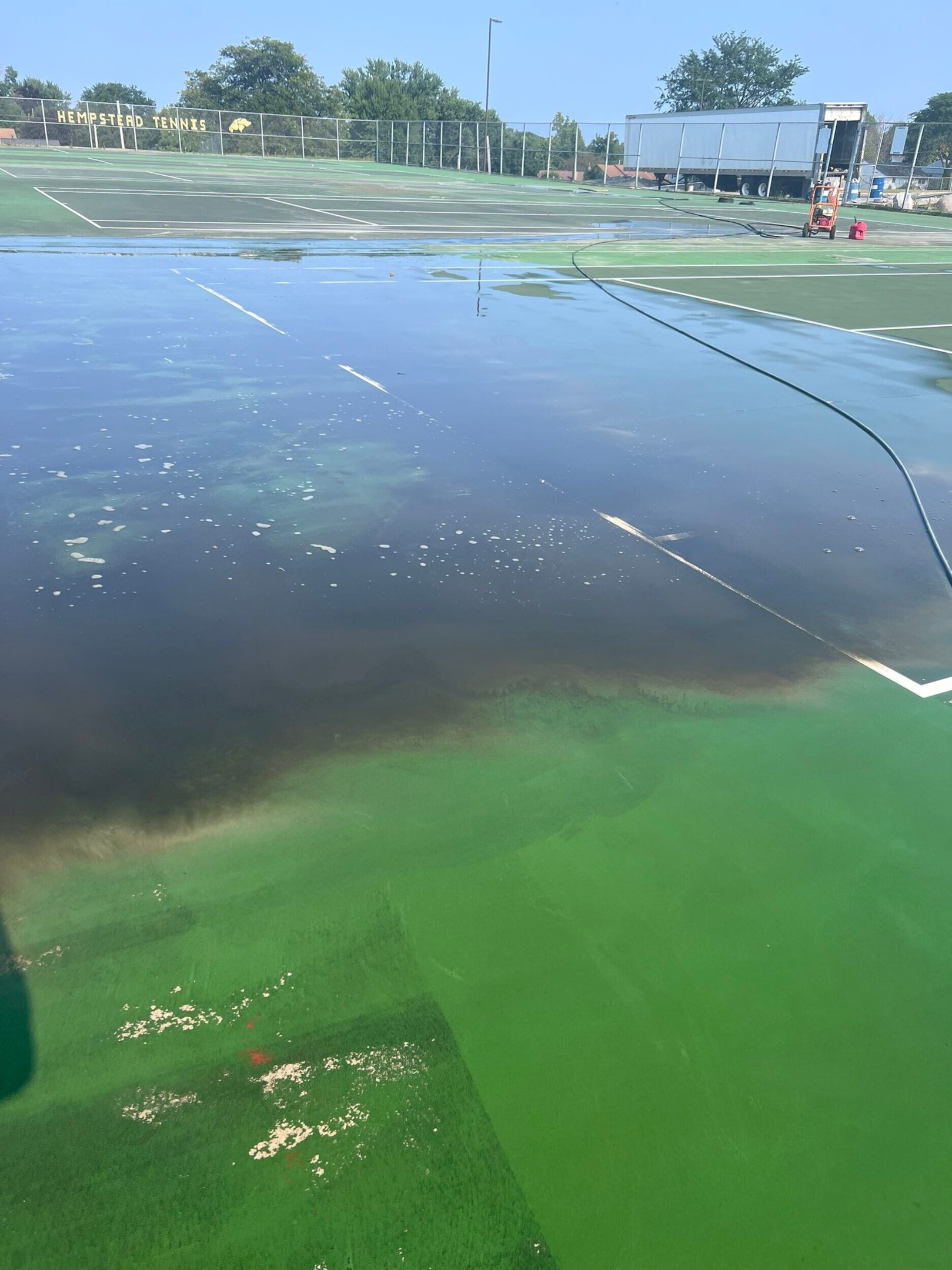
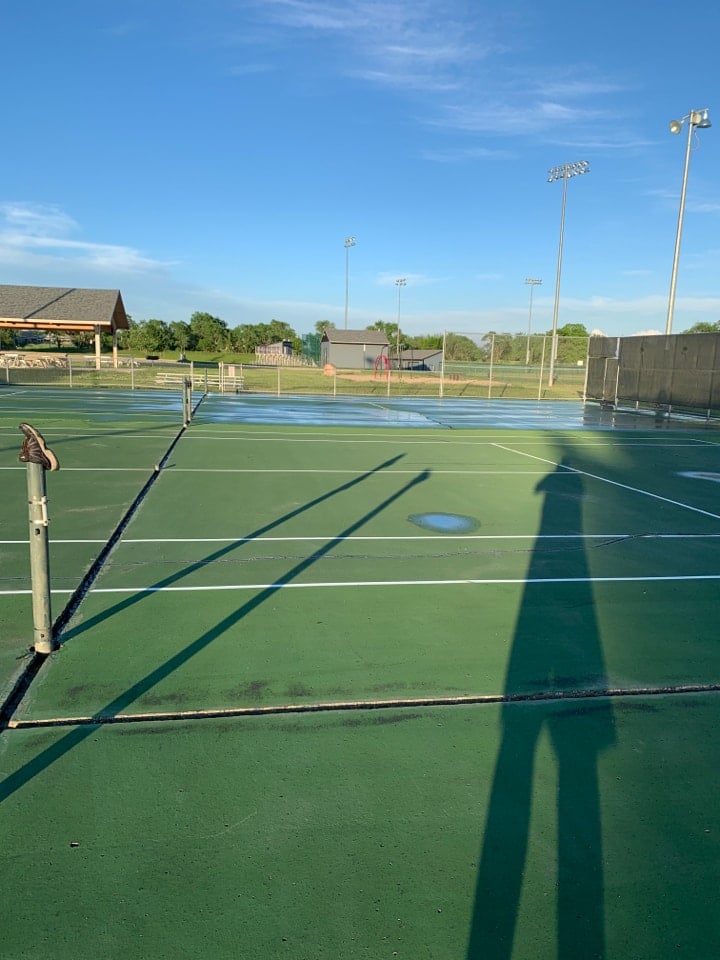
A birdbath is a low spot that holds water after rain. According to ASBA guidelines, if a puddle is deeper than ⅛ inch and still there after about an hour, it’s out of tolerance. That’s not cosmetic, it’s your court warning you about slope or base support underneath.
Standing water on the court surface softens coatings, seeps into cracks, and accelerates base movement. These issues are usually caused by improper compaction, poor drainage design, or natural aging. Over time, even small errors in slope or grading lead to puddles that damage the tennis court surface and reduce play quality. If the court was not properly constructed or leveled, these problems can become persistent, causing birdbaths that encourage mold growth, especially in shaded or poorly drained areas.
Two Types of Problems
Isolated birdbaths – Small, confined dips that can be fixed during resurfacing with acrylic patch mix, feathered and sanded smooth. A range of repair options is available for these depressions, including the application of an acrylic patch binder or similar sport surfacing products. Once properly repaired, these areas restore the court’s playability.
Uneven slopes – The entire plane is off. Fix one spot and the water migrates elsewhere — a sign the base or subgrade has shifted.
Maintaining consistent slope and following proper court maintenance routines help prevent both issues from developing in the first place. Even a well-built tennis court will eventually need adjustments to its slope or coatings as part of its lifecycle.
The Real Cost Picture
- Resurfacing with correction: about $20,000 per court
- Full rebuild (new base + coatings): about $75,000 per court
- Crack system (ARMOR): about $20–22 per linear foot to stop cracks from returning.
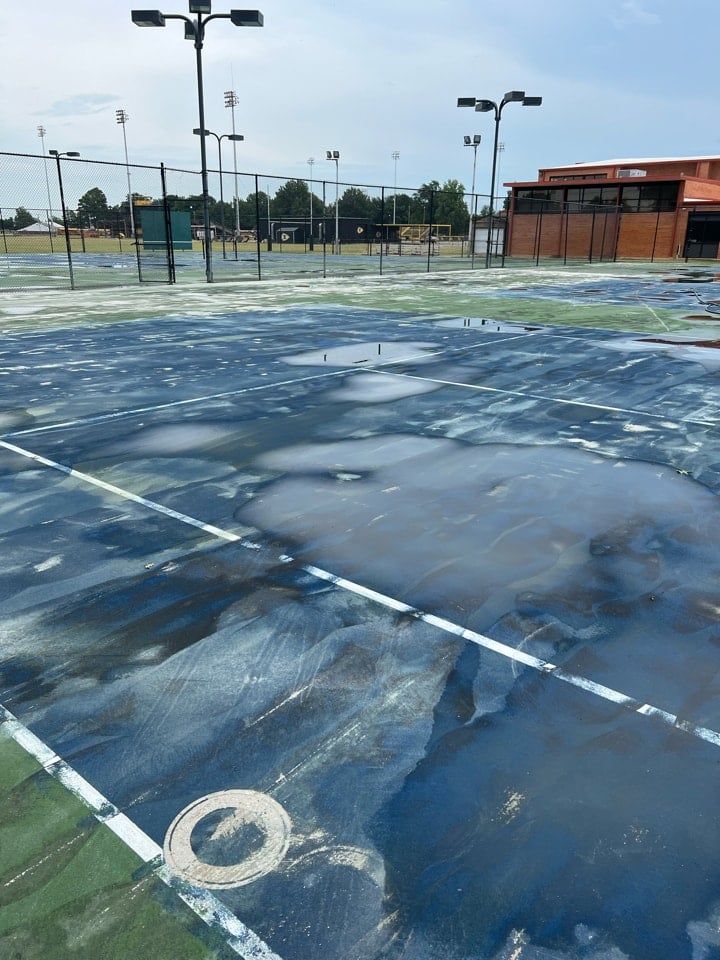
Where facilities lose money is in repeated patching. A few thousand each year adds up to the cost of a rebuild, while the same drainage problems remain. The result of neglecting proper repairs is ongoing costs, and water often takes a long time to evaporate from persistent birdbaths.
Bottom line: Fix birdbaths when you resurface. You’re already paying for prep, coatings, and crew time; adding correction then costs little extra and saves thousands in the long-term.
Three Signs Your Birdbaths Are Serious
1. The Nickel Test Fails — Repeatedly
Set a nickel in the puddle. If water covers it, you’re over tolerance.
• 1–2 small spots → monitor and log.
• 3 or more → plan to resurface with correction.
2. Same Puddles After Every Storm
If patched areas keep pooling, slope or base movement is to blame, not the coating. Surface fixes alone won’t hold.
3. Puddles with “Companions”
When low spots appear alongside cracks, coating bubbles, algae, or soft areas, you’re past the patch stage. These “companions” point to underlying structural or drainage failure. That’s the point where resurfacing, or, if widespread, a rebuild, becomes necessary.
Why “Quick” Patches Keep Failing
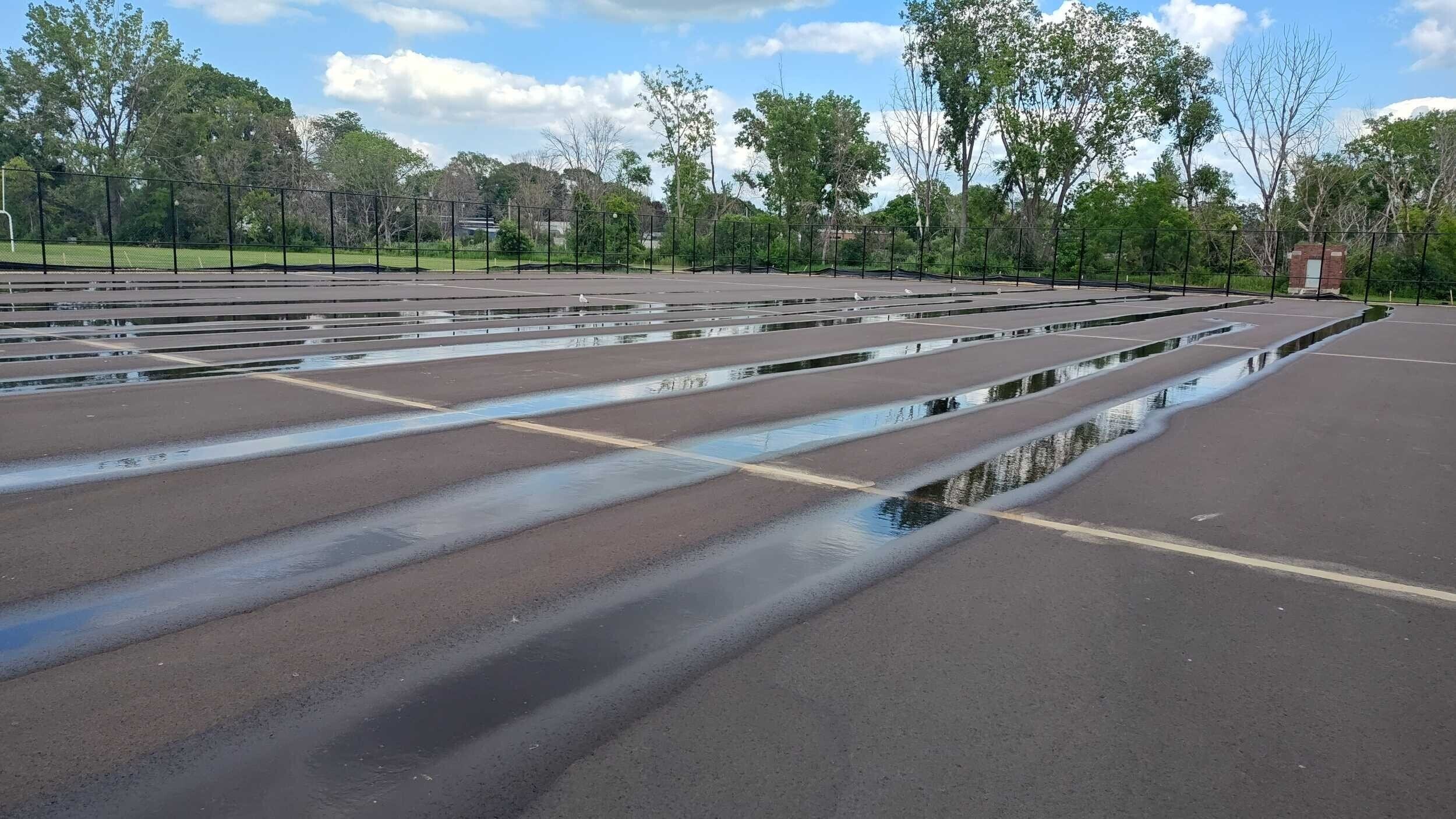
Patches treat the symptom, not the cause.
- Acrylic patch mix re-cracks if the base shifts or freezes.
- Spot grinding often redirects water instead of removing it.
- Generic leveling compounds aren’t designed for athletic surfaces and can’t handle weather or expansion.
No primer eliminates moisture pressure, the right one only reduces it. If water pushes from below (poor drainage or missing vapor barrier), surface-only repairs won’t last.
Even the best DIY patch can’t overcome base movement or poor slope. True correction happens when you resurface the tennis court surface as a system, not a patchwork.
Your Best Options (In Order of ROI)
1. Correct Birdbaths During Resurfacing (Recommended)
Scope: prep → power wash → correct lows (acrylic patch mix, feather/sand) → repair cracks (ARMOR) → apply coatings and lines.
Why it works: restores a uniform slope and texture across the entire court surface, improving consistency and playability.
Cost: around $20,000 per court, including birdbath correction.
2. Standalone Patching (Temporary)
Use case: buying one season before resurfacing.
Caveat: fine as a bridge; wasteful if routine. It doesn’t fix slope or drainage, so standing water will reappear.
3. Rebuild (Last Resort)
Use case: base failure, recurring birdbaths after resurfacing, or unfixable drainage. Building a pickleball court with improper compaction or poor grading often means a need for full reconstruction to achieve long-term results.
Cost: roughly $75,000 per court.
We’ll tell you when resurfacing won’t hold and a rebuild is the honest recommendation.
Drainage: The Hidden Variable
If birdbaths return after proper correction, the root problem is drainage or sub-base moisture.
Common culprits:
- Perimeter water trapped by landscaping or berms
- Run-on from nearby slopes pressurizing the base
- Concrete courts without vapor barriers (bubbling or recurring depressions)
- Vegetation or debris blocking runoff
- Weak or improper compaction in the base layer
Even a minor drainage problem can damage the court surface and cause cracks to reappear. Poor drainage is one of the leading causes of surface failure on any tennis court surface, often leading to premature cracking and birdbaths.
Fix drainage before resurfacing, or you’ll keep chasing puddles. Each Pro Track & Tennis assessment includes slope and perimeter drainage checks so issues can be corrected during the same project.
“Moisture is a very tricky thing in our business. Bad drainage around the court causes the heat in the slab to actually suck groundwater from around the court underneath the slab. If you don’t have good drainage taking that perimeter moisture away, it gets attracted underneath and comes up through.”
— Lance, Pro Track & Tennis
Climate Reality Check
- Freeze–thaw regions: Water expands in winter, deepening dips and widening cracks. Best repair window: warm, dry months.
- Hot / humid regions: Heat and moisture accelerate coating breakdown and algae growth. Schedule work in dry, moderate conditions.
Materials stay consistent nationwide. Timing and moisture management determine how long your tennis court surface lasts, with innovations in sustainable sports playing a key role.
Preventing Future Tennis Court Birdbaths
You can’t stop wear, but you can control how it develops. Proactive court maintenance is your best defense.
- Inspect courts after rain and mark puddles lasting more than one hour.
- Keep edges clear of debris and vegetation; maintain perimeter drains and swales.
- Schedule resurfacing every 5–8 years before structural wear begins.
- Maintain clean, dry surfaces to reduce algae and discoloration.
- Encourage players to wear proper tennis shoes to minimize surface abrasion.
- Remind players to wear non-marking tennis shoes to protect the coating and avoid premature wear.
- Use professional-grade materials – avoid generic fillers or DIY sealers.
Routine maintenance ensures the tennis court surface stays smooth, playable, and safe. Catching issues early keeps you at the $1,000 maintenance stage, not the $75,000+ rebuild stage.
On-Court Checklist (After the Next Rain)
- How many puddles last more than one hour?
- Nickel test — pass or fail for each?
- Any cracks, bubbles, algae, or soft spots nearby?
- Have these areas been patched before?
Decision Guide
- Monitor: 1–2 isolated spots.
- Resurface + correct: 3+ spots, recurring puddles, or prior patch failures.
- Rebuild: birdbaths return after resurfacing, or base/drainage failure is obvious.
How We’ll Help You Decide (Fast, Practical, Honest)
In one on-site assessment, we’ll show you:
- Whether puddles are a simple resurfacing add-on or a drainage fix first
- How much crack repair is worth doing now (ARMOR)
- A clear cost comparison: resurface vs. patch vs. rebuild
We’re ASBA members, run in-house crews, and have completed 1,000+ projects across 25 states.
Do it once. Do it right. Don’t pay for the same problem twice.
FAQ: Tennis Court Birdbaths and Repairs
What causes tennis court birdbaths?
They form when low spots on a tennis court surface trap standing water after rain. Most cases come from improper compaction, poor grading, or aging asphalt. Courts built with incorrect slope or inadequate base preparation are especially prone to these issues.
How do you fix birdbaths on a tennis court?
Minor depressions are corrected during resurfacing using acrylic patch mix. Larger slope or base failures may require professional leveling or complete rebuilds following ASBA guidelines. Professional leveling restores correct slope and surface uniformity for proper drainage and player safety.
Can regular court maintenance prevent birdbaths?
Yes. Cleaning drains, clearing debris, and resurfacing every 5-8 years helps prevent new low spots and extends court life. Consistent maintenance prevents minor issues from becoming major problems.
The Bottom Line
Tennis court birdbaths aren’t “just puddles.” They’re early warnings that slope, support, or drainage needs attention. Fix them when you resurface, and you’ll spend less over the life of the court, with better playability, appearance, and safety for years to come. A well-maintained court surface doesn’t just look good, it ensures consistent play and protects your investment in your tennis court for the long term.
Next Step: Book a free on-site assessment. We’ll map your birdbaths, check slope and moisture, and give you a practical resurfacing plan so you don’t waste another season (or another dollar) on temporary fixes.
Pro Track & Tennis — ASBA members resurfacing across 25+ states. Practical plans. Honest costs. In-house crews.
Contact Pro Track & Tennis today to schedule your free resurfacing consultation and ensure your tennis court gets the expert care it needs.