


Key Takeaways
- Tennis court budget planning is about lifecycle cost, not just this year’s repair invoice.
- Most expensive projects start with deferred maintenance and water intrusion.
- Resurfacing at the right time costs far less than full reconstruction.
- Drainage and base condition matter more than surface color or coating type.
- Athletic directors should schedule a professional assessment before committing to patchwork repairs or capital rebuilds.
Why Tennis Court Budget Planning Is a Leadership Issue, Not Just a Maintenance Line Item
For most schools, tennis courts don’t get attention until something goes wrong.
Cracks widen. Paint fades. Players complain about dead spots. Then someone asks: “Can we just patch it this year?”
That’s where budget problems begin.
From a facility management standpoint, tennis court budget planning isn’t about cosmetic upgrades. It’s asset management. A properly built tennis court should last decades structurally, with resurfacing cycles layered in at the right intervals. When maintenance is delayed or misdiagnosed, small problems turn into capital replacements.
Athletic directors are rarely given unlimited budgets. That makes timing everything.
The difference between a resurfacing project and a full reconstruction usually isn’t luck. It’s planning. And knowing which path you’re actually on before committing capital dollars.
Understanding the Lifecycle of a School Tennis Court
Before you can plan a budget, you need to understand what you’re budgeting for.
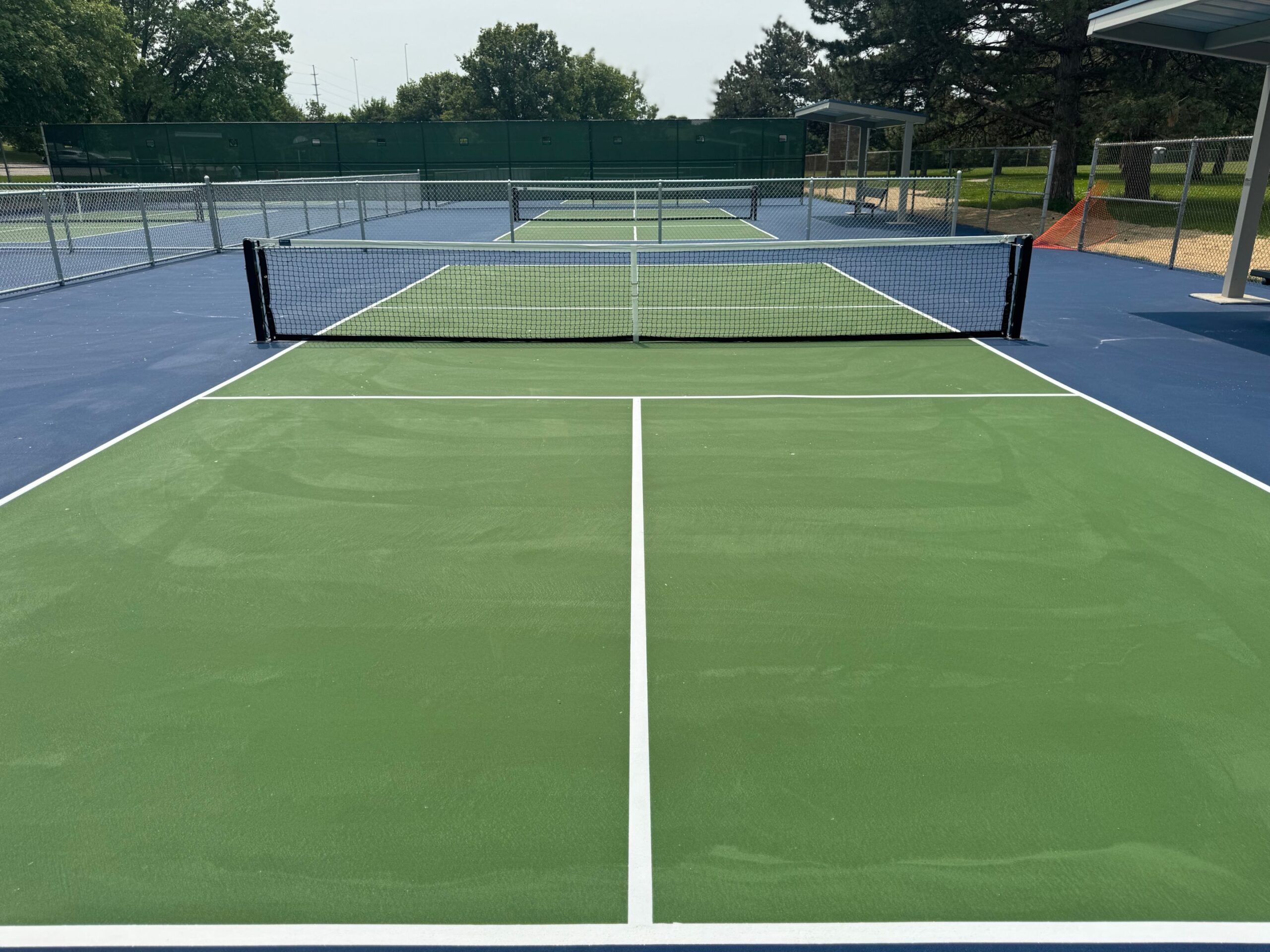
A typical outdoor school tennis court system includes a compacted subgrade, aggregate base, asphalt layer, and an acrylic or polyurethane surface system. The asphalt base is the structural backbone. The surface coating provides traction, color, and playability, but it is not structural.
With proper construction and drainage, the asphalt base can last for decades. The surface system will need attention on a regular cycle, which is where the resurfacing budget conversation comes in. When schools confuse surface wear with structural failure, they either overspend on premature reconstruction or underspend and let a fixable problem get away from them.
The smartest approach is knowing which layer is actually failing before you spend anything.
The Three Budget Paths: Maintenance, Resurfacing, or Reconstruction
Every tennis court project falls into one of three categories. The key is identifying the correct one early.
1. Ongoing Maintenance (Operational Budget)
Cleaning, minor crack sealing, isolated patch repair, and line repainting all fall here. Done consistently, maintenance extends the time before resurfacing is needed. When skipped, resurfacing arrives early and the cost goes up accordingly.
This phase protects the surface and slows deterioration. It does not fix base movement or drainage problems.
2. Resurfacing (Planned Capital Expense)
Resurfacing typically involves cleaning and preparation, crack repair systems, new acrylic or polyurethane wear layers, and full striping. If the asphalt base is stable and drainage is functioning, resurfacing restores playability and extends surface life at a fraction of reconstruction cost.
For most school facilities, planning resurfacing before base damage occurs is the financial sweet spot. Waiting too long shifts the project into the third category, and the cost gap between the two is significant.
3. Reconstruction (Major Capital Project)
Reconstruction is required when the asphalt base has failed, drainage is inadequate, courts are settling or heaving, cracks return almost immediately after repair, or water is infiltrating from beneath. This means removing the surface and asphalt, rebuilding base layers, regrading and improving drainage, and installing new asphalt and surfacing.
Reconstruction costs significantly more than resurfacing. And most reconstruction projects begin as deferred resurfacing. The choice to wait is rarely as neutral as it feels at the time.
What Actually Drives Cost in Tennis Court Budget Planning
Athletic directors often focus on the visible surface. In reality, three factors determine the real cost of any project.
Drainage
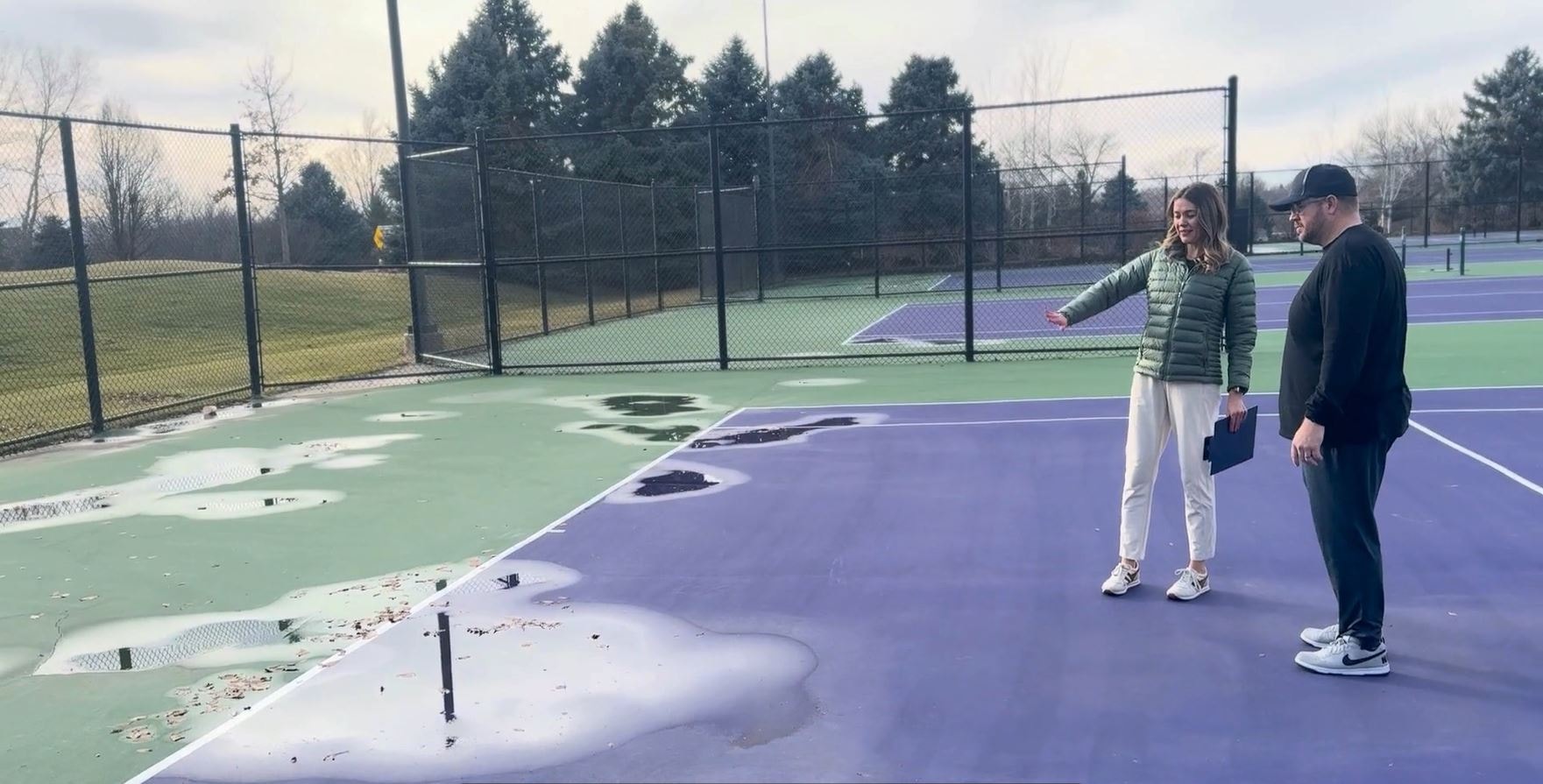
Water is the single biggest long-term threat to a tennis court. When water infiltrates the base, asphalt softens, freeze-thaw cycles expand cracks, surface coatings separate, and structural settlement accelerates. Many schools resurface repeatedly while ignoring subsurface water movement. That strategy always fails eventually.
If water is getting under the court, you don’t have a paint problem. You have a structural problem. Budget planning should always begin with a drainage evaluation.
Base Integrity
Surface systems sit on asphalt. Asphalt sits on stone. Stone sits on soil. If the base shifts, the surface follows. Base issues can appear over time, especially in freeze-thaw climates, poorly compacted original construction, and sites with clay-heavy soils or inadequate drainage. Core testing and base evaluation are inexpensive compared to guessing wrong.
Timing
Resurfacing on schedule is maintenance. Resurfacing multiple cycles late is often reconstruction. The phrase “let’s get one more season out of it” is one of the most expensive decisions a facility manager can make, because that one season can push a manageable resurfacing project into a full rebuild. The window matters, and it closes faster than most budgets can catch up.
Planning Cost Ranges for School Tennis Court Projects
Cost varies by region, court count, existing condition, and material selection. That said, facility managers need real numbers to plan. Here are honest planning ranges for a typical school facility.
For crack repair, professional-grade flexible repair systems carry a five-year warranty against telegraph cracking. On a court with significant cracking, the cost can reach or exceed the price of the color coating work itself. This is where scope surprises happen on projects that didn’t begin with a proper assessment.
For cushion system upgrades, a layered rubber granule system adds roughly $10,000 per court. A rolled Pro-Cushion mat system adds approximately $20,000 per court, and is popular with older players for its energy return and joint comfort.
Full reconstruction on a multi-court facility is a major capital project by any measure. The deciding factor between resurfacing and reconstruction is almost always base condition and drainage, which is exactly why a professional assessment before budget approval is worth every dollar.
Pro Track & Tennis provides written assessments with multi-option budgeting so administrators can present resurfacing and reconstruction scenarios side by side. That documentation also gives facility managers something concrete to bring to a board meeting rather than guessing at numbers.
How Athletic Directors Should Approach Tennis Court Budget Planning
Instead of reacting to visible cracks, follow a structured approach.
Step 1: Conduct a Professional Assessment
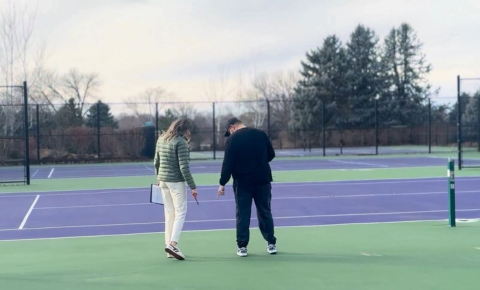
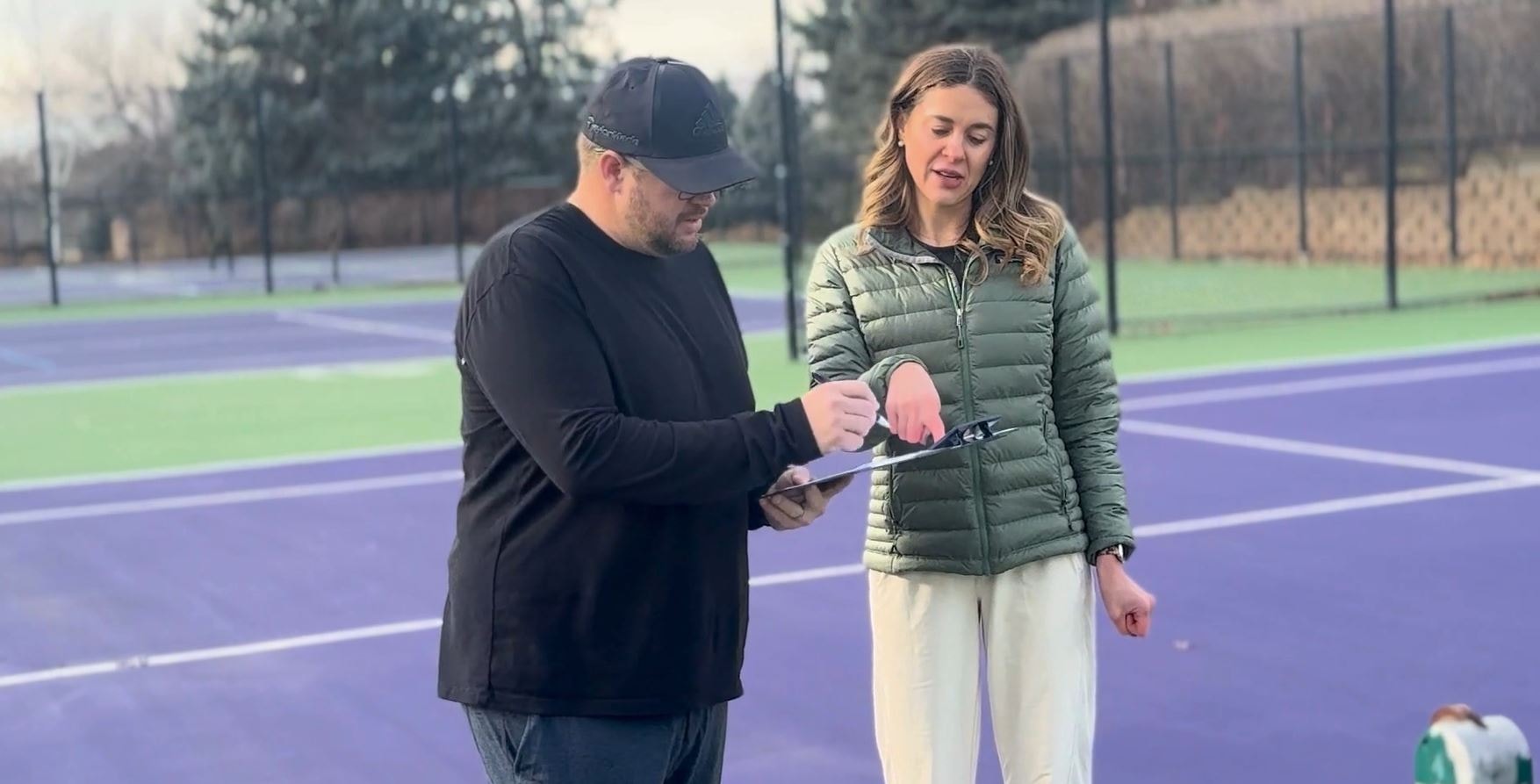
Before allocating capital dollars, verify base condition, evaluate drainage, map crack patterns, confirm slope and water movement, and determine if the court geometry is still intact. Without this step, you’re budgeting blind. A written assessment also gives you documentation for board meetings and capital planning discussions.
Step 2: Separate Cosmetic Wear from Structural Risk
Not all cracking is equal. Surface cracks from normal aging are manageable. Structural cracks that telegraph through the asphalt require a different approach entirely. Budget planning improves dramatically when you distinguish between cosmetic wear, system fatigue, and structural movement. Surface appearance alone is not enough to make that call.
Step 3: Build a 10-Year Forecast, Not a One-Year Patch
Smart schools plan in 10-year cycles. Maintenance in the early years, resurfacing before base damage occurs, base evaluation as courts age, and reconstruction planning only when the base genuinely requires it. When you forecast properly, you avoid emergency projects. And emergency projects always cost more.
Common Budget Planning Mistakes Schools Make
Treating Resurfacing as Cosmetic
Resurfacing protects the base. Delaying it allows water into the asphalt. Once asphalt degrades, resurfacing no longer solves the problem. What looked like a surface issue becomes a structural one.
Patching the Same Areas Repeatedly
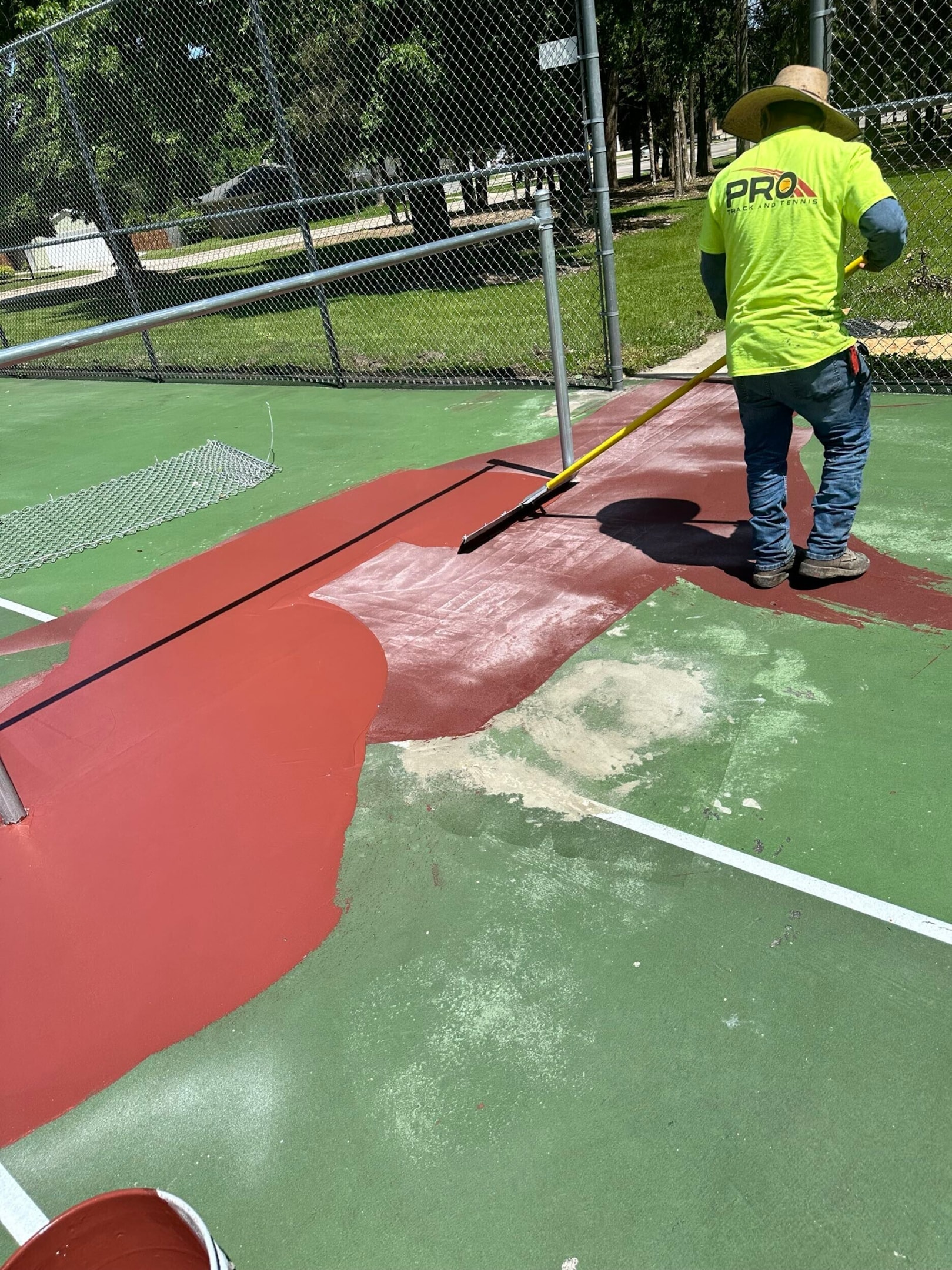
If cracks reappear in the same zones, the base is moving or drainage is compromised. Surface-only repair in those areas is temporary at best. Repeated patching is rarely cost-effective and often delays a diagnosis that would have saved money if caught earlier.
Hiring Non-Specialized Contractors
Tennis court construction is not general paving. Incorrect crack systems, improper acrylic mixing, or poor base prep can void warranties and accelerate failure. When evaluating contractors, look for ASBA membership and in-house installation crews. Contractors who sub out their work lose quality control the moment they leave the job. Pro Track & Tennis uses its own crews on every project for exactly that reason.
Planning Around Aesthetics Instead of Performance
Color changes do not solve structural issues. Budget decisions should always prioritize drainage first, base integrity second, and surface system third. That order matters.
Climate Considerations Athletic Directors Often Underestimate
A court in Arizona behaves differently than one in Minnesota. Freeze-thaw cycles expand cracks, stress asphalt joints, and accelerate base failure. High UV environments degrade acrylic binders and harden surfaces faster. Heavy rainfall regions expose poor drainage almost immediately.
Pro Track & Tennis works across 25+ states and has completed more than 1,000 court and track projects across a wide range of climates. As an ASBA member, Pro Track & Tennis builds to established industry standards regardless of region. Surface selection should match where you are. The wrong system in the wrong region shortens lifespan and creates exactly the kind of early resurfacing cycle that breaks facility budgets.
When to Resurface vs. When to Rebuild
Facility managers should look for patterns, not isolated issues.
Resurfacing is appropriate when:
- Cracks are manageable and not telegraphing through the asphalt
- The base feels firm and stable across the court
- Water drains properly after rain
- No widespread settlement is visible
Reconstruction becomes necessary when:
- Cracks are structural and widespread
- The court feels uneven or soft underfoot
- Water pools repeatedly for days after rain
- Crack repairs fail within a season or two
The most important decision is diagnosing correctly. And that diagnosis requires a site visit, not just a photo and a quote.
Integrating Tennis Court Planning Into Broader Athletic Facility Strategy
Tennis courts don’t exist in isolation. Smart schools coordinate court planning with track resurfacing cycles, lighting improvements, ADA compliance updates, and campus master planning. Bundling projects strategically often reduces mobilization costs and creates a stronger capital narrative for board approval.
It also prevents courts from being deferred repeatedly while other sports receive upgrades. A written multi-year plan with real cost options makes that conversation a lot easier.
Frequently Asked Questions
How often should school tennis courts be resurfaced?
Resurfacing frequency depends on climate, usage, and maintenance consistency. Courts in freeze-thaw climates or with high daily usage tend to need attention sooner than those in milder conditions with lighter use. A professional assessment can help determine where your courts are in their lifecycle.
What is the difference between resurfacing and reconstruction?
Resurfacing renews the surface layers while keeping the asphalt base intact. Reconstruction removes and replaces the structural layers from the ground up. The cost difference is substantial, and the deciding factor is almost always base condition.
Can we delay resurfacing another year?
Possibly, but only if base and drainage conditions have been verified by a professional. Delays without inspection increase risk. The later the project gets, the more likely it tips from a resurfacing scope into a reconstruction one.
How do we know if our base is failing?
Recurring cracks in the same locations, soft spots when walking the court, and standing water that doesn’t drain within 24 hours are all early indicators. A professional assessment confirms the condition and gives you something concrete to act on.
What should we look for in a contractor?
Look for an ASBA member, in-house installation crews (not subcontractors), written warranty coverage, and experience working across multiple states and climates. A reputable contractor will also provide a written assessment before quoting, not just a number over the phone.
Bottom Line: Budget Planning Is About Timing, Not Just Money
Tennis court budget planning for schools is less about finding funds and more about spending them at the right time. Resurface too early and you shorten your ROI. Resurface too late and you trigger reconstruction. The window in between is where good facility management lives.
Athletic directors who verify base condition, address drainage early, forecast ahead, and partner with specialized contractors consistently spend less over the life of their courts. The smartest move is knowing exactly what condition your courts are in today, before the next season forces a rushed decision.
Schedule a Free Assessment with Pro Track & Tennis
If your school is planning tennis court resurfacing, evaluating aging courts, or building long-term capital projections, start with a professional assessment. Our team will walk your courts, evaluate the base and drainage, and provide a written plan with realistic cost options for both resurfacing and reconstruction.
Pro Track & Tennis has completed 1,000+ court and track projects across 25+ states. ASBA member. In-house crews. Honest pricing.
Call 800-498-4395 or email info@protrackandtennis.com to request your assessment.