


Key Takeaways
- Grant funding can offset a meaningful portion of project costs, but only if you plan early and position the project correctly.
- Resurfacing projects get approved faster than full rebuilds because they’re easier to justify on cost and lifecycle grounds.
- Funding decisions are driven by safety, usage, and community impact, not aesthetics.
- Most successful projects combine multiple funding sources rather than relying on a single grant.
- The right project scope matters more than the funding source.
Why Most Facilities Wait Too Long, and Pay for It Later
Most municipalities don’t ignore their tennis courts because they want to. They ignore them because budgets are tight and other priorities keep moving ahead. But the cost of waiting stacks up quietly.
Cracks turn into trip hazards. Drainage issues compound. Surfaces lose playability. And what could have been a $20,000 resurfacing project turns into a $75,000 rebuild. That’s the part most funding conversations miss.
Grants aren’t just about reducing cost. They’re about controlling timing, getting ahead of failure instead of reacting to it. Funding is out there, but it’s competitive, and it rewards facilities that already know what they’re working with.
What Types of Municipal Tennis Court Funding Are Actually Available?
Federal and State Grant Programs
Programs like the Land and Water Conservation Fund (LWCF) are a common starting point. They typically require matching funds and favor projects tied to public recreation and community access. Cities, counties, and other public entities are generally eligible to apply. State-level programs follow a similar pattern, offering larger funding amounts with strong requirements around demonstrated community benefit. These aren’t quick wins. They’re part of a longer planning cycle with lead times that can stretch well over a year, which is why early project documentation matters so much.
Local Government and City Budget Allocations
This is where most projects actually get funded. Capital improvement plans, parks budgets, and bond measures frequently cover resurfacing, incremental upgrades, and multi-year improvements. A typical single-court resurfacing project runs around $20,000, which makes it easier to phase across budget cycles than a full reconstruction. That’s exactly why resurfacing shows up far more often than rebuilds in municipal planning.
USTA and Private Grant Opportunities
USTA funding programs are the most relevant source for tennis-specific projects. These programs tend to support resurfacing, new construction, and community access initiatives, with a particular focus on public facilities and youth programming. Facilities must generally be open to the public to qualify, and grant amounts vary based on project scope and category. Community foundations and corporate sponsorships can also contribute, but they typically work best as supplemental funding rather than a primary source. Stacking these on top of a city allocation or state grant is usually how projects reach their full budget.
For the most current USTA grant amounts, eligibility requirements, and application windows, visit the USTA website directly. Program details and funding levels change year to year.
Hybrid Funding: What Actually Works in Practice
Most successful projects don’t rely on a single funding source. They combine grants, city budget allocations, and phased project planning. A facility that approaches funding this way has far better odds than one waiting for a single grant to cover everything. Trying to fund a full project through one source usually leads to delays, reduced scope, or rejection.
This is also where having a documented assessment pays off. When you apply with a clear scope, realistic cost figures, and a phased plan, you’re not just asking for money. You’re showing reviewers that the project is manageable, well-thought-out, and ready to execute.
What Projects Actually Qualify for Tennis Court Grants?
Resurfacing vs. Reconstruction: What Gets Approved Faster
Resurfacing is easier to justify because it’s positioned as asset preservation. You’re extending the life of something that already exists, at a fraction of the cost of starting over. Reconstruction is a harder sell. It requires a stronger case built around structural failure, documented safety risks, or liability concerns.
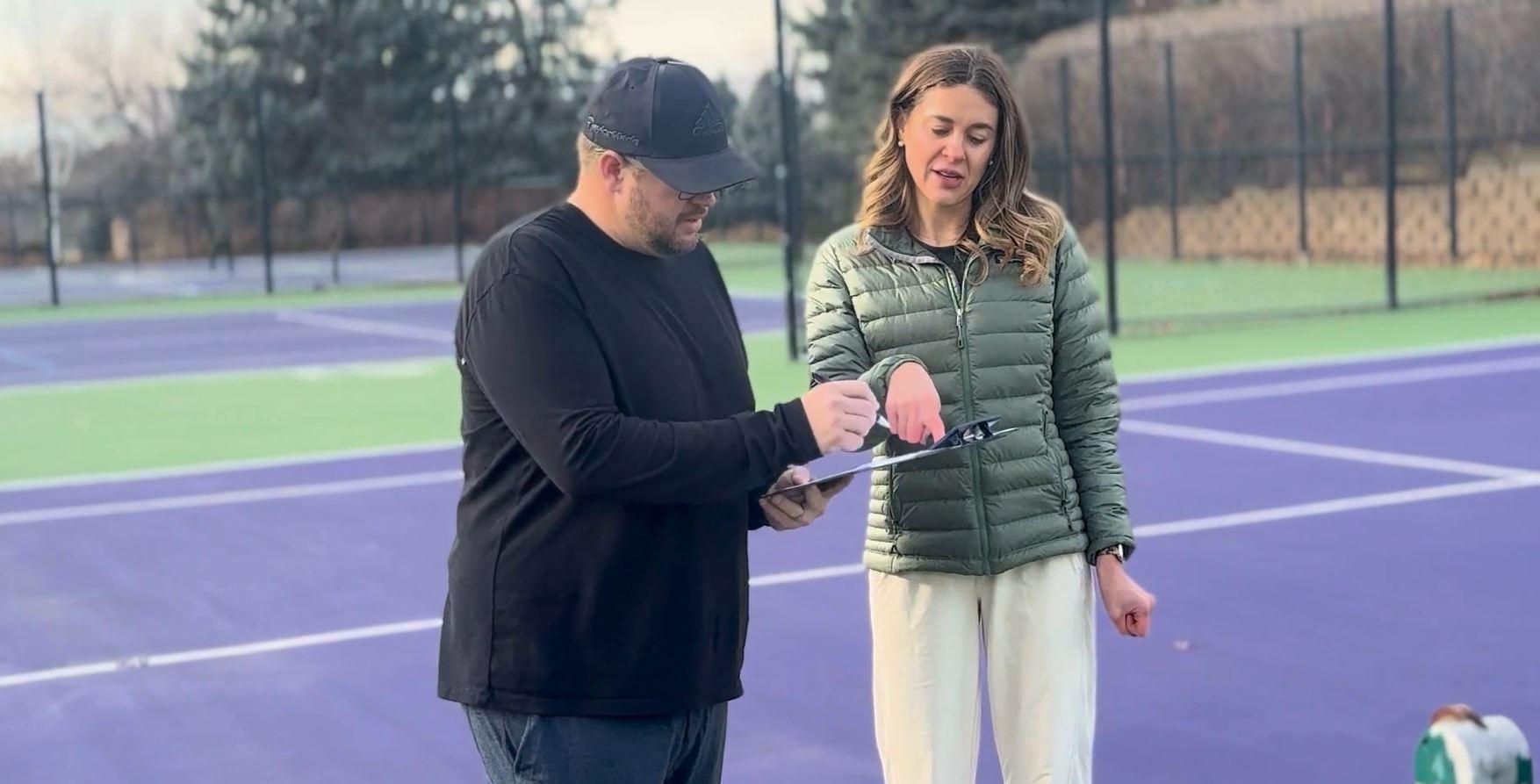
The honest question to ask before any funding conversation is whether the base is still sound. As Lance Laurent, President of Pro Track & Tennis, puts it: “Our niche is repairing existing courts and we’re really good at it. To be completely beyond repair, it would be a condition where the asphalt was really crumbling apart and there’s no way to prep it. It wouldn’t accept our coatings.” In practice, courts that appear too far gone are often candidates for resurfacing. That threshold matters because it directly determines which funding path makes sense.
Multi-Use Court Conversions and the Pickleball Advantage
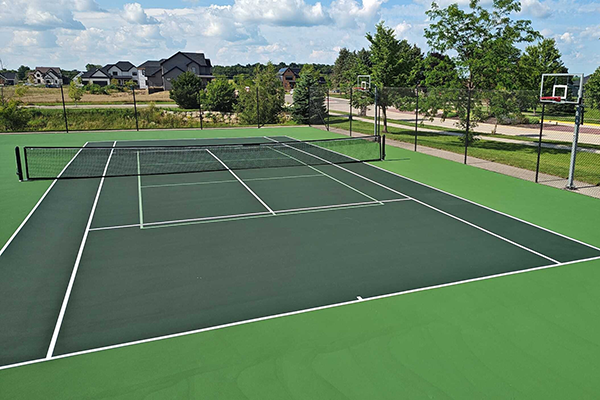
If you want to improve approval odds, adding pickleball to a court conversion is one of the strongest angles available right now. It increases usage, expands community access, and aligns with documented participation growth that funding reviewers respond to. A court that serves more people is easier to fund than one that serves fewer. This is a legitimate project enhancement, not a cosmetic upgrade.
Accessibility and ADA Improvements
Accessibility upgrades are often required by code, but they also strengthen funding applications because they directly address inclusivity and compliance risk. Reviewers look favorably on projects that include accessible pathways, court access points, seating, and circulation areas. Framing these as part of the overall scope, rather than add-ons, makes for a more complete and credible application.
Lighting, Drainage, and Safety Upgrades
These are easier to fund than cosmetic improvements because they connect directly to safety, usability, and long-term surface performance. A lighting upgrade or drainage correction is simple to justify on a cost-benefit basis. Courts with poor drainage fail faster and cost more to maintain over time. Documenting that relationship in an application is exactly the kind of lifecycle argument that moves reviewers.
How Court Condition Shapes Your Funding Strategy
Courts That Can Be Resurfaced
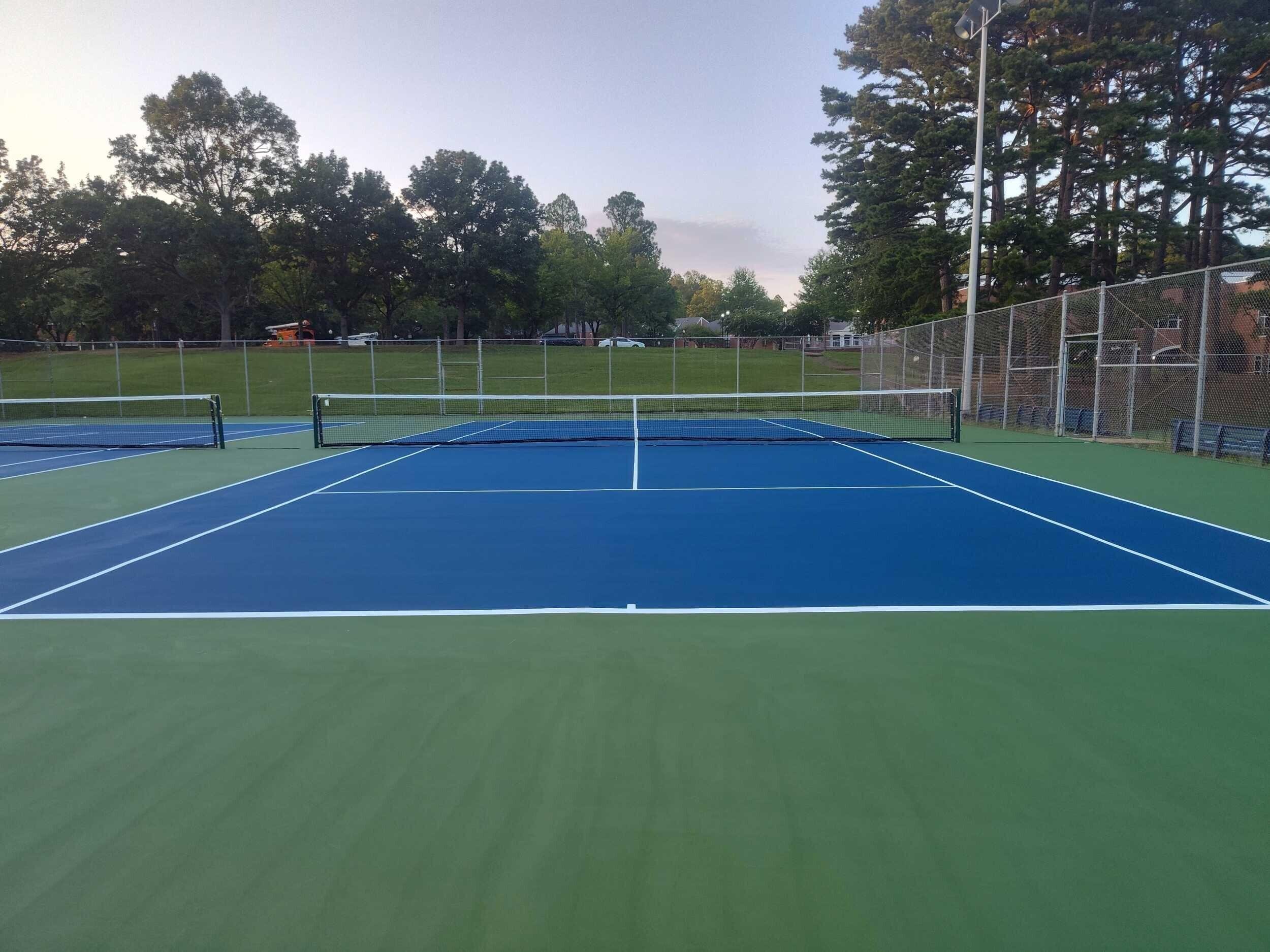
If the base is still stable and coatings will adhere, resurfacing is the right move. It’s the most cost-effective option, it’s faster to approve, and it gives the facility meaningful additional life without the cost or timeline of a full rebuild. Most courts fall into this category, even ones that look rough on the surface.
Courts That Require Structural Repair or Rebuild
Once you’re dealing with severe cracking that has reached through the asphalt layer, base failure, or unresolvable drainage issues, you’re no longer talking about resurfacing. Rebuild costs start around $75,000 for a single court, and the funding process becomes more involved because the justification needs to be stronger. Getting that documentation right early, including a professional condition assessment, makes the difference between a credible application and one that stalls.
The In-Between Scenario: Where Most Facilities Sit
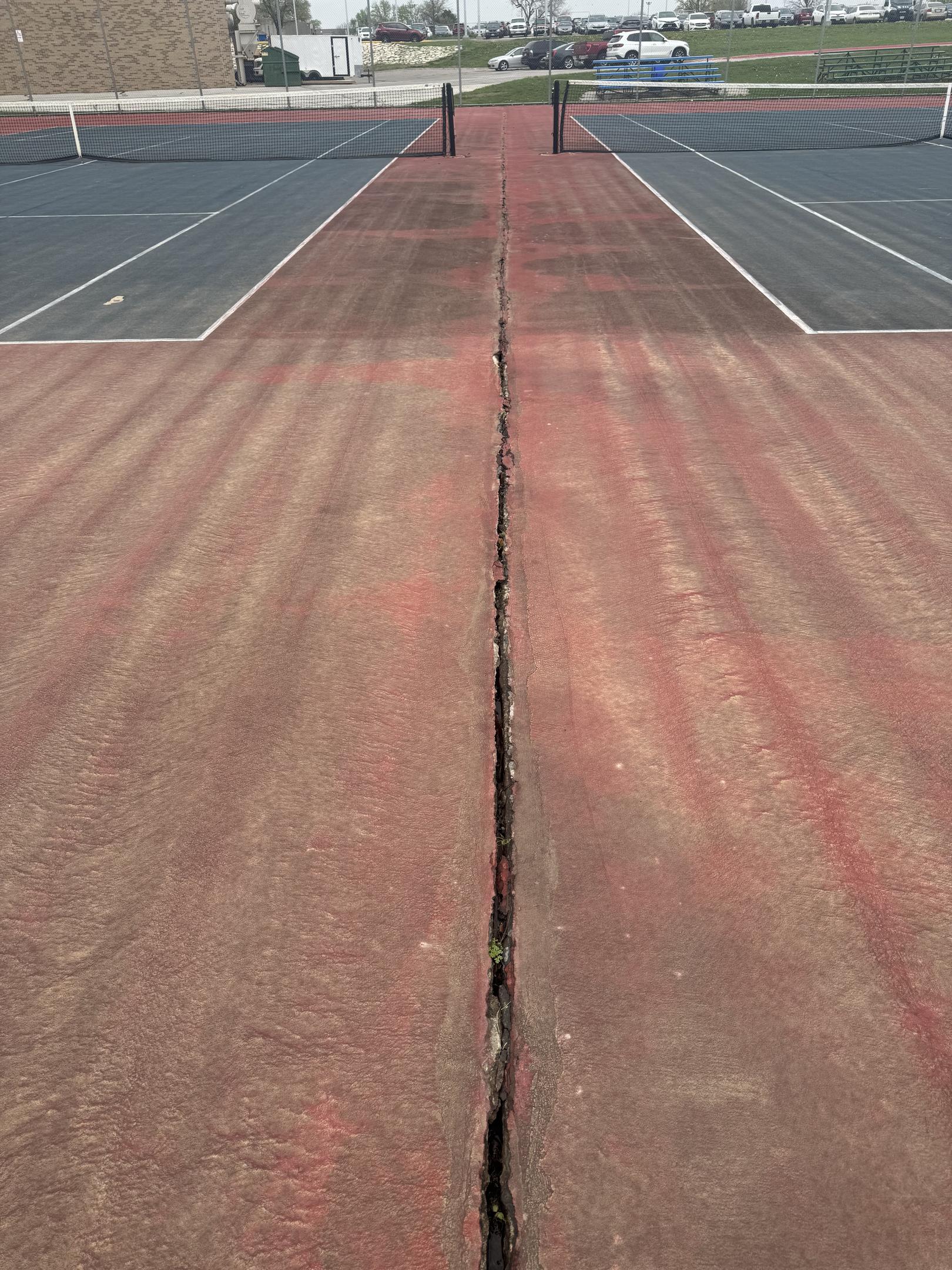
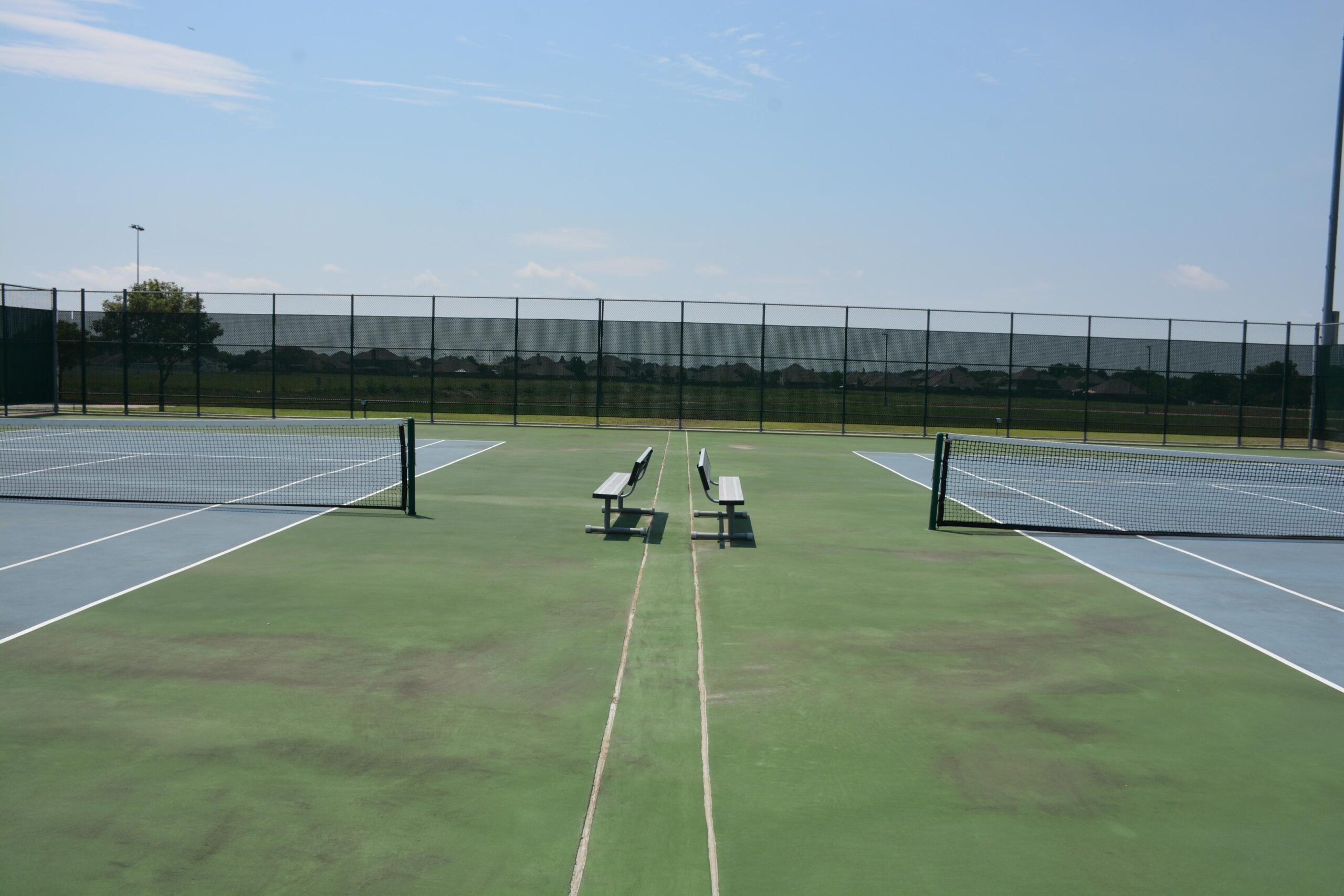
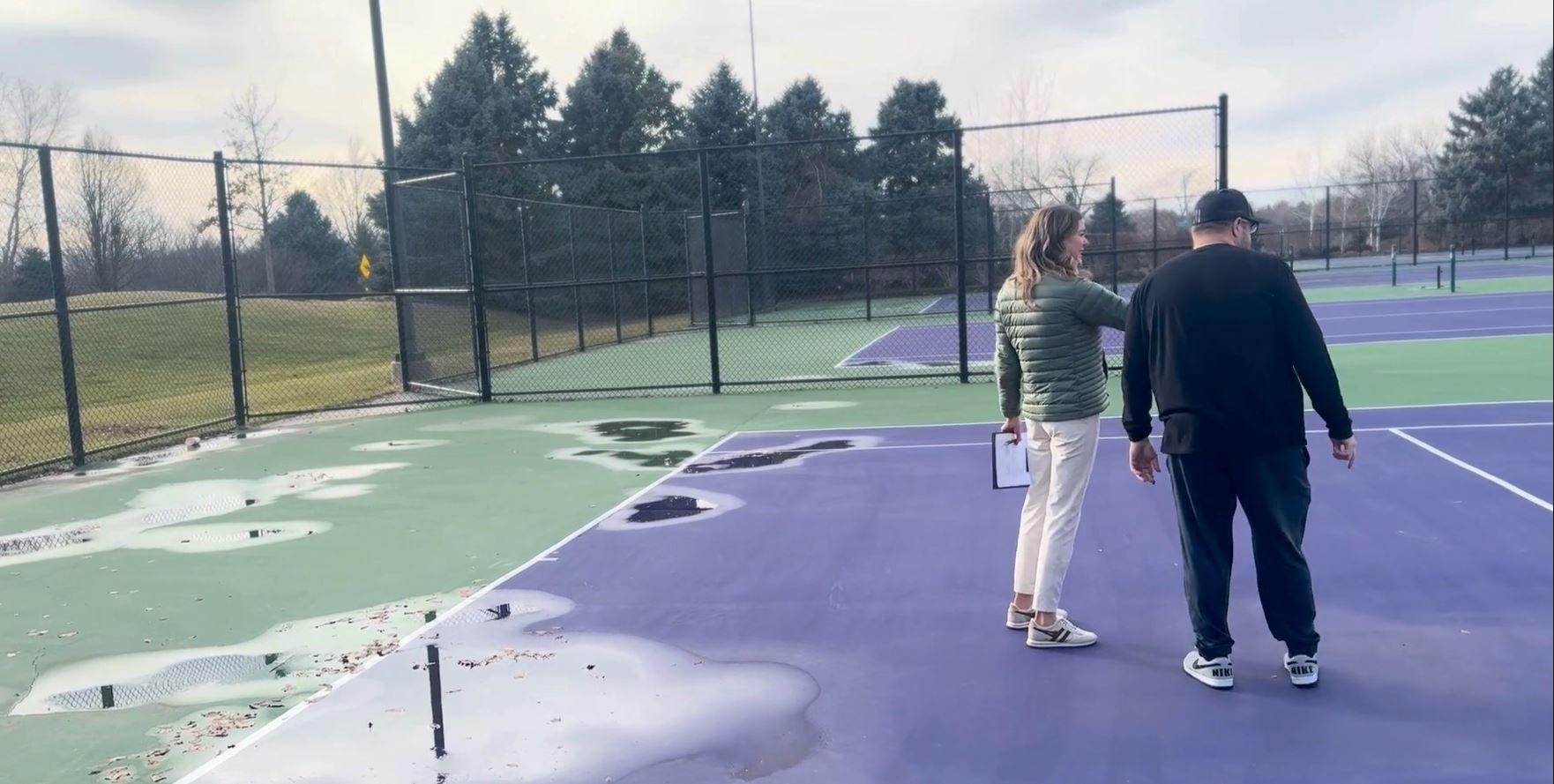
The reality for most municipal courts is that they’re neither in perfect shape nor completely failed. Heavy cracking, standing water in low spots, aging surfaces that still hold coatings. Technically, many of these can still be resurfaced, especially with a proper crack repair system. The real question isn’t whether you can fix it. It’s how long you need it to last and what your budget can realistically support right now.
What Grant Reviewers Actually Look For
Clear Community Impact
This is the first filter most reviewers apply. They want to see documented usage, youth and school access, and multi-sport functionality where applicable. A court that sits underused won’t attract funding. Applications that include usage data, program enrollment numbers, or evidence of unmet demand are the ones that move forward.
Cost Efficiency and Lifecycle Value
This is where resurfacing wins on paper. If you can demonstrate lower upfront cost, a realistic extended lifespan, and a maintenance plan that protects the investment, you’re in a much stronger position than a facility requesting a full rebuild when resurfacing is viable. Reviewers are making allocation decisions, and a project with better ROI per dollar is simply more competitive.
Safety and Liability Reduction
Cracks, pooling water, and uneven surfaces aren’t just maintenance issues. They’re documented liability risks, and facilities that clearly present that documentation have a stronger case. Trip hazards with photos, drainage failure reports, and surface degradation assessments all serve as supporting evidence that the project is a genuine safety need, not just a cosmetic request.
Realistic Project Scope and Budget
This is where a lot of applications fall apart. Overbuilt projects look inefficient. Under-scoped projects look unprepared. The strongest applications match the solution to the actual documented condition, use real cost figures, and present a plan that’s clearly executable within the proposed budget. Vague estimates don’t get approved. Specific, documented scopes do.
How to Position Your Tennis Court Project for Funding Approval
Frame It as Asset Preservation, Not Improvement
There’s a meaningful difference between “we want new courts” and “we need to protect the investment the community already made.” Grant programs fund the second framing. Resurfacing extends an existing asset. Crack repair prevents structural failure. Drainage improvements protect the base. Every element of the project should be framed around preservation and efficiency, not aesthetics.
Show Phased Planning
Breaking a project into phases is one of the most effective things you can do for approval odds. A realistic multi-phase plan shows that the facility understands the full scope of work, has thought through budget constraints, and isn’t asking for everything at once. Phase one might be resurfacing and crack repair. Phase two might include lighting or fencing improvements. Phase three might address longer-term reconstruction if needed. This aligns naturally with how grants and municipal budgets actually work.
Tie the Project to Participation
More users equals a stronger case. Any documentation of current usage, anticipated growth, school programs, community leagues, or pickleball demand directly strengthens the application. Funding bodies want to see that the investment will be used.
Use Real Numbers
This is where credibility comes from. Applications with specific, defensible cost figures, actual lifecycle comparisons, and documented cost-per-court estimates read as prepared and trustworthy. Applications with round numbers and vague estimates don’t. A professional assessment gives you those numbers before you apply, not during.
Common Mistakes That Kill Grant Applications
Asking for full reconstruction when resurfacing is still viable is one of the most common errors. Higher cost reduces approval odds, and reviewers will sometimes reject or reduce funding for projects where a less expensive option wasn’t adequately considered.
Ignoring drainage and base issues is another frequent problem. Funding bodies don’t want to pay for the same repair twice. An application that doesn’t address underlying drainage or structural issues signals that the project will fail prematurely, which makes it a harder investment to justify.
Treating the project as cosmetic is a fast path to rejection. New colors, updated logos, and aesthetic upgrades don’t get funded. Safety corrections, extended lifespan, and expanded access do.
Poor timing is probably the most common mistake of all. By the time courts have failed completely, options are limited, costs are higher, and funding timelines rarely align with the urgency of the situation. The facilities that get funded are the ones that plan ahead, not the ones that react to failure.
How Long Does the Funding Process Actually Take?
Most grant programs run on annual cycles, which means missing an application window puts you back a full year. From approval to completed construction, a realistic timeline runs six to eighteen months when you factor in approval periods, contractor scheduling, and weather constraints for surface work.
The facilities that navigate this well start the assessment and scoping process well before an application opens. They go into the process with documented condition reports, realistic budgets, and a phased plan. That preparation is what makes it possible to move quickly when a window opens.
Matching the Right Solution to Your Budget
Not every facility needs the same approach, and a funding strategy should reflect that.
For facilities focused on extending life within a tighter budget, crack repair and resurfacing is typically the right starting point. It preserves the existing asset, corrects surface issues, and extends usable life without the cost of a full rebuild. For facilities dealing with lighting or drainage problems in addition to surface wear, a mid-range project scope that combines resurfacing with targeted infrastructure upgrades usually offers the best balance of cost and performance. For facilities where the base has genuinely failed or where a long-term solution is the priority, reconstruction is the right answer, but that decision should be backed by a documented condition assessment, not assumed.
The point isn’t to pick the most expensive or the cheapest option. It’s to match the solution to what the court actually needs.
When It Makes Sense to Move Forward Without a Grant
Sometimes waiting for a grant costs more than acting. If safety risks are immediate, if surface damage is accelerating, or if the budget is already in place, holding off for a funding cycle you might not win isn’t always the right call. Grants are a useful tool for cost management. But they shouldn’t delay a decision that needs to happen now.
Funding Should Support the Right Decision, Not Drive It
The biggest mistake facilities make is starting with funding instead of condition. The right sequence is to understand what the court actually needs first, determine what lifespan you’re planning for, and then align funding to that plan. Trying to reverse-engineer a project around a grant program often leads to a mismatched scope and a weaker application.
Facilities that do this well get funded. Facilities that don’t usually spend another year waiting.
Get a Funding-Ready Assessment
If you’re planning a grant application or a capital improvement project, the first step isn’t the application. It’s understanding what you’re actually working with.
A proper on-site assessment should give you a clear condition evaluation, a resurface vs. rebuild recommendation backed by what the court will actually support, realistic cost ranges that hold up under scrutiny, and a documented scope that makes a funding application credible from the start.
Pro Track & Tennis provides free on-site assessments for municipalities and facility managers across 25+ states. As an ASBA member with 1,000+ completed court and track projects, we’ve helped facilities plan projects that get funded, not just submitted.
Call 402-761-1788 or email info@protrackandtennis.com to schedule your free assessment.