


Key Takeaways
- Budget before diagnosis is the most expensive mistake club managers make
- Timing is the biggest cost lever. Resurfacing at the right time is predictable and scalable. Waiting until reconstruction is required can multiply the cost several times over.
- Drainage and base condition determine whether your investment holds
- Country clubs are judged to a higher standard than public facilities, and members notice everything
- A proper assessment of cracks, drainage, and base stability should come before any budget conversation
Why Renovation Planning Is Where Country Clubs Lose Money
Most country clubs don’t lose money on bad contractors or overpriced materials. They lose it on timing and sequencing. Budget gets approved before anyone has looked closely at the courts. A surface fix gets purchased when a drainage correction was what was actually needed. And then two years later, the same courts are back on the agenda.
This guide is about avoiding that cycle. The decision framework is straightforward once you understand what’s actually driving deterioration, what each project type should cost, and where most budgets go wrong. If your courts are showing wear, the question isn’t whether to act. It’s what kind of action makes sense right now.
What “Renovation” Actually Means at a Country Club
Not every project needs a rebuild. But not every surface can be saved with a coat of acrylic either. The difference between the two is where most of the financial outcome gets decided.
Surface Refresh
Cleaning, new color coatings, line repainting. This is basic upkeep and works when the court is structurally sound. It maintains appearance and playability but doesn’t address anything underneath.
Resurfacing
This is where most clubs should be operating. Crack repair combined with a new acrylic system can extend court life significantly if the base is stable. Resurfacing done at the right time is cost-effective and predictable. Done too late, it stops working.
Structural Renovation
This is where projects often go over budget. If drainage or base issues haven’t been corrected, even a new surface will fail early. Structural work is the layer many boards try to skip, and pay for later when resurfacing doesn’t hold.
Full Reconstruction
Complete tear-out and rebuild. Necessary when the base has failed or drainage problems can’t be corrected any other way. This is not a decision to make based on surface appearance alone.
Step 1: Assess First, Budget Second
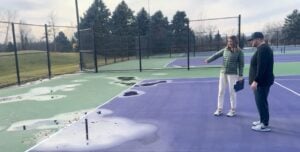
If there’s one thing to take from this guide, it’s this: don’t set a budget before you understand the problem. The two decisions are connected, but they have to happen in the right order.
A proper assessment should cover:
- Crack patterns. Are they isolated or recurring in the same spots?
- Drainage performance. How long does water sit after rain?
- Surface wear consistency. Are certain zones deteriorating faster than others?
- Base stability. Any soft spots, movement, or areas that feel different underfoot?
Skip this step, and the outcomes are predictable. You either overpay for a rebuild that wasn’t necessary, or you underinvest in a surface patch that fails inside two years. A real assessment gives you a clear path (repair, resurface, or rebuild) with actual reasons behind it, not guesswork.
Step 2: Understand What Members Are Actually Evaluating
Country club courts are held to a different standard than public facilities. Members aren’t just looking at whether the court is playable. They’re noticing color consistency, whether the ball bounces the same way across the whole surface, whether there’s visible patchwork or cracking, and whether the facility looks maintained.
The problem happens when renovation planning tries to meet those expectations with the wrong scope. A resurfacing job that addresses appearance without fixing the base underneath can make a court look great for a season. It doesn’t make the court play reliably for the next decade.
Board approval cycles make this worse. Photos of a clean, freshly coated court tend to close budget discussions. But what matters to members over time is consistent performance, not how the court looked at ribbon-cutting. Planning that accounts for both, appearance and longevity, is what actually protects your facility’s reputation with members.
Step 3: Timing Is the Biggest Cost Lever
Most courts should be resurfaced on a regular cycle based on usage and climate. The window where resurfacing is both predictable and cost-effective is real, but it closes.
Here’s what changes when clubs wait too long:
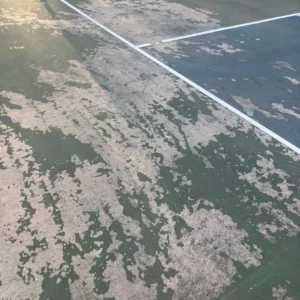
- Water starts working its way into the base
- Cracks deepen and spread instead of staying isolated
- Surface patches stop holding because the movement underneath has become too significant
That’s when a resurfacing project becomes a reconstruction at several times the cost. The deterioration doesn’t announce itself clearly. Courts give years of warning in the form of cracks, water pooling, and surface wear patterns, but those signs often get managed cosmetically until the window for a cost-effective fix is gone.
The most expensive renovation mistake clubs make isn’t choosing the wrong contractor or the wrong surface system. It’s waiting until there are no good options left.
Step 4: Drainage and Base Conditions Drive Everything
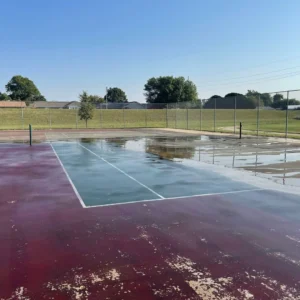
If there’s one consistent cause of early court failure, it’s water. Drainage issues left unaddressed will compromise any surface system, regardless of quality or price.
What to Look For
- Standing water after rain, especially in the same locations repeatedly
- Birdbaths, the low spots where water pools and sits, indicating planarity problems
- Runoff that goes toward the court rather than away from it
- Moisture underneath the surface, which can cause bubbling and delamination
The rule that should drive every renovation decision: fix drainage first, then resurface. Putting new acrylic over drainage problems doesn’t solve anything. It just resets the clock on the same failure.
Step 5: Choosing the Right Surface System
Surface selection matters, but only after the base is confirmed to be in good condition. The best surface system on a compromised base is still a bad investment.
Acrylic Systems
Most common for country clubs. Cost-effective, reliable, and proven across a wide range of climates. Good balance of performance and durability when the base is stable.
Cushion Systems
Add comfort layers that reduce joint strain, which matters for members who play frequently. Higher cost and require a very stable base to perform properly. This is a program decision for player experience, not a cosmetic upgrade.
Clay Courts
A premium playing experience with a different maintenance model entirely. Clay courts require consistent watering, rolling, and material replenishment, which is a meaningful operational commitment. They are not interchangeable with hard court systems and require different infrastructure.
The right choice depends on usage volume, climate, your maintenance team’s capability, and what members actually expect. Pro Track & Tennis works primarily with hard court systems. If you’re considering clay, the contractor conversation and the operational planning conversation need to happen simultaneously.
Step 6: What Country Club Renovation Actually Costs
Cost varies significantly based on project type, scope, and site conditions. The framework below is a starting point. Every country club project should be quoted based on a real assessment of your courts.
Resurfacing
Standard single-court resurfacing starts at $20,000 per court for projects without significant prep work. Volume discounts are typically available when multiple courts are done in one project. Cushion system additions raise the per-court cost. Resurfacing assumes the base is stable. If drainage or base corrections are needed, scope moves into structural renovation territory and pricing changes accordingly.
Structural Renovation
When base or drainage corrections are required alongside the surface work, costs increase meaningfully above resurfacing alone. The variation here depends entirely on the extent of base correction required, which is why a written assessment matters before any budget commitment.
Full Reconstruction
A complete tear-out and rebuild costs several times what a properly-timed resurfacing would have cost. This is the budget outcome timing-driven planning is meant to avoid.
What drives cost beyond project type: the number of courts, severity of base issues, drainage correction complexity, surface system selected, and site access and logistics.
The smarter budget approach is a multi-year plan rather than one-off projects approved in response to visible deterioration. Clubs that plan renovations on a regular cycle avoid emergency capital requests, keep resurfacing costs in the predictable range, and don’t end up with the whole court inventory going bad at once.
Step 7: Phasing Work to Minimize Disruption
Country clubs can’t shut down their court inventory completely, and they don’t need to. Most renovation work can be staged so that some courts remain playable throughout the project.
Effective phasing means renovating courts in groups, keeping enough inventory available for members during active work, and scheduling around peak seasons. For resurfacing, most court groups can be completed in about a week to just under two weeks depending on scope, weather, and crack conditions. Larger structural projects take longer.
The key to making phasing work for members is communication. If members understand the schedule and why it’s structured that way, disruption is manageable. If courts just start going offline without explanation, that’s when complaints surface.
Step 8: The Most Expensive Mistakes in Club Renovation Planning
These are the patterns that consistently cost clubs more than they should spend:
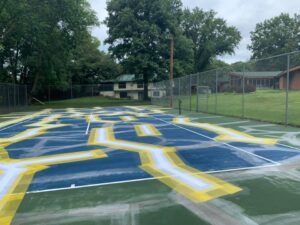
Treating resurfacing as purely cosmetic. New surface doesn’t fix a drainage problem. It covers it temporarily, and then it fails again, usually faster.
Skipping the assessment. Going straight from visible problem to budget conversation means you’re probably solving the wrong thing.
Waiting too long. The cost difference between acting during the resurfacing window and waiting until reconstruction is required is significant, often several times the cost of timely resurfacing.
Choosing lowest bid over expertise. A contractor who bids low by skipping base or drainage corrections isn’t saving you money. They’re deferring cost.
Step 9: What to Look for in a Contractor
The right contractor for a country club project doesn’t just install surfaces. They diagnose the underlying condition and explain what they find. That distinction matters a lot at the assessment stage.
For a country club specifically, relevant questions to ask any contractor:
- Do you use your own crews or subcontract the work? In-house crews mean more consistent quality control and accountability.
- What’s causing the problem underneath, not just what’s visible on the surface?
- How long will this solution realistically last, and under what conditions?
- What does your process look like if issues come back?
Pro Track & Tennis uses in-house crews across all projects.
“We use our own crews. Once you start subbing stuff out, you lose control.”
Lance Laurent, President, Pro Track & Tennis
Pro Track & Tennis has completed 1,000+ court and track projects across 25+ states and is an ASBA member. If you want to know what that means for how a project gets managed, ask us directly.

Screenshot
Step 10: Renovation vs Rebuild, Making the Right Call
This is where most renovation budgets are won or lost. Getting this decision wrong in either direction is expensive. Overbuild a court that only needed resurfacing, or resurface a court that needed structural work, and you’ll be back in the same conversation sooner than you should be.
Renovation Makes Sense When
- The base is stable with no signs of movement
- Drainage is functioning correctly
- Issues are surface-level, including cracks that can be properly repaired and wear that can be addressed with a new coating system
Rebuild Is Required When
- Water intrusion is ongoing and drainage can’t be corrected without structural intervention
- The base has failed or shows significant movement
- Surface patches keep failing in the same locations, a sign the problem is below the surface
Most clubs that get this wrong aren’t working with bad information. They’re making decisions based on what they can see rather than what’s underneath. A professional assessment resolves this. It’s the difference between spending money on the right fix and spending money twice.

Frequently Asked Questions
How often should courts be resurfaced?
Resurfacing frequency depends on usage volume, climate, and maintenance history. Your contractor should be able to give you a recommendation based on actual court condition rather than a fixed calendar.
What’s the difference between resurfacing and renovation?
Resurfacing is a surface-level project, meaning crack repair plus a new acrylic system. Renovation may include base corrections and drainage work before any new surface goes down.
How long does renovation take?
Resurfacing typically takes about a week to just under two weeks per group of courts depending on scope and conditions. Structural work takes longer and should be scoped with your contractor based on what the assessment finds.
Can we keep courts open during work?
Yes. Phasing allows clubs to keep part of their inventory playable throughout the project. This requires planning the sequence in advance.
How do we know if we need a rebuild?
Recurring cracks in the same locations, standing water after rain, and base movement are the strongest indicators. A professional assessment confirms it. Don’t try to make this call from a visual inspection alone.
Bottom Line: Renovation Planning Is About Timing and Accuracy
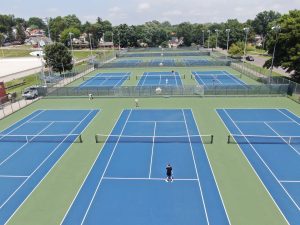
Courts don’t fail overnight. They give you years of warning in the form of cracks, water pooling, and uneven wear patterns. The clubs that manage renovation costs well are the ones that take those signals seriously before the resurfacing window closes.
The difference between a smart capital investment and a budget overrun usually comes down to three things: diagnosing the actual problem before budgeting, acting at the right point in the court’s lifecycle, and fixing what’s underneath rather than just what’s visible.
If you’re not sure which category your courts fall into, that’s exactly what a site assessment is for. Pro Track & Tennis offers assessments to help facility managers get a clear picture before any budget conversation happens.
Call us at 402-761-1788 or email info@protrackandtennis.com to set up an assessment. We serve facilities across 25+ states and can usually give you a clear picture of what your courts actually need.