Key Takeaways
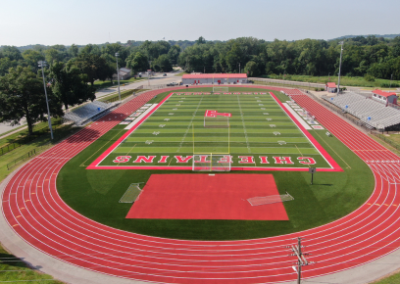
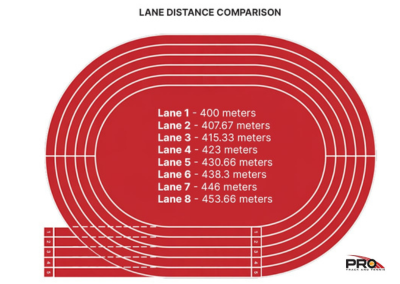
A standard high school outdoor track measures 400 meters in Lane 1, and most U.S. high schools follow this format.
Typical high school tracks have 6 to 8 lanes, each about 1.22 meters (4 feet) wide, usually built around a football or soccer field.
Some schools use 300 m or other non-standard tracks due to space or budget limits, which affects meet ...
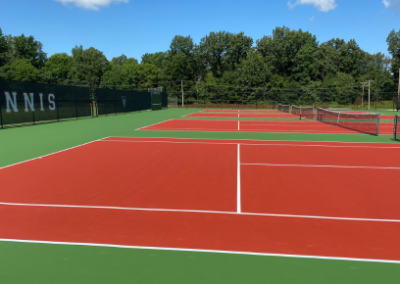
Once your tennis court starts showing signs of wear, it’s time to start thinking about resurfacing. Applying a fresh, even coating and repairing surface damage helps to restore and support the court’s functionality, safety, and appearance.
Pricing note: figures below are indicative. Final costs depend on base condition, crack systems (for example ARMOR), primer choice, number of ...
Key Takeaways
Water intrusion and base movement cause most track failures, not surface wear
Early intervention through routine inspections protects your investment and extends usable life
Drainage problems must be fixed before any surface work
Planned maintenance costs a fraction of emergency repairs or premature rebuilds
Knowing when to repair, ...
Most people assume every running track is identical, a simple oval where one lap equals a quarter mile. In reality, the length and geometry of a track vary more than you might expect. The familiar 400-meter oval is the global standard, but many schools, indoor venues, and land-restricted facilities rely on alternative layouts that change how far each lap measures and how the track performs ...
When a running track fails early, it is almost never the fault of the top coating alone. In nearly every problem project, the real issue lives underneath in the base and drainage. If those are wrong, no surfacing system in the world will save it.
For a facility manager, that is the key idea. A running track is not just a red or orange surface for sprinters. It is a civil construction ...
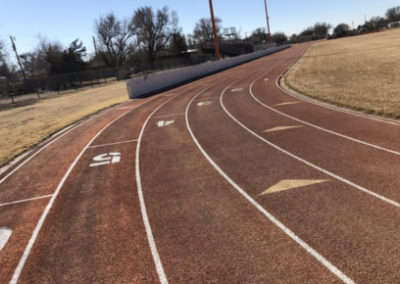
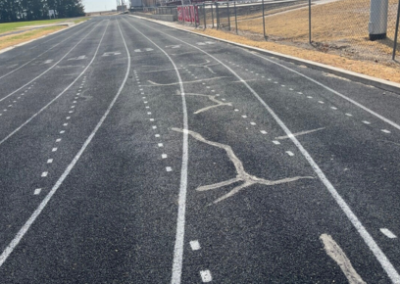
Small cracks, soft spots, and standing water might look like minor maintenance issues, but on a running track they are early warnings of far bigger problems. A hairline fissure in lane four could be a minor repair, or the first sign that water has reached the asphalt base, putting you on a path toward complete replacement.
For facility managers juggling tight budgets and liability ...