


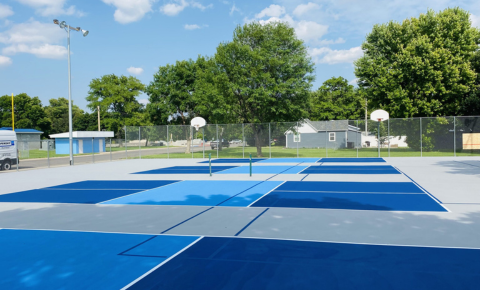
A pickleball tennis court conversion is one of the most cost-effective facility upgrades you can make right now. If your tennis courts are underused and pickleball demand is growing at your facility, a conversion is worth a serious look. One tennis court can support multiple pickleball courts. The process is faster and less expensive than most facility managers expect. And when it’s done right, it extends the useful life of your existing surface instead of letting it sit idle.
This guide covers what a tennis to pickleball court conversion actually involves, what affects the cost, and what to expect from start to finish.
Pickleball is a great fit for school physical education curricula, and its programs can be tailored specifically for elementary schools, ensuring young children benefit from age-appropriate instruction and activities.
Once enjoyed mainly by older generations, pickleball is now popular among students of all ages.
Organizations like USA Pickleball support these efforts by providing resources and funding to schools and colleges interested in starting or expanding pickleball programs.
In this article we’ll dive deeper into the benefits of pickleball for schools, and look at the available options for bringing pickleball into your program.
What “Conversion” Actually Means
Conversion can mean a few different things depending on what you want your courts to do.
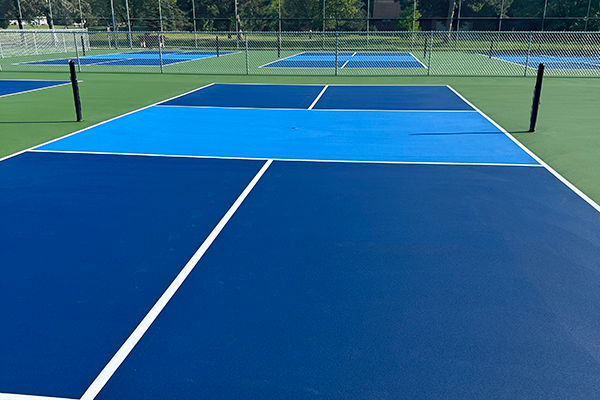
Overlay (tennis stays active): Pickleball lines are added to your existing tennis surface using a contrasting color. Both sports remain playable on the same court. This is the most common approach for schools and parks that want to serve both player groups without losing tennis programming.
Dedicated pickleball conversion: The tennis surface is repainted and restriped exclusively for pickleball. Net posts are adjusted or replaced. This is the right call when tennis usage has dropped off and you want to maximize pickleball court count.
Surface + conversion: If the existing court has cracks, color fade, or drainage issues, it makes sense to resurface at the same time you convert. You get a fresh acrylic system and accurate new lines in the same project window, rather than patching twice.
Most facilities land on the overlay approach. It’s practical, cost-effective, and lets you respond to whatever sport is drawing more players at any given time.
🏆 Check out our project gallery
Get in touch with us for a free on-site assessment, project plan, and quote.
How Many Pickleball Courts Fit on a Tennis Court?
A standard tennis court (78′ x 36′) can accommodate the following configurations:
One pickleball court: Placed center court, using the existing tennis net lowered to regulation pickleball height (34″ at center). Simple, minimal disruption, works well for low-demand locations.
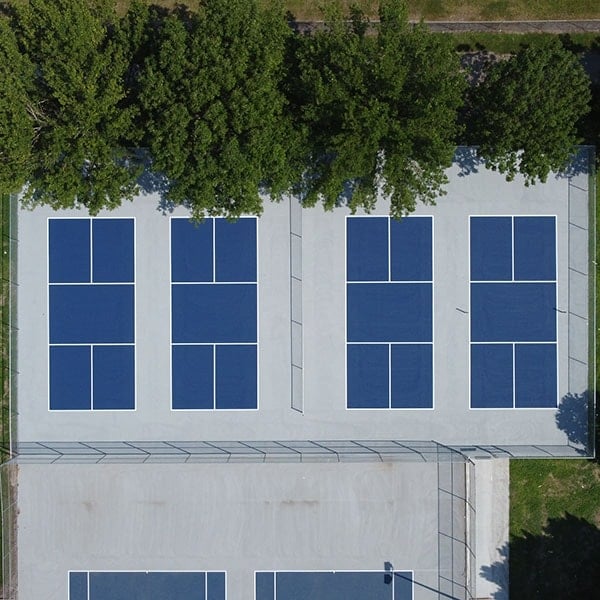
Two pickleball courts: Placed side by side, running across the width of the tennis court. Each uses a portable or dedicated net. Most parks and schools that want active pickleball programming use this layout.
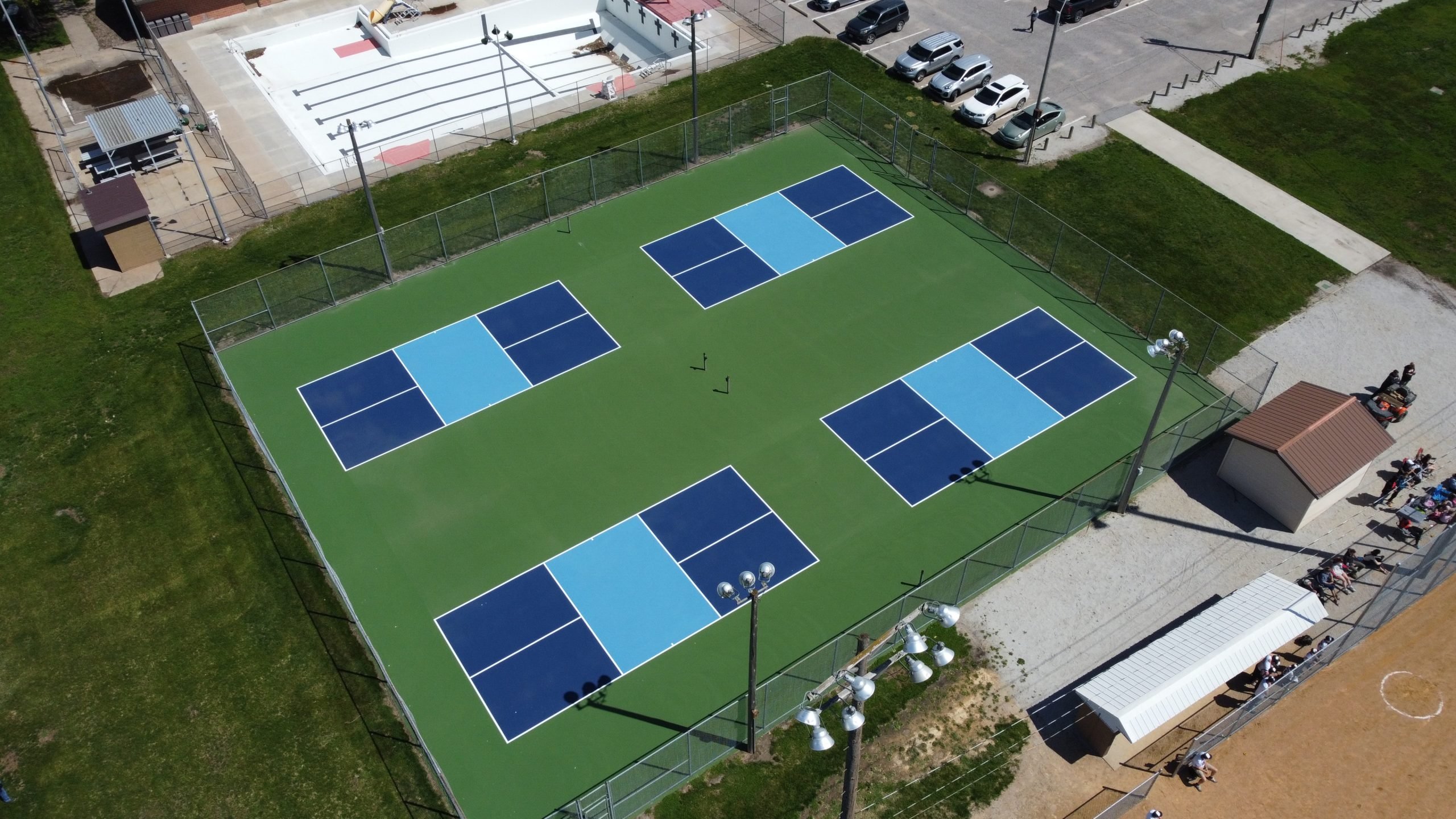
Four pickleball courts: The full conversion. Four courts fit by dividing the tennis surface into quadrants. Requires portable nets or permanent post installation. Best for dedicated pickleball facilities or high-demand recreational sites.
The right configuration depends on your available space, how many players you’re trying to accommodate, and whether you want to preserve tennis. Most conversions we handle land at two or four courts.
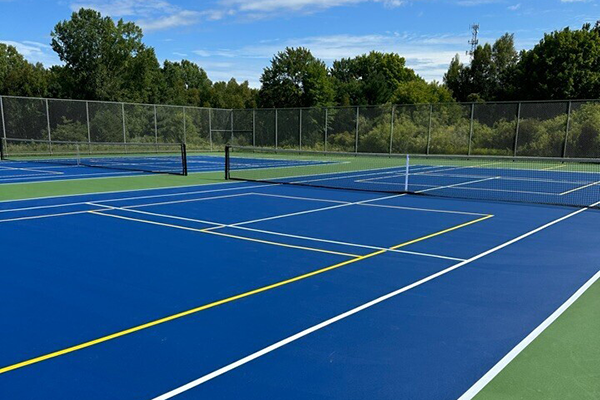
👉 Want to see what’s possible? Contact us for a free on-site assessment to evaluate your conversion options and get expert recommendations.
What Affects the Cost
Conversion pricing varies based on three things: what the surface needs before conversion, what layout you’re going with, and whether you need net infrastructure.
Surface condition is the biggest variable. If your court is in good shape, you’re looking primarily at line installation and color coating. If there are cracks, you’ll want to address those before the new lines go down. Adding ARMOR crack repair runs $20-22 per linear foot. Ignoring cracks and painting over them is a short-term fix that costs more to correct later.
Line complexity adds time. A simple two-court overlay with a single accent color is straightforward. Four courts with color-coded zones for multiple user groups takes more prep and application time.
Net infrastructure. If you’re keeping the tennis net in place and using portable pickleball nets, costs are minimal. Permanent net post installation requires concrete work and adds to the project scope.
Resurfacing. If the court needs a new acrylic system before conversion, that’s a separate line item. Most conversions on courts in decent condition don’t require a full resurface, but if the surface is showing significant wear, combining it into one project is more efficient than scheduling two separate visits.
Get a site assessment before budgeting. Courts that look similar on the surface can have very different needs underneath.
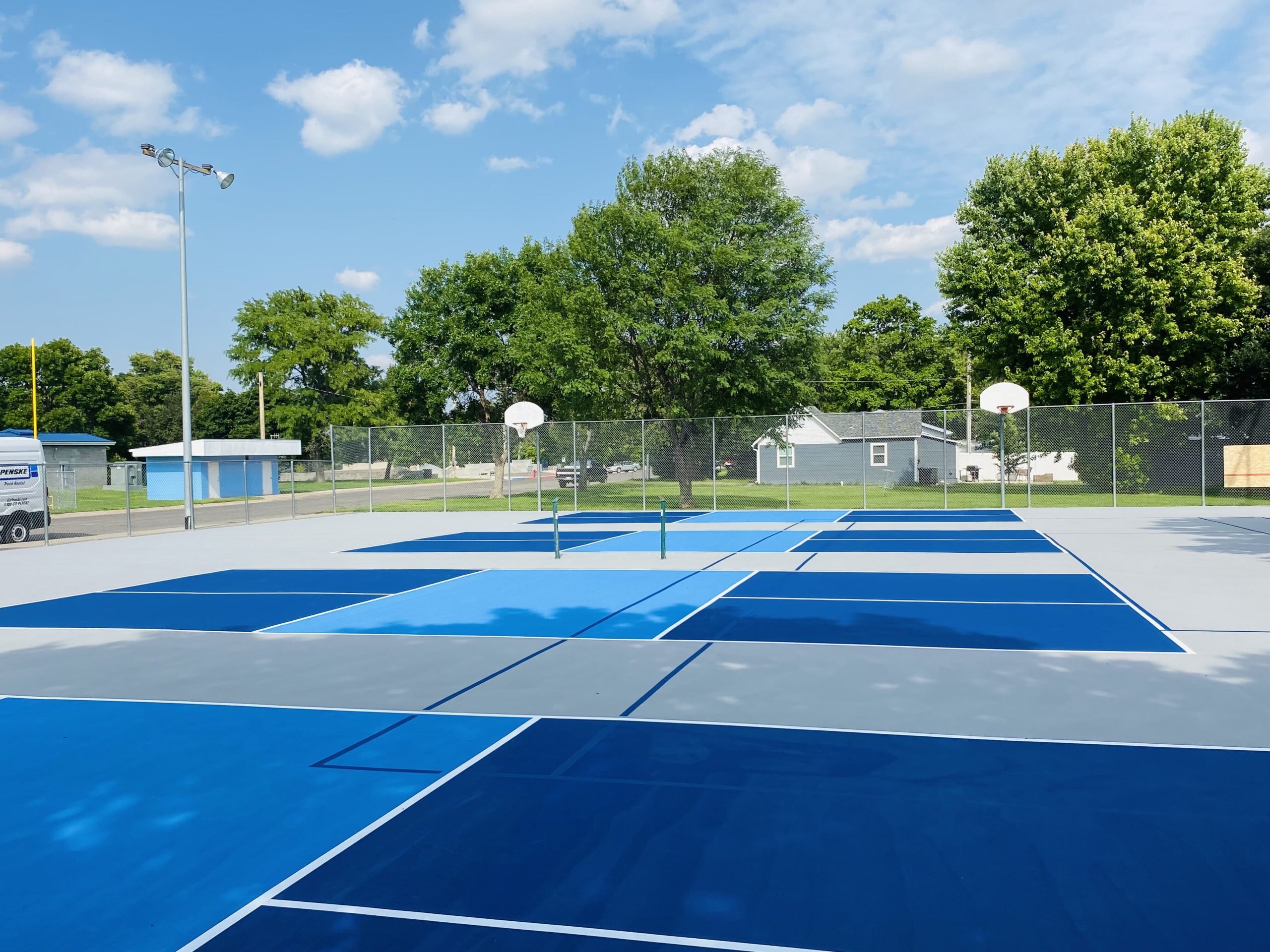
👉 See how pickleball could look at your school
The Conversion Process
Here’s what a typical project looks like from inquiry to finished courts.
Site assessment. A contractor walks the court, checks surface condition, identifies crack patterns, reviews drainage, and confirms dimensions. This is where the scope gets defined. Pro Track & Tennis provides free assessments and can usually give you a clear picture of what your courts actually need before any budget conversation happens.
Scope and proposal. Based on the assessment, you’ll get a proposal that covers layout, color options, crack repair if needed, net requirements, and timeline. For schools and parks, we coordinate around your schedule so courts aren’t out of service during peak programming.
Surface prep. Cleaning, crack repair if required, any patching. This is the step that determines how long the new lines hold. Skipping prep to save money is the most common reason conversions don’t last.
Color coating and line application. New acrylic coatings go down first. Lines are applied with precision striping equipment. Court boundaries, kitchen lines, service boxes, and centerlines are all marked to USA Pickleball specifications.
Net setup. Nets are adjusted, portable systems are positioned, or permanent posts are installed depending on the layout.
Most court conversions are completed in 5-10 days, weather permitting. Projects that include resurfacing or permanent net post installation may run longer depending on scope.
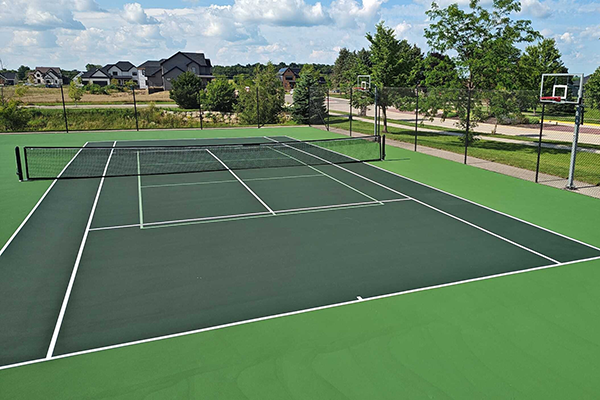
👉 Contact us to see what’s possible for your courts!
What to Look for in a Contractor
Not every contractor who resurfaces tennis courts has done a lot of pickleball conversion work. A few things worth asking:
Do they handle the full scope in-house? Subcontracting line work to a separate crew adds coordination risk. As Lance Laurent, President of Pro Track & Tennis, puts it: “We use our own crews. Once you start subbing stuff out, you lose control.” Look for contractors who own the project from surface prep through final striping.
Are they ASBA members? The American Sports Builders Association sets professional standards for court construction and resurfacing. ASBA membership signals that a contractor is operating within a defined industry standard.
Do they know pickleball specifications? USA Pickleball has specific dimensional requirements for court layouts. Lines that don’t meet spec create problems for players and may require rework.
What’s the warranty? Ask specifically what’s covered, for how long, and what conditions apply.
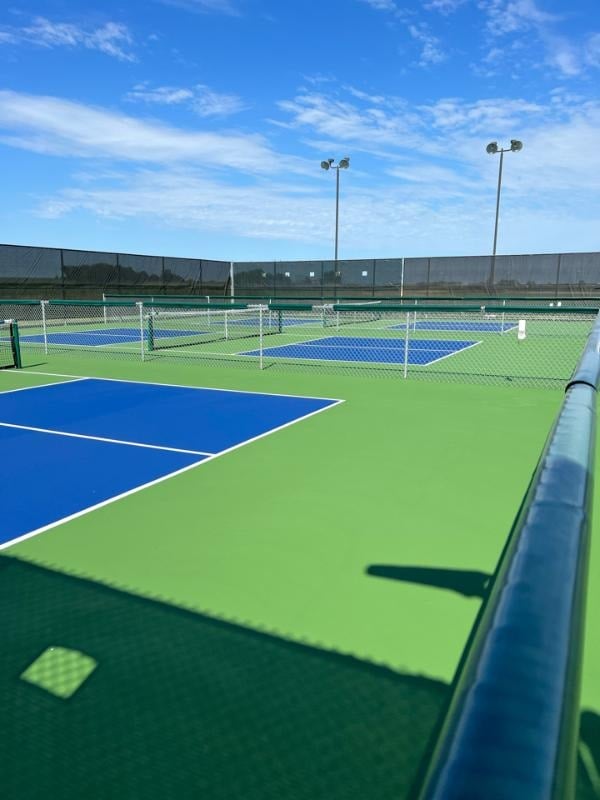
👉 Get started with a free on-site assessment – we’ll come to you!
Tennis + Pickleball Overlay: The Practical Approach
For most facilities managing multiple courts and multiple sports, the overlay is the right starting point. It doesn’t require a full commitment to one sport over the other. It lets you test pickleball demand before making infrastructure changes. And it’s the lowest-cost way to expand your offering without new construction.
The key to a functional overlay is color contrast. When tennis and pickleball lines share the same surface, players need to be able to distinguish them quickly. A good contractor will use color combinations that minimize confusion and match your facility’s branding if needed. Pro Track & Tennis offers 144 color options through our Nova Sports partnership.
Ready to Evaluate Your Courts?
If pickleball demand is growing at your facility and your tennis courts have available capacity, a conversion is worth evaluating. The site assessment is the right starting point. It costs nothing and gives you a clear scope before any budget decisions get made.
Pro Track & Tennis is an ASBA member contractor with 1,000+ completed court and track projects across 25+ states. Our in-house crews handle the full project scope, from surface assessment through final striping.
Call us at 402-761-1788, email info@protrackandtennis.com, or request a free assessment and we’ll come to you.