
Running Track Resurfacing
Running Track Construction: What It Really Takes to Build It Right (and Keep It Performing)
Updated on
·
13 min read

Published by
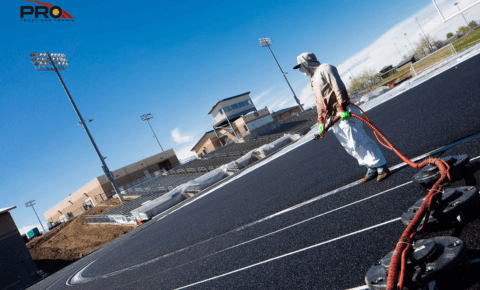
Key Takeaways
Early track failures almost always start in the base and drainage, not the surface.
A typical high school track costs $400,000 to $800,000 or more to build, with site conditions and the surfacing system moving the number most.
Let the asphalt base cure fully before surfacing. Rushing it causes blisters and delamination a few seasons later.
Latex systems cost less and suit limited budgets; polyurethane and sandwich systems last longer and suit high-use and competition facilities.
With maintenance coatings every five to seven years, a new mat system can perform for upwards of 20 years.
When a running track fails early, it is almost never the fault of the top coating alone. In nearly every problem project, the real issue lives underneath in the base and drainage. If those are wrong, no surfacing system in the world will save it.
For a facility manager, that is the key idea. A running track is not just a red or orange surface for sprinters. It is a civil construction project that has to manage water, movement, and weather for years to come. For a typical high school track, you are looking at roughly $400,000 to $800,000 for full construction, with timelines running 8 to 12 weeks from site prep to finished lanes.
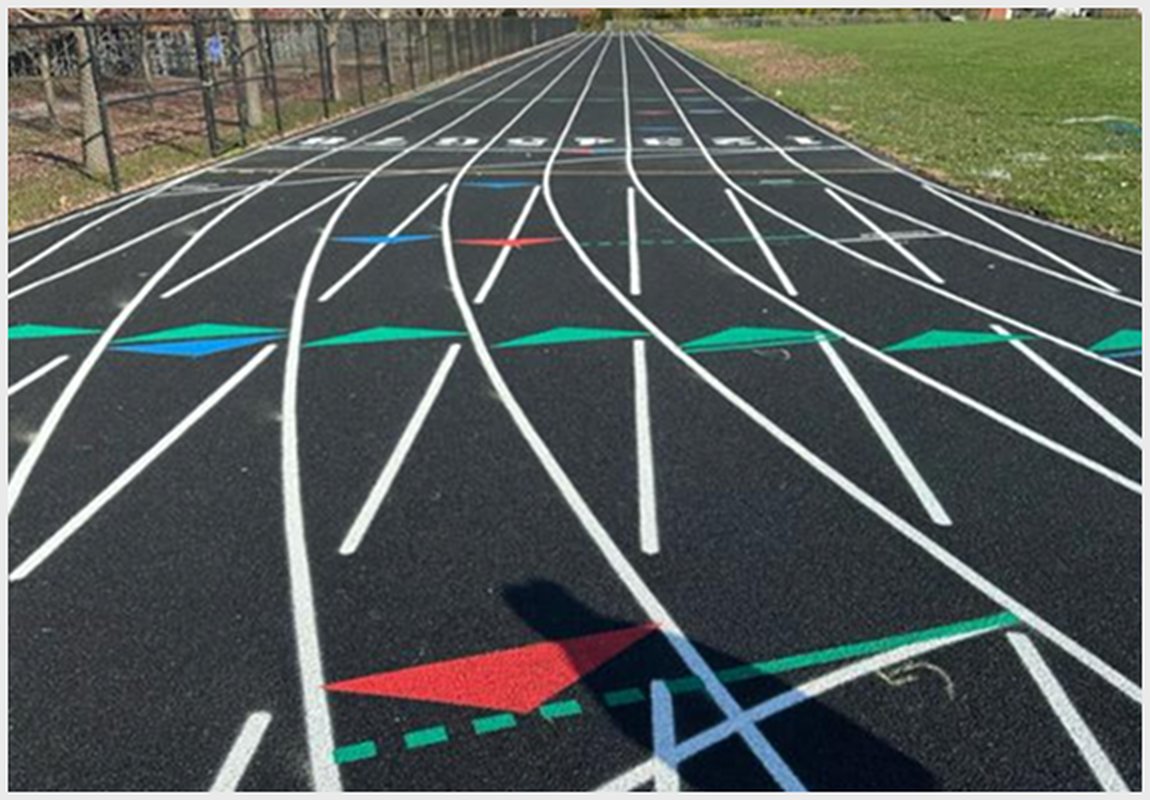
Who We Are and How We Look at Tracks
Pro Track & Tennis has completed 1,000+ projects across 25+ states. Most of that work is for schools, universities, and municipal facilities that need surfaces to perform in real climates, not just on a spec sheet.
Lance Laurent, President of Pro Track & Tennis, has spent decades walking tracks that failed early and tracks that are still performing 20 years later. His view is simple: before you think about colors, logos, or even surfacing systems, the base and drainage have to be right. If those are wrong, you are only choosing how fast the surface will fail.
This article is written from that perspective: what matters if you are going to be responsible for the track five, ten, and fifteen years from now, not just at the ribbon cutting.

The Foundation of Every Quality Track: Base, Drainage, and Design
Almost every major resurfacing problem can be traced back to one of three things:
Water sitting where it should not
A base that moves more than it should
Layout or curbing that was never built to spec
If you get these three right, your choice of surfacing system can actually do its job.
Subgrade and Drainage: Where Most Tracks Win or Lose
Across 1,000+ construction and resurfacing projects, we see the same pattern: well over half of premature failures trace back to drainage or base movement, not the surface system itself.
A good subgrade and drainage design should:
Be compacted and proof-rolled so it does not “bounce” or pump under load
Carry water away with proper cross slope (maximum 1% toward the inside lane, per IAAF and NCAA standards)
Maintain minimal slope in the running direction (no more than 0.1%) to avoid competitive advantage
Account for local soils, freeze-thaw conditions, and groundwater
Drainage is not just “a few drains.” It is a complete system that may include:
Perimeter or slot drains
Infield drainage (if the track surrounds a field)
Designed slopes that move water off the surface and away from the base
Skipping proper drainage to save money upfront almost always results in bigger costs down the road. We have seen districts spend far more on emergency patching and base repairs than they would have spent getting the drainage right from the start.

Asphalt Base: Thickness, Quality, and Cure Time
Above the prepared subgrade sits your asphalt base. This is the structural platform for the surfacing system and one of the biggest cost drivers in running track construction.
Good practice usually includes:
Thickness: 2 to 3 inches of compacted asphalt
Mix: Designed to meet ASBA and industry guidelines for smoothness and stability
Finish: Smooth and tight, with no birdbaths or open aggregate
Cure time matters. Fresh asphalt continues to off-gas and move. Industry standards call for a minimum of 14 to 30 days of cure time before installing the surfacing system. This protects against adhesion failures, blistering, and early cracking. Cutting that corner to “save time” might trim a few thousand dollars in schedule pressure and then cost tens of thousands in repairs when the surface delaminates a few years later.
Layout, Radius, and Curbing
The geometry of the track is set at this stage. If the radius, straights, and curbs are wrong, no amount of striping will make it a regulation 400m facility.
Key elements:
Accurate surveying so lane lengths match the intended standard (usually 400m in lane 1)
Concrete curbing to hold the shape, support the surface edge, and give a clean line for striping
Consistent slope built into the design, not improvised by the paving crew
When layout and curbing are done properly, the track drains as intended, performs as designed, and can meet World Athletics and ASBA competition standards. When they are not, the facility inherits geometry and drainage issues that are very expensive to fix later.
Running Track Surfacing Systems: Latex, Polyurethane, and Sandwich Systems
Once the base and drainage are correct, you can talk about surfaces. Most modern running tracks fall into three broad categories:
Latex systems
Full polyurethane systems
Sandwich and encapsulated systems
Each has its role. The goal is to match the system to your climate, usage, and budget, not simply pick the cheapest or most expensive option.
Latex Systems: Entry-Level Workhorses
Latex systems are common in high schools and municipal facilities, especially where budgets are tight and formal competition is limited.
They typically:
Cost less than full polyurethane systems
Offer good traction when new
Can be installed relatively quickly
The trade-offs:
Shorter service life before resurfacing is needed compared to polyurethane systems
More sensitive to UV and weathering, especially in hot, sunny regions
Require a realistic resurfacing plan from day one
For schools with limited budgets, latex can be a good value if the base and drainage are built for the long term. The surface is the replaceable part. The base is not.
Polyurethane Systems: Competition and High-Use Surfaces
Full polyurethane systems are what most people associate with collegiate and higher-level competition tracks. These are multi-layer poured systems that create a resilient, consistent surface over the asphalt.
They offer:
Strong durability and weather resistance
Better shock absorption and consistent performance across all lanes
Good resistance to UV and temperature extremes
Longer intervals between resurfacing compared to latex systems
Upfront cost is higher and installation requires experienced crews, but for high-use programs and formal competition, the lifecycle cost is often better than cheaper systems that need more frequent work.
Sandwich and Encapsulated Systems: Premium Performance
Sandwich systems combine a rubber base mat with polyurethane layers and encapsulation. In practice, they deliver:
High resilience and comfort for athletes
Strong, consistent performance for competitive meets
Very good cost-per-year of service for high-use facilities
They carry a higher initial price, especially when paired with custom colors and logos. For universities, major facilities, or districts planning on a 20+ year horizon, these systems make sense when they sit on top of a well-designed base and drainage system.
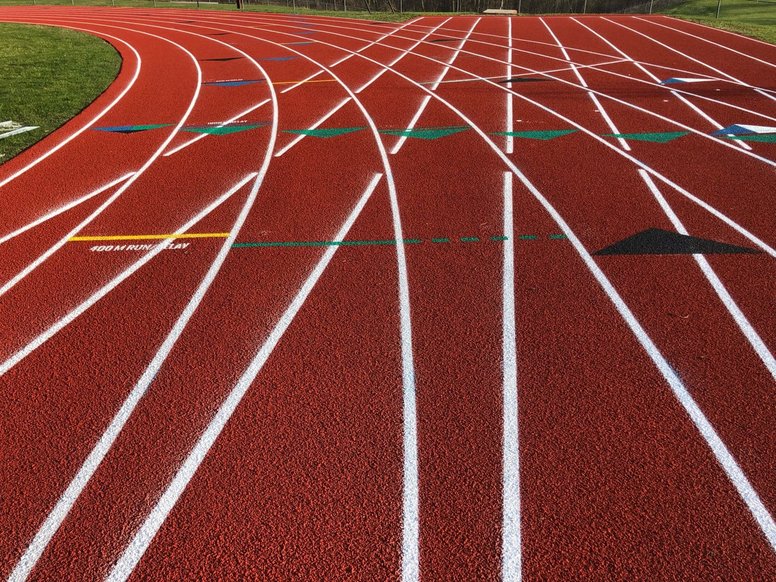
What Really Drives Running Track Construction Costs
From a facility manager’s standpoint, it is helpful to know where the money actually goes instead of just looking at the final number.
Typical cost drivers include:
Site preparation and grading
Asphalt base construction
Surfacing system (latex, polyurethane, or sandwich)
Drainage installation
Striping, event markings, and accessories
The exact breakdown varies significantly by project, but surfacing and base construction typically represent the largest portions of the budget. Specialized running track construction services and sports construction expertise add value by making sure each of those pieces is designed and built to the right standard the first time, not patched later.
If one bid comes in dramatically lower, it is usually because one or more of those components has been reduced or removed: thinner asphalt, minimal drainage, cheaper surface, or a lot of risk hidden in “by others” line items.
Real Numbers: Typical 400m High School Track
“An average eight lane track is 5,000 square yards.” — Lance Laurent, Pro Track & Tennis
That works out to roughly 45,000 square feet of surfacing area.
For full new construction on a straightforward site, expect $400,000 to $800,000 or more depending on site conditions, surfacing system, and scope. Premium systems for Division I universities can run $700,000 to $1,000,000+.
If one bid is 25% or more lower than the others, ask directly:
Is the asphalt base thinner?
Is there less or no underdrainage?
Is the crew entirely subcontracted?
What cure time is actually included in the schedule?
Those answers will tell you whether it is truly “cheaper” or simply pushing cost and risk into the future.
If you have an existing track and are exploring resurfacing options, visit our running track resurfacing services page for pricing and assessment information.
Construction Timeline: From First Dirt to Finished Lanes
Most full running track construction projects follow a similar pattern:
Design, engineering, and permits: 2 to 3 weeks or more
Site preparation and base grading: often around 2 weeks. Selecting the ideal location is crucial at this stage, as accessibility, site size, environmental conditions, drainage, and orientation all impact track performance and long-term usability.
Asphalt paving and cure time: a few days to pave, 30+ days to cure
Surfacing system application: 1 to 2 weeks if weather cooperates
Line striping and markings: several days
Final inspection and turnover: punch list and walk-through
Each phase is critical. A professional running track installation process, managed by people who build tracks regularly, keeps every step aligned with industry standards and ensures the finished facility is safe and durable.
Total timeline is typically 8 to 12 weeks from start to completion, assuming normal weather.
Climate matters. In northern regions, you need to work around spring thaw and fall freeze:
“We can’t install coatings below 60°F or on damp surfaces. For northern states, that means work windows are much shorter, mainly summer.” — Lance Laurent, Pro Track & Tennis
For schools, that often means starting site work in late spring so the track is ready for fall sports, not the other way around. Timelines may also vary for tracks designed primarily for recreational use, as these facilities may have different standards or requirements.

Common Pitfalls That Shorten Track Life (and How to Avoid Them)
Over and over, we see the same avoidable mistakes. Most of them start with assumptions rather than field data. Safety considerations must be prioritized in every phase of running track construction to prevent injuries and ensure long-term usability.
Skipping Soil Testing and Core Sampling
A basic geotechnical review and core sampling is a relatively small investment compared to rebuilding a failed base.
If no one has checked what is under the existing track or the new subgrade, you are guessing about soft pockets, old fill, or expansive clays. Those guesses can turn into six-figure problems.
Treating Drainage as an Afterthought
If drainage is described as “a few drains and some slope,” you will see problems within a few seasons:
Birdbaths that never dry
Base saturation
Freeze-thaw damage
Surface delamination and cracking
Red flag: any proposal that does not address drainage design in clear detail. If it is not in the scope, it is not being built properly.
Hiring Builders Without Track-Specific Experience
General paving contractors may be excellent at roads and parking lots, but running track tolerances are tighter and the requirements for competition surfaces are different.
Look for:
A real track portfolio from the last 3 years
ASBA training or manufacturer certifications
In-house crews who actually install the track system, not just a chain of subcontractors
“We use our own crews. Once you start subbing stuff out, you lose control.” — Lance Laurent, Pro Track & Tennis
Ask bidders:
“Who from your company will be on site every day?”
“Which track projects have they personally built?”
If those answers are vague, be cautious.
Before making your final decision, read our guide on how to choose a running track contractor to learn what qualifications, proposal details, and red flags to evaluate before signing a contract.

Choosing the Wrong Surface for the Climate
Hot, high-UV regions are hard on entry-level latex systems unless resurfacing cycles are planned for shorter intervals. Freeze-thaw climates need very careful attention to subgrade, base, and drainage so the surface is not constantly moving and cracking.
Matching the running track surface system to your actual weather and usage is more important than chasing a brand name.
Rushing Asphalt Cure Time
If asphalt is not allowed to cure, it continues to move and off-gas under the surface. The result is bubbles, blisters, and weak adhesion that show up a few seasons later.
Do not let schedule pressure override basic engineering. An extra month of cure time is far cheaper than rebuilding sections of a delaminated track.
Skipping the Pre-Bid Site Visit
Many problems start when contractors price a project from plans alone. Underground utilities, access constraints, existing base conditions, and drainage issues are best understood on site.
Require bidders to visit the facility and document their assumptions in the proposal. It is much easier to reconcile scope before you sign than to fight about change orders after work begins.
Maximizing ROI: Building a Track That Lasts
The difference between a track that performs for a decade and one that becomes a recurring maintenance headache is rarely the brand of surface. It is whether someone looked at it regularly and dealt with small problems before they became base failures.
Facilities that treat the running track as a long-term asset, rather than a one-time project, consistently spend less over time. Additionally, a well-maintained running track can serve as a valuable resource for the community, supporting recreation and social engagement.
Annual Inspections and Routine Maintenance
At least once in the spring and once in the fall:
Walk the track and look for cracks, soft spots, and color loss
Identify any birdbaths or areas that stay wet
Clear drains and remove debris from drainage channels
Industry estimates for annual maintenance on an 8-lane track range from $10,000 to $30,000 depending on usage, climate, and whether professional cleaning services are used. Basic in-house maintenance like debris removal, drain cleaning, and visual inspections can be done at minimal cost, while professional deep cleaning and minor repairs add to the budget.
The key is consistency. Small problems caught early remain small problems. Small problems ignored become base failures.
Planning for Future Resurfacing
A well-built track will eventually need resurfacing. Planning for this from day one ensures you get maximum value from your investment.
With proper maintenance coatings every five to seven years, a new mat system can perform for upwards of 20 years. Building with quality base and drainage means that when resurfacing is needed, it remains a surface-level project rather than a full reconstruction.
For information on resurfacing existing tracks, visit our running track resurfacing page.
Protecting the Surface Day to Day
Simple policies go a long way: for example, having clear guidelines on running track resurfacing can help facilities maintain their athletic surfaces efficiently.
No vehicles on the track without proper protection
Use mats or plywood when lifts, soccer goals, or maintenance equipment must cross
Keep metal edges, bleachers, and heavy stands off the surface
These small habits prevent gouges, tears, and point-load damage that shorten the surface life and accelerate wear.
How to Get a Reliable Running Track Construction Quote
Not all proposals are equal. To compare apples to apples and protect your budget, ask for:
Detailed scope of work: Grading, drainage, asphalt, surfacing, and striping, all clearly described.
Material specifications: Actual product names, system type, and thickness, not just “polyurethane system.” Confirm that materials and methods comply with World Athletics and relevant athletics federations where certification or fair-competition standards matter.
Geotechnical assumptions: Especially for rebuilds. If no cores have been pulled, what are they assuming about the existing base?
Warranty terms: For both surface and base, plus how the claims process works.
Crew and experience information: Whether work is done by in-house crews or subcontracted, and what track-specific projects those crews have recently completed.
Phasing and timeline: How the work aligns with your calendar and likely weather windows.
Site visit documentation: Confirmation they have walked the site and understand access, utilities, and existing conditions.
You want a solution tailored to your facility, not a generic “one size fits all” package. A clear proposal makes it much easier to see where a low bid is truly efficient versus where it is simply leaving something out.
For a reliable running track construction quote or to discuss your project needs, contact our team today to schedule a consultation, site assessment, or request a detailed quote.
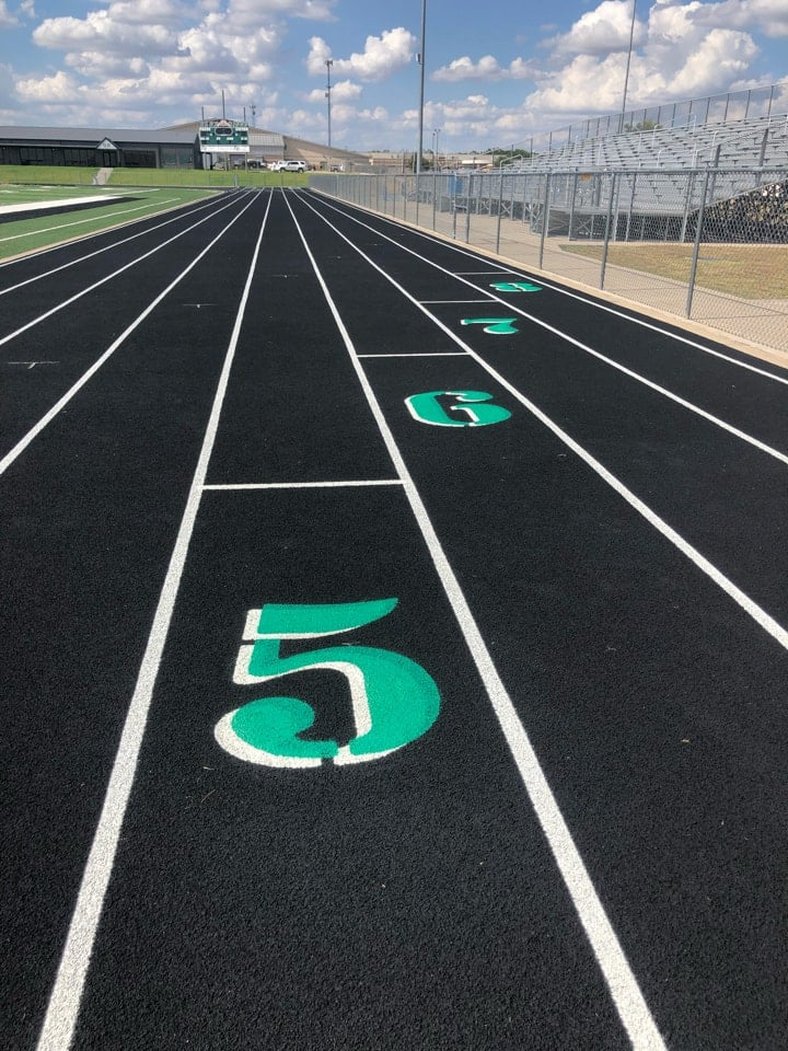
The Bottom Line: Smart Construction Beats Reactive Repairs
For running track construction, the lowest initial bid is almost never the cheapest choice over time. The real savings come from:
A base and drainage system that do not fail
A surface matched to your climate and usage
Builders who understand track standards, not just paving
Planning for maintenance and future resurfacing from day one
Done well, a track delivers years of safe, predictable performance and reliable conditions for athletic records and everyday training. Done poorly, it becomes a recurring line item in your capital plan with constant patching and emergency projects.
If you are planning new construction, the best starting point is a field-based assessment of your site. We will walk the facility, review soil conditions, and give you a clear scope and budget range based on what is actually there, not guesses from a desk.
Already have a track that needs resurfacing or repair? Visit our running track resurfacing services page for options and pricing.
Schedule a no-obligation site assessment and project consultation. With 1,000+ projects completed in 25+ states, we know what works, what fails, and what your facility actually needs.
Pro Track & Tennis 25+ states • 1,000+ projects • In-house crews
Discover coaching insights on our Building a Champion Podcast. Schedule your free assessment: 800-498-4395
Get a Free Assessment for Your Court or Track
Our in-house crews have completed 1,000+ projects across 25+ states. Tell us about your facility and we will inspect the surface and give you a straight plan and quote.
Get Free Assessment
»
About the Author
Marketing Manager, Pro Track & Tennis
Recent Blog Posts
Discover More →
•
8 min read
Plan your fall court and track resurfacing project: when to book, how budget cycles fit in, and how to sequence multiple surfaces.
•
8 min read
Your tennis court cracked again after resurfacing? Learn why reflective cracking happens and what actually stops an old crack from reappearing.
•
7 min read
Learn how tennis court resurfacing timing affects downtime, from weather windows to phasing multi-court facilities without closing everything at once.
•
7 min read
TYPTI vs. pickleball for clubs: court, equipment, and rules differences, plus a decision framework on adding TYPTI or switching entirely.
•
10 min read
How to host TYPTI at your club: equipment, court readiness, programming, marketing, and the revenue model, compared to pickleball benchmarks.