
Running Track Resurfacing
Running Track Installation: Timeline, Process, and What Really Affects Your Schedule
Updated on
·
9 min read

Published by

Key Takeaways
Running track installation timelines range from a couple of weeks for targeted repairs to several months for new construction, but calendar time almost always exceeds working days due to weather and cure windows.
Base condition is the single biggest variable in your schedule. Hidden drainage failures or asphalt problems discovered mid-project cause the longest delays and the most frustration.
The planning and evaluation phase determines whether your project stays on schedule. Rushing this stage rarely saves time and often adds weeks later.
Weather constraints are non-negotiable. Most track surfacing systems cannot be installed below 60°F or on damp surfaces, which sharply limits work windows in northern states.
Working backward from your first meet date, not forward from budget approval, is the only reliable way to build a realistic track construction timeline.
A thorough pre-construction assessment heads off timeline surprises and protects both your schedule and budget.
Why Track Installation Timelines Rarely Match the Original Schedule
If you’ve managed a track project before, this probably sounds familiar. The original timeline looked reasonable on paper. Then weather shifted. Base issues showed up. Cure times stretched. Suddenly the finish date moved.
This isn’t usually because a contractor misled you. It’s because running track installation depends on variables that are hard to see early and impossible to control once work starts.
Track projects are especially sensitive to three things:
What’s happening below the surface
Weather windows during installation
How clearly the scope was defined before anyone mobilized
The question “how long does it take to install a running track” doesn’t have a universal answer. The timeline depends far more on base condition, drainage performance, and climate than on which surface brand you choose.
This guide explains what timelines look like in the real world—based on 1,000+ completed projects across 25+ states. Not ideal scenarios. Not marketing promises. Just how these projects actually play out, so you can plan with confidence and avoid the delays that derail most track installations.

Quick Answer: How Long Does Running Track Installation Take?
Here are typical ranges facility managers can use for planning.
Project Type | Working Days | Typical Calendar Time |
|---|---|---|
Minor repairs and restriping | 3–7 days | 1–2 weeks |
Full resurfacing (structural spray) | 7–14 days | 2–4 weeks |
Full scrape and new mat | 14–21 days | 3–6 weeks |
New track construction | 40–60 days | 8–14+ weeks |
The difference between working days and calendar time matters. A two-week installation almost never means two weeks on the calendar.
Weather delays, cure windows, weekends, and access restrictions stretch projects out. That’s normal.
Most synthetic track surfaces require:
Air and surface temperatures above 60°F
Dry conditions during installation
No rain for at least 24–48 hours after application
In northern states, this often limits workable installation windows to late spring through summer. In southern states, extreme heat and frequent storms introduce their own delays.
These aren’t arbitrary restrictions—they’re chemistry. Push installation outside these parameters and you’re paying for a surface that will fail early.
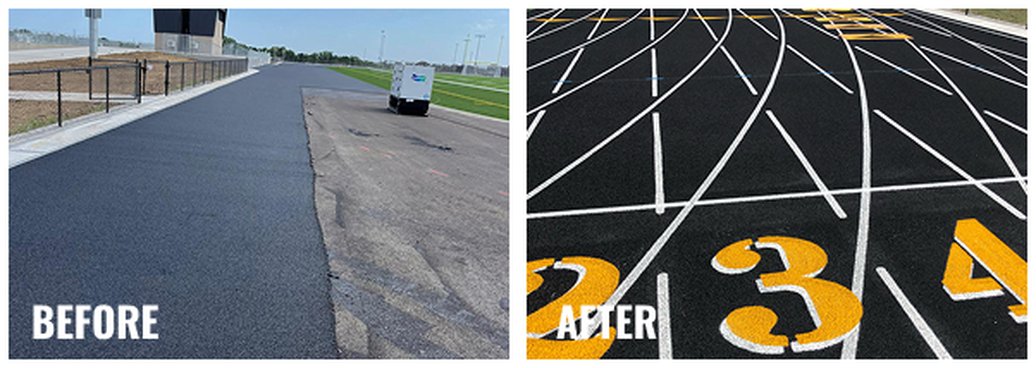
The 5 Phases of Running Track Installation (From Planning to First Meet)
Understanding the phases of track construction helps explain where schedules slip and where you actually have control.
Phase 1: Site Evaluation and Planning (2–6 Weeks Before Work Starts)
This is the phase that determines whether your project stays on track or not.
A proper evaluation includes:
Visual inspection of the existing surface
Core samples to understand asphalt and base condition
Drainage inspection to identify ponding or moisture issues
Review of past repairs and maintenance history
Skipping or rushing this phase is the most common cause of delays later. Problems that aren’t identified here don’t disappear. They just show up during construction when fixes are slower, more expensive, and harder to schedule.
This is where expectations also get aligned. A coach may want a quick resurface. A board may want the lowest upfront cost. The site may need more than either realizes.
As Lance Laurent puts it,
“You have to figure out what do they need, what do they want, and what is the pain associated with whatever the problem is.”
For most schools and municipalities, this planning phase should start 8-12 months before your first meet—not 8-12 weeks.

Phase 2: Base Repairs and Prep Work (1–3 Weeks)
Base preparation is where track construction timelines are won or lost.
Typical work in this phase includes:
Crack repair using systems designed to manage movement
Patching failed asphalt areas
Leveling low spots and correcting tolerances
Cleaning and priming the surface
Track surfaces require tight tolerances. Minor base irregularities will telegraph through the finished surface.
This phase is also weather sensitive. Asphalt repairs and crack systems need proper temperatures and dry conditions to cure correctly. Moisture trapped in the base can delay or compromise surfacing.
Many tracks look worn but are structurally viable. Others look acceptable but hide drainage or base failures underneath. This is why evaluation matters more than appearance.
This is also why Pro Track & Tennis uses in-house crews for base work. Once you start subbing out critical prep, you lose quality control. As Lance explains,
“We use our own crews. Once you start subbing stuff out, you lose control.”
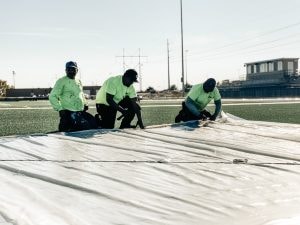
Phase 3: Surfacing Installation (1–2 Weeks)
Once the base is prepared and approved, surfacing work moves relatively quickly.
Common options include:
Structural spray systems
Paved-in-place polyurethane surfaces
Full-pour or layered systems
Installation conditions are strict:
Surface temperature above 60°F
Dry weather during application
Proper humidity for curing
In northern climates, these conditions exist for a limited part of the year. A rainy stretch in May or June can push work into July or August. In southern regions, daily storms or extreme heat can shorten productive work windows.
At Pro Track & Tennis, we’ve completed 1,000+ projects by following the chemistry, not the calendar. Trying to “make up time” during this phase almost always causes problems later.
As Lance explains,
“We can’t install coatings below 60 degrees or on damp surfaces. For northern states, that means work windows are much shorter, mainly summer.”
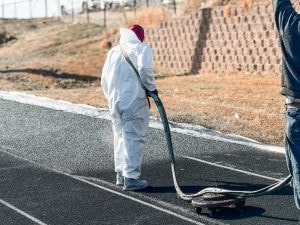
Phase 4: Striping and Markings (2–5 Days)
Striping is more than just painting lines.
Scope may include:
Lane lines and start marks
Exchange zones and event markings
School logos and custom colors
Precision matters. Lane geometry must meet competition standards, and layouts are often surveyed and benchmarked for future maintenance.
This phase is frequently underestimated. A complex marking package can take close to a week, especially when multiple colors or layouts are involved.

Phase 5: Cure Time and Return to Use (3–14 Days)
After installation and striping, the surface needs time to cure.
Cure time depends on:
System type
Temperature and humidity
Sun exposure
A track may be safe to walk on before it’s fully cured, but heavy use, spikes, or wheeled equipment too early can permanently damage the surface and void warranties.
Rushing this phase to hit an event date is one of the most expensive mistakes facilities make. If you’re working backward from a hard deadline like a first meet or regional competition, cure time needs to be built into your timeline from day one—not treated as optional.

Track Construction Timeline by Project Type
Different scopes behave very differently on the calendar.
Minor Track Repairs and Restripe
Typical timeline: 1–2 weeks
Best for:
Cosmetic wear
Isolated cracking
Short-term life extension
Not effective when:
Cracking is widespread
Water ponds on the surface
Previous repairs have failed repeatedly
This is maintenance, not rehabilitation.
Full Track Resurfacing Timeline
Typical timeline: 2–4 calendar weeks
Resurfacing works when:
The base is stable
Drainage is functioning
Wear is uniform
It fails when base movement or moisture problems are ignored.
As Lance notes,
“A running track can be pretty wore out, but you can patch it, you can patch the cracks, and you can do what they call a structural spray.”
But that only works when the foundation is still doing its job.
Full Scrape and New Surface
Typical timeline: 3–6 weeks
This becomes necessary when:
The existing mat has failed
Multiple resurfaces have already occurred
Adhesion issues or delamination are present
Weather matters more here because the base is exposed during removal.
New Running Track Construction
Typical timeline: 8–14+ weeks
New construction includes:
Excavation and grading
Stone base and compaction
Asphalt installation
Drainage and curbs
Cure windows
Surfacing and striping
This work is usually limited to summer in northern states. Any delay early in the process can push completion past fall sports. Planning new construction should start 12+ months before your target completion date.
What Causes Track Installation Delays (And How to Avoid Them)
Weather and Temperature
Weather is the most common delay and the least controllable.
Build buffer time into your schedule. Assuming perfect conditions almost always backfires.
Unexpected Base or Drainage Issues
Hidden problems cause the longest delays.
Fixing them properly takes time. Ignoring them guarantees future failures.
Incomplete or Vague Bid Scopes
Unclear scopes lead to change orders, approvals, and delays.
Low bids often omit critical prep or drainage work, then add it later.
School Calendar Conflicts
Graduation, camps, and fall sports create hard deadlines.
Backward planning from the first meet date is essential. At Pro Track & Tennis, we build project timelines backward from your must-have dates—not forward from budget approval. This approach prevents the calendar conflicts that derail most track projects.
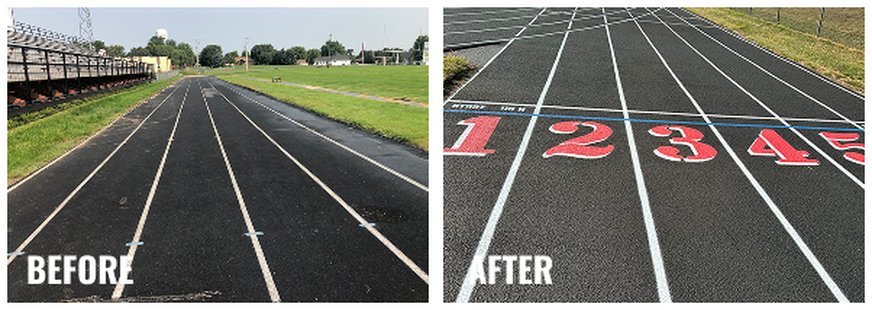
How to Plan a Running Track Installation Around Your Athletic Calendar
Successful projects start earlier than most people expect.
A common planning sequence:
Winter: assessments and budget planning
Spring: bidding and contractor selection
Early summer: base work
Mid-summer: surfacing
Late summer: cure and return to use
Waiting until spring to start planning a summer project usually means compromises. With 1,000+ projects completed across 25+ states, we know which weather windows work in different regions and how to build realistic timelines around actual athletic calendars.
Before selecting a company, read our guide on how to choose a running track contractor to compare qualifications, evaluate proposals, and avoid common hiring mistakes that can delay your project.
Budget vs Timeline Trade-Offs Facility Managers Should Understand
Faster almost always means riskier.
Accelerating work often requires:
Overtime crews
Shortened cure windows
Reduced weather flexibility
In many cases, delaying a season produces a better long-term result than rushing a surface that will fail early.
This isn’t just philosophy—it’s math. A rushed resurfacing that fails years earlier than expected costs you a second project sooner than planned. That’s often more expensive than delaying one season.
When to Choose Repair, Resurface, or Full Construction
Repair when damage is isolated.
Resurface when wear is uniform and the base is sound.
Rebuild when problems keep returning.
At Pro Track & Tennis, we provide two-option proposals for every project: what you can do now, and what you’ll likely need in 2-3 years if you defer. This approach helps facility managers make informed budget decisions instead of guessing.
If the same areas fail repeatedly, the issue is not cosmetic.

Final Takeaway: The Best Track Timelines Are Built Before Construction Starts
Track projects that finish on time share common traits:
Honest site evaluation
Clear scope
Realistic scheduling
Weather contingency
Projects that struggle usually rush the planning phase.
At Pro Track & Tennis, we provide site assessments to help facility managers understand what their track actually needs before committing to a timeline or scope. The goal is not to push a specific system. It’s to match the solution to the site, climate, and calendar.
If you’re planning a running track installation, resurfacing, or repair, start with an assessment. It’s the most reliable way to protect your schedule, your budget, and your facility.
Call 800-498-4395 or request an assessment online. Pro Track & Tennis—serving 25+ states with 1,000+ completed projects and ASBA members.
Get a Free Assessment for Your Court or Track
Our in-house crews have completed 1,000+ projects across 25+ states. Tell us about your facility and we will inspect the surface and give you a straight plan and quote.
Get Free Assessment
»
About the Author
Marketing Manager, Pro Track & Tennis
Recent Blog Posts
Discover More →
•
8 min read
Plan your fall court and track resurfacing project: when to book, how budget cycles fit in, and how to sequence multiple surfaces.
•
8 min read
Your tennis court cracked again after resurfacing? Learn why reflective cracking happens and what actually stops an old crack from reappearing.
•
7 min read
Learn how tennis court resurfacing timing affects downtime, from weather windows to phasing multi-court facilities without closing everything at once.
•
7 min read
TYPTI vs. pickleball for clubs: court, equipment, and rules differences, plus a decision framework on adding TYPTI or switching entirely.
•
10 min read
How to host TYPTI at your club: equipment, court readiness, programming, marketing, and the revenue model, compared to pickleball benchmarks.