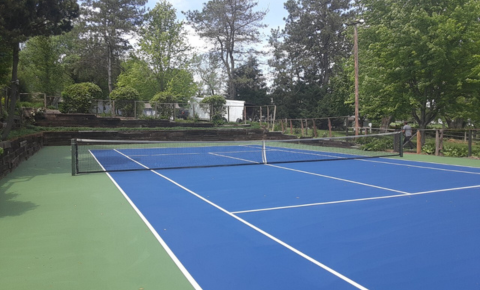
Introduction to Different Tennis Court Surfaces
When it comes to building or resurfacing a tennis court, one of the most important decisions is selecting the right surface material. From bounce speed to maintenance needs, the type of surface you choose can drastically impact player experience, performance, and long-term costs. There are several types of tennis court surfaces, each offering unique playing characteristics and maintenance requirements.
The main court surfaces used today are clay, grass, hard (acrylic or concrete), and various artificial or modular options. These are considered the main surfaces, but there are also other types of tennis court surfaces, such as carpet, hybrid, and artificial courts, which are used in specific settings or tournaments.
In this guide, we’ll walk through all the major court surface types, how they affect the game, and what you need to know before making a choice.
Types of Court Surfaces
Let’s start with a high-level overview of the different material types and some of their identifying characteristics:
Clay courts are made of crushed stone or brick and known for their slow pace and high bounce, favoring baseline players who thrive in long rallies.
Grass courts offer a fast-playing surface with a low bounce, rewarding quick reflexes and serve-and-volley strategies.
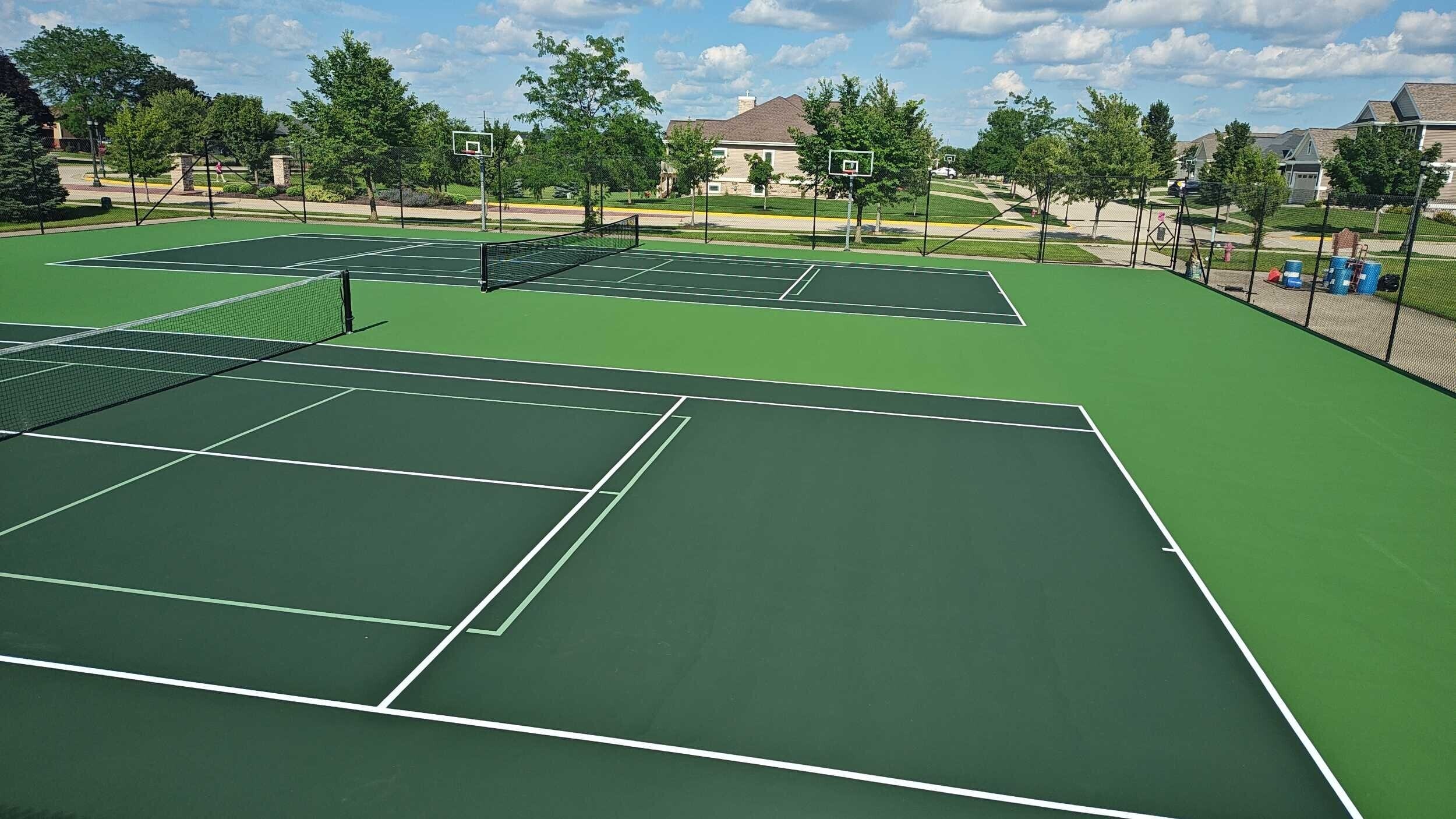
Hard courts, such as acrylic or concrete, are considered hard court surfaces and are often constructed with an acrylic top layer over a concrete or asphalt foundation. Concrete courts are a traditional, durable option. These surfaces are made from rigid materials and are considered a hard surface with an asphalt foundation or concrete or asphalt foundation. Hard courts provide consistent bounce and balanced speed. These are the most widely used surfaces in both recreational and professional play today.
Artificial surfaces, including carpet and synthetic grass, are a type of synthetic surface and are popular for their low maintenance and use as outdoor surfaces as well as indoor or multi-use applications.
Modular courts, made from interlocking tiles, are known as modular tennis court surfaces and are a growing option for temporary or community-focused installations where portability and durability are priorities.
There are also other surfaces available beyond the main types discussed. Let’s dive a bit deeper to understand each.
Grass Tennis Court Characteristics
Out of all the surface types, natural grass has the fastest gameplay, favoring aggressive players who rely on powerful serves and quick net approaches. Grass tennis court surfaces, especially natural grass courts, are the traditional form of grass tennis courts and are renowned for their speed and unique playing characteristics. That’s why they’re used in some Grand Slam tournaments, like Wimbledon.
While grass courts offer a classic, prestigious playing experience, they can be less predictable due to variable ball bounce and more challenging for recreational players. Conditions also vary significantly depending on the weather and ground moisture. Grass courts are composed of tightly mown turf. Keeping them play-ready requires intensive upkeep, including daily mowing, watering, and seasonal maintenance, which can get expensive.
For those seeking a similar playing style without the maintenance demands, synthetic grass or artificial turf is a viable alternative.
Artificial Grass and Carpet Court Options
Artificial grass courts use synthetic turf with a sand or rubber infill that simulates the feel of real grass, offering moderate bounce and good traction. These are popular in club and recreational settings thanks to their durability and ease of care. Some modular courts use interlocking plastic tiles or polymeric material supplied in rolls or sheets, providing additional options for quick installation and surface customization.
Carpet courts are removable synthetic coverings that provide a fast game similar to grass but requiring much less maintenance and lower installation costs. Carpet courts are commonly used for indoor tennis courts and indoor courts due to their ease of installation and maintenance.
Both options are attractive for recreational players or facilities seeking fast, low-maintenance courts without the high costs of traditional surfaces.

Hard Court Characteristics
Hard courts, typically made from acrylic coatings over an asphalt foundation or concrete or asphalt foundation, offer the most balanced style of play, falling between the speed of grass and the slower tempo of clay. Hard court surfaces are one of the main surfaces used in professional tennis tournaments worldwide, including the U.S. Open and Australian Open. An acrylic court is generally faster than clay but slower than grass, making it a popular choice for high-level competitions.
Hard courts provide a consistent bounce and reliable footing, making them ideal for a wide range of playing styles, from aggressive baseline hitters to all-court players. As a type of hard surface, their medium-to-fast pace suits both singles and doubles formats and makes them especially popular in public parks, schools, and private clubs.
Hard courts are known for their durability and require less day-to-day maintenance than grass or clay, but they can also be tougher on joints over time, especially for players with frequent or intense use. Still, modern cushioned acrylic systems help reduce impact, making the surface more forgiving without sacrificing playability.
For facilities looking for a cost-effective, all-purpose surface that’s tournament-ready and built to last, acrylic hard courts remain the go-to option.
👉 Not sure which surface material is best for your needs? Contact us for a free on-site assessment to evaluate your options and get expert recommendations.
Court Surface Maintenance and Repair
Whether you are building a new tennis court or caring for an existing one, maintenance planning is crucial. Every court surface requires some level of ongoing maintenance to preserve play quality and safety:
- Clay courts need regular rolling, watering, and sweeping. These courts are constructed on a compacted stone base and use unbound mineral aggregate materials, such as crushed brick or crushed shale, for the playing surface.
- Grass courts demand mowing, irrigation, and seasonal repairs.
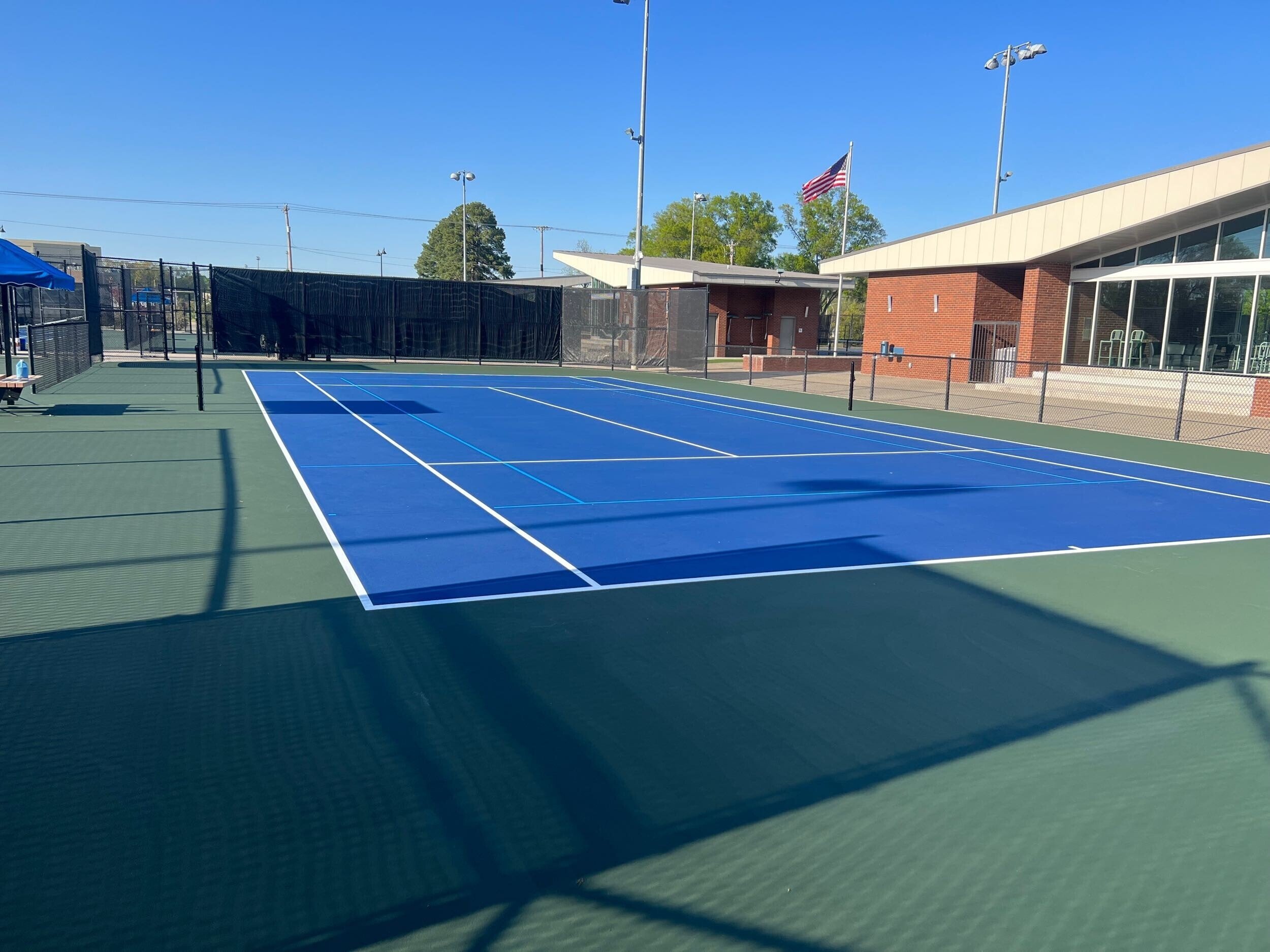
- Acrylic hard courts are relatively low-maintenance but typically need resurfacing every 4 to 8 years to erase cracks and refresh the colored top layer and line paint.
- Artificial surfaces (like turf or carpet) require basic cleaning and infrequent repairs.
Investing in proper maintenance not only extends the life of the court but also ensures consistent bounce, grip, and safety over time.
The Role of Court Surfaces in Tennis
Court surface type significantly influences how the game is played and shapes the playing characteristics that tennis players must adapt to. Each surface—clay, grass, and hard—affects ball speed, bounce, and movement, influencing tennis players’ strategies and natural playing ability:
- Clay courts slow the game down and encourage longer rallies, suiting baseline players.
- Grass courts create faster points with lower bounce, favoring serve-and-volley players.
- Hard courts offer a middle ground with predictable performance.
Court markings and dimensions also play a crucial role, especially in doubles matches. The service line, located 6.40 meters from the net, defines the service box for both singles and doubles, but the court is wider for doubles matches, with additional sidelines marking the area of play.
Beyond style of play, surfaces also affect injury risk and fatigue, especially for older players or high-traffic courts. Harder surfaces like concrete can increase joint strain, while cushioned or softer courts can reduce long-term wear and tear.
Choosing the right surface also involves weighing practical factors like weather conditions, maintenance capacity, and expected usage (recreational vs. competitive).
Acrylic and Clay Court Comparison
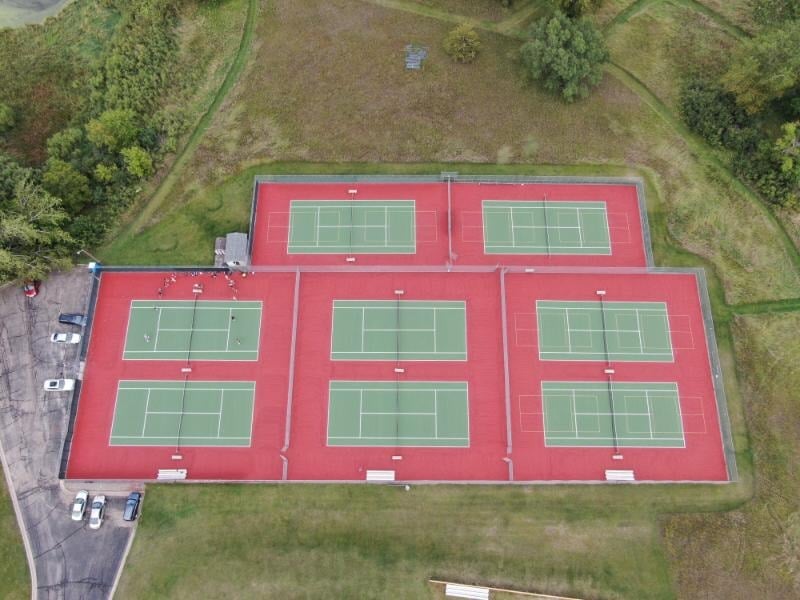
Two of the most widely used surfaces, acrylic hard courts and clay courts, represent opposite ends of the playing spectrum.
Acrylic courts are durable, cost-effective, and provide a fast, consistent bounce. They’re easier to maintain and commonly used in North America and Australia.
Clay courts—which are a type of clay surfaces—include both red clay courts and green clay, each with unique properties. Red clay courts are especially popular in Europe and South America, while green clay is more common in North America. Clay courts are known for slower play and the ball tends to bounce high, leading to strategic, long-point rallies.
If you’re looking for a low-maintenance, year-round option, acrylic may be the better fit. If you prioritize a slower-paced, player-friendly surface and don’t mind the upkeep, clay offers a rewarding alternative.
Grass Tennis and Court Surface Selection
In sum, surface selection should align with your goals, player base, and facility capabilities. Having the right surface allows people to play tennis in a way that matches their style and needs:
- Grass courts are ideal for fast-paced, serve-and-volley play, but have high maintenance demands.
- Clay courts are great for baseline players and provide joint-friendly gameplay.
- Hard courts work well for mixed player styles and are practical for high-use environments.
- Artificial surfaces offer versatile solutions for indoor or multi-sport applications.
- There are also other outdoor surfaces available, each with unique qualities in terms of consistency and speed.
Whether you’re building a professional-grade court or upgrading a community facility, the surface you choose will shape the playing experience and influence long-term maintenance needs. When constructing a new tennis court, it’s important to follow the standards set by the governing body for tennis, such as the International Tennis Federation, to ensure proper court dimensions, markings, and surface regulations.
👉 Not sure which surface material is best for your needs? Contact us for a free on-site assessment to evaluate your options and get expert recommendations.
Pro Track and Tennis Brings the Right Surface to Life
Understanding the different tennis court surface types is an essential first step toward your next tennis court project. Selecting the appropriate surface not only enhances performance and safety for tennis players but is also crucial for hosting professional tennis tournaments.
Wondering what the next step is? You’ll want to choose the right material and install it properly – and Pro Track and Tennis can help.
Our team at Pro Track and Tennis specializes in designing, resurfacing, and constructing high-performance courts that hold up against everything from harsh winters in the Midwest to blazing summers in Texas.
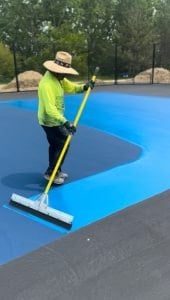
We use IFC-certified Novacrylic® systems from Nova Sports USA, featuring:
- Acrylic textured surfaces for slip resistance and smooth play
- Cushioned rubber-filled systems for impact absorption and injury prevention
- UV-resistant, low-glare pigments for vibrant, long-lasting color
Expert in All Tennis Court Surface Types
Whether you’re resurfacing or building from scratch, we work with the full range of court material types:
- Acrylic hard courts (our specialty) – durable, low-maintenance, and tournament-ready
- Cushioned systems – for added comfort and athlete protection
- Multi-use surfaces – for facilities that need to support more than just tennis
We’ll help you understand what tennis courts are made of, then tailor the right solution for your goals, location, and usage.
Proven Results Across 5,000+ Projects
With more than 5,000 courts completed across 24 states and decades of experience, our process is built around:
- Real relationships
- Collaborative planning
- Results that exceed expectations
We’re Ready to Serve Your Facility
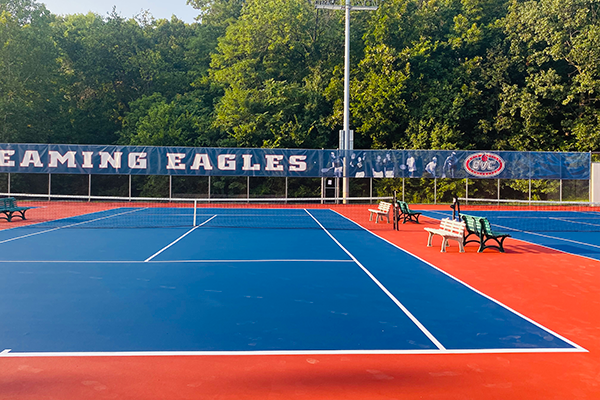
From color customizations to drainage fixes, we build and restore courts that meet the highest standards for safety, performance, and appearance.
🎾 Ready to upgrade, resurface, or build your tennis court? Request a free assessment with our team today.