
Facility Maintenance
Tennis Court Maintenance Schedule: Knowing When to Stop Patching and Start Planning
Updated on
·
9 min read

Published by

Here’s what nobody tells you about tennis court maintenance: Make sure to refer to the tennis court maintenance checklist. Most facilities are either spending a few hundred a year to stay ahead, or a few thousand a year reacting to problems. The difference is about 15 minutes a day and knowing when to stop throwing good money after bad.
This guide shows you what to do daily, weekly, monthly, and seasonally to maximize a court’s life, effectively creating a tennis court maintenance schedule. For best results, always follow established tennis court maintenance guidelines to ensure safety, surface quality, and longevity. More importantly, it explains the moment when maintenance becomes a money pit and resurfacing becomes the smarter financial move.

Quick note: Pro Track & Tennis doesn’t provide ongoing maintenance. We’re the team you call when proper tennis court maintenance isn’t enough. We resurface and rebuild acrylic and cushioned hard courts on asphalt or concrete.
The Expensive Truth About Deferred Maintenance
Many facilities believe they’re saving money by patching year after year, but this often leads to costly repairs. Deferred maintenance can also result in premature wear of the court surface, reducing its lifespan and increasing long-term costs. When you add up five years of invoices, resurfacing is usually the cheaper, cleaner path.
“Acrylic and cushioned surfaces are built to last, but they rely on proper drainage and care between resurfacing cycles. Simple things like keeping the court clean and managing drainage make a big difference.” – Lupita Ortiz, Production Manager, Pro Track & Tennis
Water and poor drainage systems are among the most damaging enemies of tennis courts, making it essential to maintain proper drainage and control vegetation to prevent water damage.
Understanding Court Surfaces
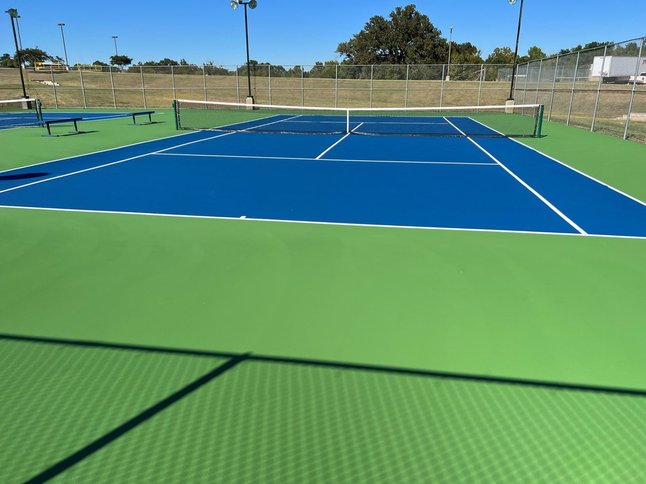
Not all tennis courts are created equal, and understanding your court’s surface is the foundation of proper tennis court maintenance. Each surface type—whether clay courts, grass courts, or hard courts—comes with its own set of maintenance requirements to ensure optimal playing conditions and extend the life of your investment.
Clay courts demand daily attention. Regular watering keeps the surface firm and dust-free, while brushing redistributes clay evenly and prevents low spots. Failing to maintain proper moisture can quickly lead to uneven areas and poor playing conditions.
Grass courts are high maintenance, requiring frequent mowing, rolling, and reseeding to keep the playing surface smooth and safe. Proper drainage is especially important for grass courts to prevent standing water and surface damage.
Hard courts—the most common surface—benefit from regular cleaning to remove dirt, leaves, and other debris. Occasional deep cleaning with a mild detergent solution helps prevent buildup that can affect traction and ball bounce. Inspect for cracks and birdbaths, as these can signal underlying issues that need prompt attention.
No matter the surface, understanding your court’s unique needs is essential for effective court maintenance. Tailoring your tennis court maintenance routine to your court’s surface type not only preserves the court’s appearance but also ensures safe, enjoyable playing conditions for years to come.
Your Daily 10-Minute Insurance Policy
Daily care prevents hours of repair later.
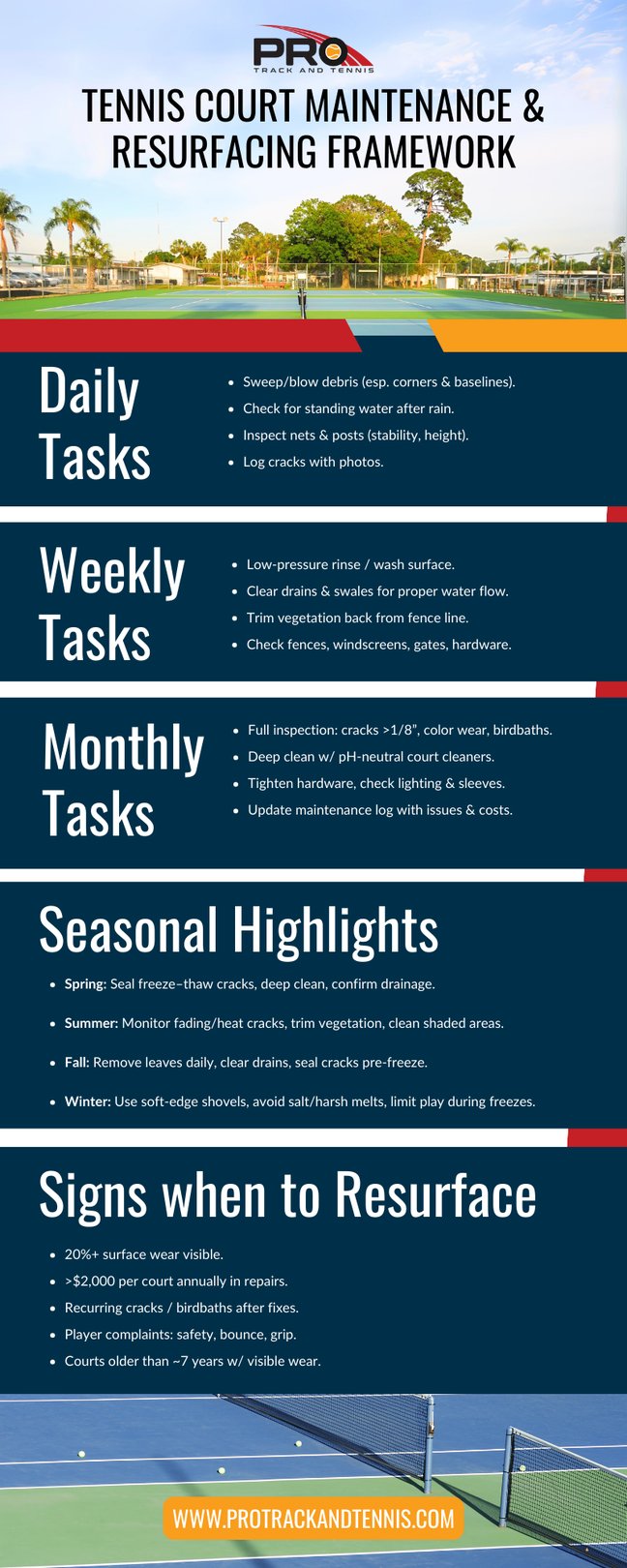
Morning sweep (5 minutes): Blow or broom debris before play. Ensure the entire court area is swept to keep the court free of debris. Focus on corners, fence lines, baselines, and service boxes. Wet leaves stain coatings and create slick spots.
The water check (2 minutes): After any rain, walk the courts. If water remains an hour later, mark the locations. Multiple birdbaths mean leveling work during your next resurface.
Quick equipment scan (3 minutes): Net at 36” center, 42” at posts. Check the net posts for stability and maintenance. Posts stable, sleeves dry. If you see a new crack, photograph it and log it.
Indoor courts need dust control. HVAC systems move fine particles that act like sandpaper. If you see a film on the surface, consider pressure washing tennis courts and clean filters more often.
Weekly Deep Dive
Once a week, go beyond the basics.
Real cleaning: Low-pressure rinse or gentle wash. Use a wide fan tip and keep the wand moving. High PSI scours texture and shortens coating life.
Drainage check: Water that doesn’t move is the fastest way to ruin a surface. Inspect for water pooling and ensure drainage systems are functioning properly to prevent excess water accumulation. Clear drains and swales so water leaves the court. Check perimeter drains for blockages from debris or vegetation, and watch for tree roots that can disrupt drainage and cause surface cracks or low spots.
“We see the biggest long-term issues come from drainage. If water isn’t moving, it finds its way under the surface, and that’s when big failures start.” – Lupita Ortiz, Production Manager, Pro Track & Tennis
Vegetation management: Trim trees and shrubs well back from the fence line. Shade encourages algae, roots lift bases, and debris adds to cleaning.
Fence and fixtures: Tighten loose windscreens, repair ties, check gates and hardware. A tidy perimeter signals a cared-for facility.
Monthly Reality Checks That Save Money
A monthly walkthrough helps you spot trends.
Full inspection: Note cracks wider than 1/8”, worn color, birdbaths that persist, or peeling coating. Compare with prior months. Schedule an annual inspection to assess the court’s overall condition and determine if repairs or resurfacing are needed.
Deep clean: Use court-specific, pH-neutral cleaners. Focus on affected areas where mold, mildew, or algae may be present. For stubborn stains or embedded dirt, consider special cleaning methods, as manual cleaning may not be sufficient. Low-PSI wash until runoff is clear.
Hardware and lighting: Tighten net hardware, check sleeves, test lighting, clean lenses.
Maintenance log: Record date, issues, actions, costs, and photos. Over 12–24 months, patterns make budget conversations easier.
Seasonal Strategies
Spring
Seal freeze–thaw cracks early
Deep clean surfaces and fence bases, paying special attention to outdoor courts where debris and organic matter can accumulate more quickly
Confirm drainage after the first heavy rain, especially on outdoor courts, and document any issues
Summer
Keep vegetation trimmed for airflow and sun exposure. Pay special attention to shaded areas, as these spots are more prone to mold, mildew, and algae growth. Regularly inspect and clean shaded areas to prevent unwanted biological buildup.
Manage spills near benches and bins
Fall
Remove leaves daily to prevent staining
Clear drains before seasonal rains
Seal cracks before freeze cycles
Winter
Use soft-edge shovels or plow shoes for snow
Avoid salt or harsh melts; sand for traction
Limit play during hard freezes to avoid surface scarring

“We can’t install coatings below 60°F or on damp surfaces. In northern states, that means projects are limited to a shorter summer window.”
– Lupita Ortiz, Production Manager, Pro Track & Tennis
Equipment and Cleaner Choices
Proper tennis court maintenance starts with having the right equipment, which is essential for effective cleaning and prolonging the court’s lifespan.
Use:
Commercial blower with flat nozzle
Soft brooms and smooth-edge squeegees
Low-PSI washer with fan tips
Pressure washer (use low pressure to avoid damaging acrylic coatings)
pH-neutral court cleaners such as Simple Green
Household bleach (diluted with water) for removing mold, mildew, and algae
Soft-edge shovels or plow shoes
When cleaning delicate surfaces, always scrub gently with a soft-bristle brush to remove contaminants without causing damage.
Avoid:
High-PSI washing
Harsh solvents
Wire brushes or metal scrapers
Salt or chemical ice melts
Common Problems and Quick Fixes
Black film in shaded corners: Clean with approved cleaner, rinse thoroughly, improve airflow.
Sticky spots near benches: Rinse with mild cleaner. Move bins or add mats. Ensure all permanent fixtures, such as benches, are properly anchored to prevent shifting or dragging that could damage the court surface.
Recurring hairline cracks: Log and track. Reopening cracks often mean base movement.
Persistent birdbaths: Plan for leveling at next resurface.
Court rules for surface protection: Prohibit chewing gum and roller blades on the court to prevent surface damage and maintain cleanliness.
Vegetation management: Use weed killer carefully around the court perimeter to prevent weed growth and protect the playing surface.
Landscaping and Aesthetics
A well-maintained tennis court isn’t just about the playing surface—it’s also about the environment around it. Thoughtful landscaping and attention to aesthetics play a crucial role in tennis court maintenance, helping to keep your court clean, safe, and inviting.
Start by keeping all grass and other vegetation trimmed well back from the court perimeter. Overgrown plants can drop leaves, pine needles, and other debris onto the court surface, leading to slippery spots and potential safety hazards. Mulching planting beds and establishing grass or ground cover on bare areas around the court help minimize dust and dirt from blowing onto the playing surface.
Regularly blowing or sweeping the walks and entryways leading to your tennis court reduces the amount of debris tracked onto the court. Be mindful when applying weed killers, fertilizers, or other chemicals near the court; these substances can damage the court surfacing system.
Don’t overlook the importance of regular maintenance around the court perimeter. Promptly removing leaves, pine needles, and other organic debris helps prevent mold and mildew growth, which can create slippery, unsafe areas. By integrating landscaping and aesthetic care into your tennis court maintenance routine, you not only enhance the court’s appearance but also contribute to a safer, more enjoyable playing experience for everyone who steps onto the surface. Keeping the surrounding area in top shape is just as important as maintaining the court itself.
When Maintenance Is Not Enough
At some point, the costs of tennis court accessories and patching climb while performance declines. Look for these triggers:
20% or more of the surface shows visible wear
Cracks wider than ¼” keep returning
Birdbaths linger in multiple spots after rain
Bounce is inconsistent, players complain about grip or safety
Repairs are trending past ~$2,000 per court annually
Issues with the concrete base, such as persistent cracking or low spots, can also indicate that resurfacing or even reconstruction may be necessary.
That’s the time to stop patching and plan resurfacing.
What Professional Resurfacing Includes
Resurfacing restores the tennis court surface to optimal condition, improving playability and appearance on acrylic or cushioned courts over asphalt or concrete.
Assessment and prep: Full review, moisture check, cleaning, crack treatment (often with the ARMOR system). Build the surface: Primer, acrylic or cushioned system to spec, color coats, line striping. Finish: Final inspection, cure guidance, net post adjustments, warranty documentation.
“The ARMOR system bridges cracks with a flexible layer that helps delay their return. It’s not a permanent fix, but it extends the life of a resurface significantly.” – Lupita Ortiz, Production Manager, Pro Track & Tennis

Budget and Timing
Plan for $20,000 or more per court, depending on condition and location. Multi-court projects reduce per-court cost. Facilities often phase resurfacing in groups to keep some courts open.
Timing matters: coatings need warmth and a dry surface. Northern climates have short summer windows. Southern regions work nearly year-round.
Indoor Courts
Indoor courts avoid rain but battle airflow and humidity. Keep filters clean, ensure that players wear non marking tennis shoes maintain humidity between 40–60%, and avoid rapid temperature swings that cause condensation.

The Bottom-Line Decision Framework
Ask yourself:
Spending more than ~$2,000 per court annually? → Time to assess resurfacing.
Same cracks reopened twice? → Base movement means resurfacing is likely needed.
Players choosing other facilities? → Don’t wait for reputation damage.
Courts older than 7 years with visible wear? → Budget for resurfacing soon.
Major drainage repairs quoted? → Compare costs with full resurfacing.
Your Next Move
The facilities that plan ahead spend less and stress less. The ones that react pay more and frustrate their users.
Maintaining well? Keep at it, and download our maintenance checklist.
Not sure if maintenance is enough? Get a free assessment and cost comparison.
Know it’s time? Let’s map out timing, phasing, and budget.
Download: Maintenance Checklist
Request: Cost Comparison Assessment
Schedule Your Free Assessment: 800-498-4395
Get a Free Assessment for Your Court or Track
Our in-house crews have completed 1,000+ projects across 25+ states. Tell us about your facility and we will inspect the surface and give you a straight plan and quote.
Get Free Assessment
»
About the Author
Marketing Manager, Pro Track & Tennis
Recent Blog Posts
Discover More →
•
8 min read
Plan your fall court and track resurfacing project: when to book, how budget cycles fit in, and how to sequence multiple surfaces.
•
8 min read
Your tennis court cracked again after resurfacing? Learn why reflective cracking happens and what actually stops an old crack from reappearing.
•
7 min read
Learn how tennis court resurfacing timing affects downtime, from weather windows to phasing multi-court facilities without closing everything at once.
•
7 min read
TYPTI vs. pickleball for clubs: court, equipment, and rules differences, plus a decision framework on adding TYPTI or switching entirely.
•
10 min read
How to host TYPTI at your club: equipment, court readiness, programming, marketing, and the revenue model, compared to pickleball benchmarks.