


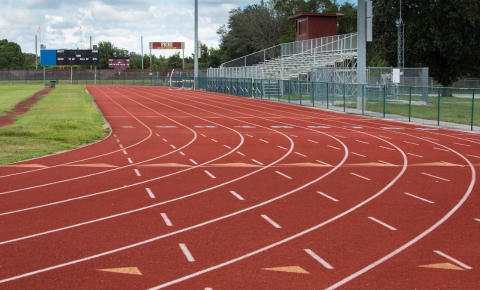
Your installer just quoted three different “rubber” track systems with a $100,000 price gap. What are you really buying? Modern running tracks aren’t just recycled tires. They’re engineered layers of rubber, binder, and coating, each affecting performance and durability. Understanding the difference between materials helps you choose wisely, plan maintenance effectively, and avoid overpaying for features your facility doesn’t need.
Key Takeaway
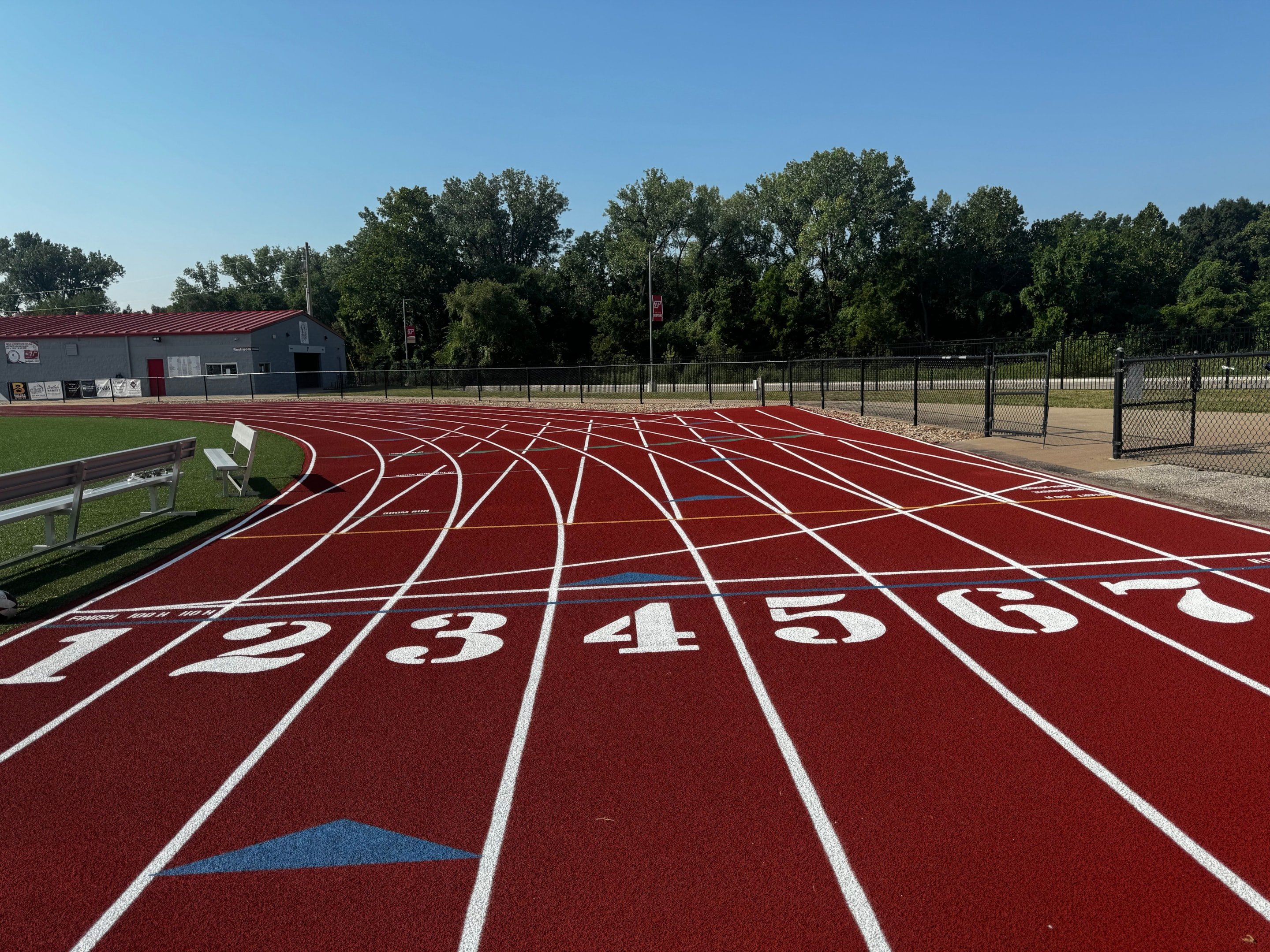
A rubber running track is comprised of rubber granules and polyurethane binders layered over a stable asphalt base. When selected correctly for your climate and usage, a quality track delivers years of reliable performance with proper maintenance.
Why Understanding Track Materials Matters
The term “rubber track” can be misleading. A $120,000 structural spray system and a $300,000 full resurfacing both qualify, but the materials beneath make all the difference. Modern tracks use engineered blends of rubber and binders to balance performance, comfort, and durability. Some systems suit community use; others are built for collegiate competition.
“You have to figure out what do they need, what do they want, and what is the pain associated with whatever the problem is.” — Lance Laurent, President, Pro Track & Tennis
Knowing what your track is made of helps you choose the right system for your climate, plan maintenance effectively, and invest where it truly counts.
Why Listen to Us
Pro Track & Tennis has resurfaced and rebuilt more than 1,000 tracks across 25 states for schools, universities, and municipalities. We don’t just sell surface types. We help facility managers choose systems that make sense for their climate, budget, and goals.
“We use our own crews. Once you start subbing stuff out, you lose control.” — Lance Laurent, Pro Track & Tennis
A durable track starts with proper preparation, in-house installation, and the right material mix for your region. When those align, the surface performs better and lasts longer.

What Are Tracks Made Of? The Real Composition
A running track isn’t one material. It’s a system. Understanding what’s in each layer helps you evaluate quotes, plan maintenance, and avoid paying for features you don’t need.
Modern running tracks consist of several layers that work together to provide safety, traction, and durability. A typical system includes:
- Asphalt base for structural stability
- Rubber granules mixed with binder for cushion and texture
- Polyurethane or latex binder that holds the system together
- Color coating and seal coats for UV protection
- Line markings and exchange zones for regulation compliance
As Lance explains it: “You mix granulated rubber with polyurethane binder, mix it in a big mixer, take it out to a paving machine, you set the depth at half inch and it paves it. Similar to the way asphalt’s laid.”
Each layer affects how the surface feels underfoot, how it drains, and how it performs over time.

The Main Track Surface Systems
Based on Pro Track & Tennis’s experience across 25 states, here are the primary options:
1. Structural Spray Systems
What it is: Think of it as repainting your house, but with rubber added to the coating. As Lance describes: “It’s like repainting your house. You’re repainting it, but you’re adding rubber to the paint coating.”
Best for: Budget-conscious schools that need 5-7 more years from their existing track
Investment: Approximately $120,000 for a standard 400-meter track (includes restriping all lines and running events)
2. Full Resurfacing (Scrape and Replace)
What it is: Complete removal of the old rubber surface and installation of new polyurethane system
Best for: Tracks where the rubber mat is worn out, spider cracking, or losing granules
Investment: $200,000 to $300,000 depending on square yardage (average 8-lane track is 5,000 square yards)
3. Premium Systems
What it is: High-end rubber systems for Division I universities and professional venues
Best for: Programs that need maximum performance and durability
Investment: $300,000 to $700,000+ for Division I university systems
How to read a Running Track Quote
Most facility managers receive two or three quotes for a rubber running track project and have no clear way to compare them. The price gap can be $100,000 or more, and the proposals often don’t explain why.
Here’s what a reliable quote should include:
- A site visit and visual assessment of the existing surface before any number is provided
- Clear identification of which system is being proposed — structural spray, full resurfacing, or premium polyurethane
- A separate line item for crack repair, not bundled into a vague “surface prep” fee
- The square yardage being covered and the cost per yard
- Written warranty terms for both labor and materials
- Confirmation that the work will be performed by in-house crews, not subcontractors
If a quote arrives without a site visit, treat it as an estimate, not a proposal. Track condition varies too much for any contractor to give an accurate number without seeing the surface.
Rubber Running Track Systems: Cost Comparison
| System | Typical Cost (400m track) | Best Candidate |
|---|---|---|
| Crack repair only | $20,000 — $40,000 | Isolated cracking, surface still intact |
| Structural spray | ~$120,000 | Surface worn but base mat sound |
| Full resurfacing | $200,000 — $300,000 | Base mat deteriorated or spider cracking |
| Premium polyurethane | $300,000 — $700,000+ | Division I / competition venues |
Track size affects every number in this table. A 6-lane track and an 8-lane track with full event areas can differ by thousands of square yards. As Lance explains: “It was an eight lane track with two big D zones, high jump areas, and it was 7,600 square yards. That was a $370,000 track. That same system on a little six lane track probably would have been $200,000 to $200,000.”
Annual maintenance – sweeping, drain clearing, and repainting lane markings every 2 to 3 years — typically runs $1,000 to $2,000 and extends the life of any rubber running track system significantly.
Questions to ask any Rubber Running Track Contractor
Before signing anything, get clear answers to these five questions. The responses tell you more about a contractor than their portfolio does.
Do you use your own crews or subcontractors? When installation gets subcontracted, accountability goes with it. The company quoting you should be the company doing the work. “We use our own crews. Once you start subbing stuff out, you lose control.” — Lance Laurent, Pro Track & Tennis
What does crack repair include and what triggers extra cost? Some quotes bundle crack repair into prep work. Others add it as a change order once they see the track. Clarify upfront whether the ARMOR crack repair systems is included, and what happens if the cracking is more extensive than expected.
What is your minimum installation temperature? Rubber running track coatings cannot be applied below 60 degrees Fahrenheit or on damp surfaces. Any contractor who doesn’t mention this hasn’t thought carefully about your project conditions — especially relevant in northern states where installation windows are short.
Can you provide references from facilities with a similar track size and climate? A contractor experienced in freeze-thaw conditions understands something a southern contractor doesn’t, and vice versa. Ask for references that match your situation, not just their best work.
Are you an ASBA member? The American Sports Builders Association (ASBA) sets construction standards for athletic surfaces. Membership signals that a contractor stays current with industry standards and is accountable to a broader professional community. World Athletics also publishes track and field specifications that inform surface requirements at the competition level — a contractor familiar with those standards brings an added layer of credibility to any project.
Understanding the Real Costs
“Sometimes you have to understand what the pain is of the customer. Sometimes when you walk up to the school, the pain is they want the regional track meet back. They lost it because school X down the road put in a new track.” — Lance Laurent, Pro Track & Tennis
Here’s what affects your investment:
|
Cost Factor |
Impact on Cost |
Details |
|---|---|---|
|
Square yardage / Track size |
High |
Larger tracks require more material and labor. |
|
Crack repair |
High |
Repairs add cost, especially if extensive linear cracking is present. |
|
Current surface condition |
High |
Heavier wear or structural issues require more prep before coating. |
|
System choice |
High |
Structural spray, latex, polyurethane, and premium systems vary significantly in cost. |
|
Regional / climate factors |
Medium |
Weather affects installation windows and material selection. |
Lance shared a recent example: “We just finished a college track up in Sioux City, Iowa. It was an eight lane track with two big D zones, high jump areas, and it was 7,600 square yards. That was a $370,000 track. That same system on a little six lane track probably would have been $200,000 to $300,000”
How Climate Affects Your Choice
Your region’s weather directly impacts which system makes sense:
Northern States (Freeze-Thaw Cycles)
- Challenge: Temperature swings cause cracking and base movement
- Solution: Flexible systems that can handle movement
- Critical: Must install when temperatures are above 60°F
Southern States (High UV Exposure)
- Challenge: Intense sun breaks down materials faster
- Solution: UV-stable coatings and quality binders
- Advantage: Longer installation season
Humid Regions
- Challenge: Moisture accelerates degradation
- Solution: Proper drainage is absolutely critical
- Priority: Fix water issues before any resurfacing
“We can’t install coatings below 60°F or on damp surfaces. For northern states, that means work windows are much shorter.” — Lance Laurent, Pro Track & Tennis
Critical Maintenance for Track Longevity
Regular upkeep extends your track’s life and protects your investment:
Essential Maintenance Tasks
- Inspect annually for cracks or drainage issues
- Keep drains clear and vegetation trimmed back
- Sweep regularly to remove debris
- Repaint lane markings every 2-3 years
- Address small problems before they become big ones
Budget Planning
- Annual maintenance: $1,000-$2,000
- Minor crack repair: $20,000-$40,000
- Structural spray: ~$120,000
- Full resurfacing: $200,000 to $300,000
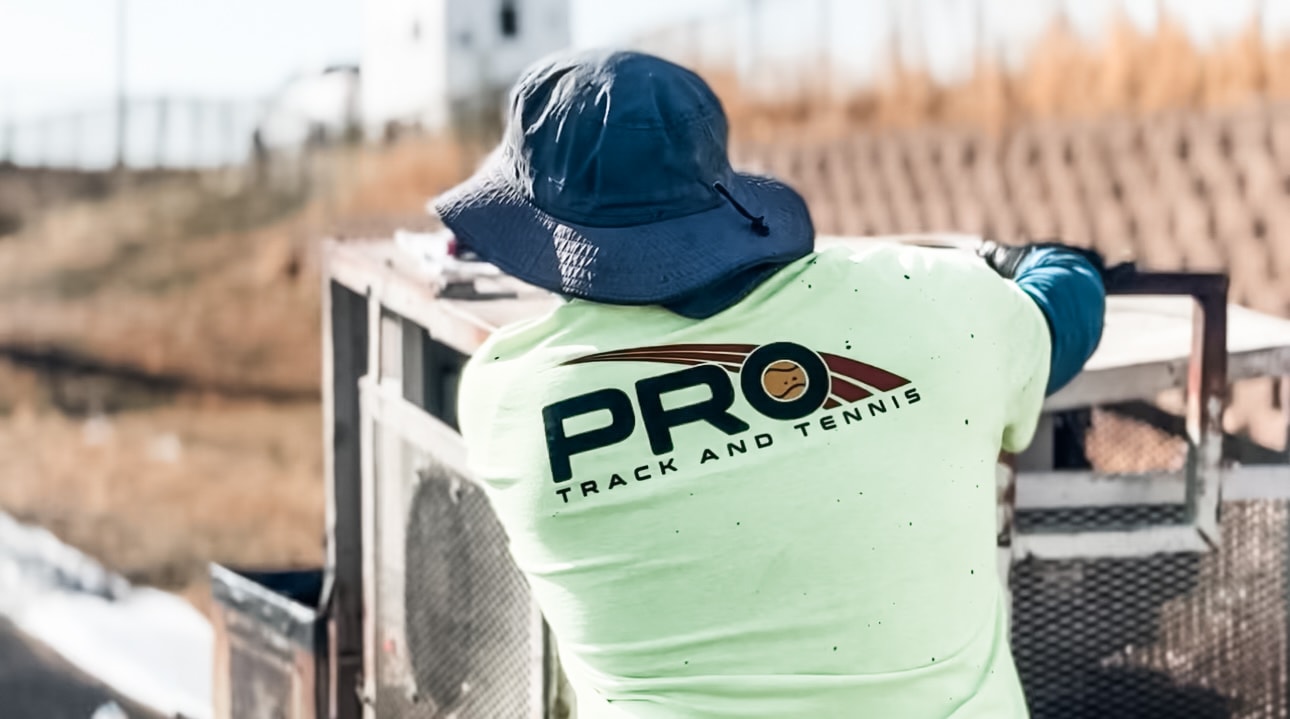
Choosing the Right System for Your Facility
The right choice depends on three key factors:
- Your current track condition – Can it be maintained or does it need replacement?
- Your budget – What can you afford now vs. what you’ll spend long-term?
- Your goals – Do you need to win back the regional meet or just maintain safety?
Key Questions to Ask Contractors
✅ Do you use in-house crews or subcontractors?
✅ What’s included in your warranty?
✅ Can you provide references from similar facilities?
✅ How do you handle crack repair?
✅ What’s your experience in our climate?
Red Flags to Avoid
Watch out for:
- Vague quotes without specific system details
- Contractors who subcontract the actual work
- No discussion of drainage or base condition
- Promises that seem too good to be true
- No local references or ASBA membership
The Bottom Line
Not all rubber running tracks are created equal. The difference between a $120,000 structural spray and a $300,000 full resurfacing isn’t just price. It’s about matching your facility’s needs, budget, and goals with the right solution.
Smart facility managers don’t guess. They get an expert assessment, understand their options, and make informed decisions based on their specific situation.
Get Your Track Assessment
Not sure whether your facility needs a structural spray, full resurfacing, or complete rebuild? We’ll assess your current surface, review your budget and goals, and recommend the right solution with honest cost projections.
As Lance puts it: “Our niche is repairing existing courts and tracks, and we’re really good at it.”
Pro Track & Tennis: 25+ states. 1,000+ projects. ASBA member with in-house crews.
Schedule your free assessment or call 402-761-1788.