


Key Takeaways
- Water intrusion and base movement cause most track failures, not surface wear
- Early intervention through routine inspections protects your investment and extends usable life
- Drainage problems must be fixed before any surface work
- Planned maintenance costs a fraction of emergency repairs or premature rebuilds
- Knowing when to repair, resurface, or rebuild determines whether you spend $20,000 or $300,000
Introduction: Why Running Track Maintenance Is a Budget Issue, Not Just Upkeep
A small crack in lane one. Faded color near the curve. Water that lingers longer than it used to after a storm.
Those are not cosmetic problems. They are early signals your running track is starting to break down, and the timing of your response determines whether the fix stays manageable or becomes a capital project.
Too often, running track maintenance gets treated like cleaning and striping. In reality, it is asset management. A running track is a multi-layer system built to handle water, weather, and daily use for years. The difference between proactive maintenance and reactive repair is not convenience. It is cost, downtime, and risk.
For facility managers, athletic directors, and municipal planners, the goal is simple:
- Keep athletes safe through consistent traction, cushioning, and surface integrity
- Keep programs running by avoiding closures and surprise failures
- Keep budgets predictable by planning repairs and resurfacing before the base is compromised
At Pro Track & Tennis, we’ve evaluated hundreds of tracks across 25+ states and seen the same pattern: facilities that act on early warning signs spend significantly less over the track’s lifetime than those that wait for visible failure.
This guide explains how to maintain a running track in practical terms: what actually causes tracks to fail, what to look for early, which repairs make sense, and how to choose between repair, resurfacing, and rebuild.

Understanding How Running Tracks Deteriorate Over Time
What Actually Damages a Running Track
Running tracks do not wear out evenly. They deteriorate under specific forces, and understanding those forces is the foundation of effective running track maintenance.
Water infiltration and poor drainage are the leading causes of early track failure. Once water reaches the asphalt base, it can soften the structure, accelerate cracking, and create conditions for delamination. If water is trapped below the surface, patching the top rarely solves the real problem.
Freeze-thaw cycles magnify small defects. Water enters hairline cracks, freezes, expands, and widens them. If your facility sees winter conditions, this cycle is one of the biggest reasons small cracks become major repairs.
UV exposure and binder breakdown happen gradually. Over time, UV hardens the surface and reduces elasticity. As surfaces stiffen, they become more brittle and more prone to cracking. High-traffic zones like lane one, curves, and start areas deteriorate faster and require closer monitoring.
Why Surface Problems Usually Start Below the Surface
Visible surface damage is often a symptom, not the root cause.
A running track is a layered system, and the surface depends on the stability of what’s underneath. When the base shifts, cracks, or becomes saturated, the surface can fail even if it is relatively new.
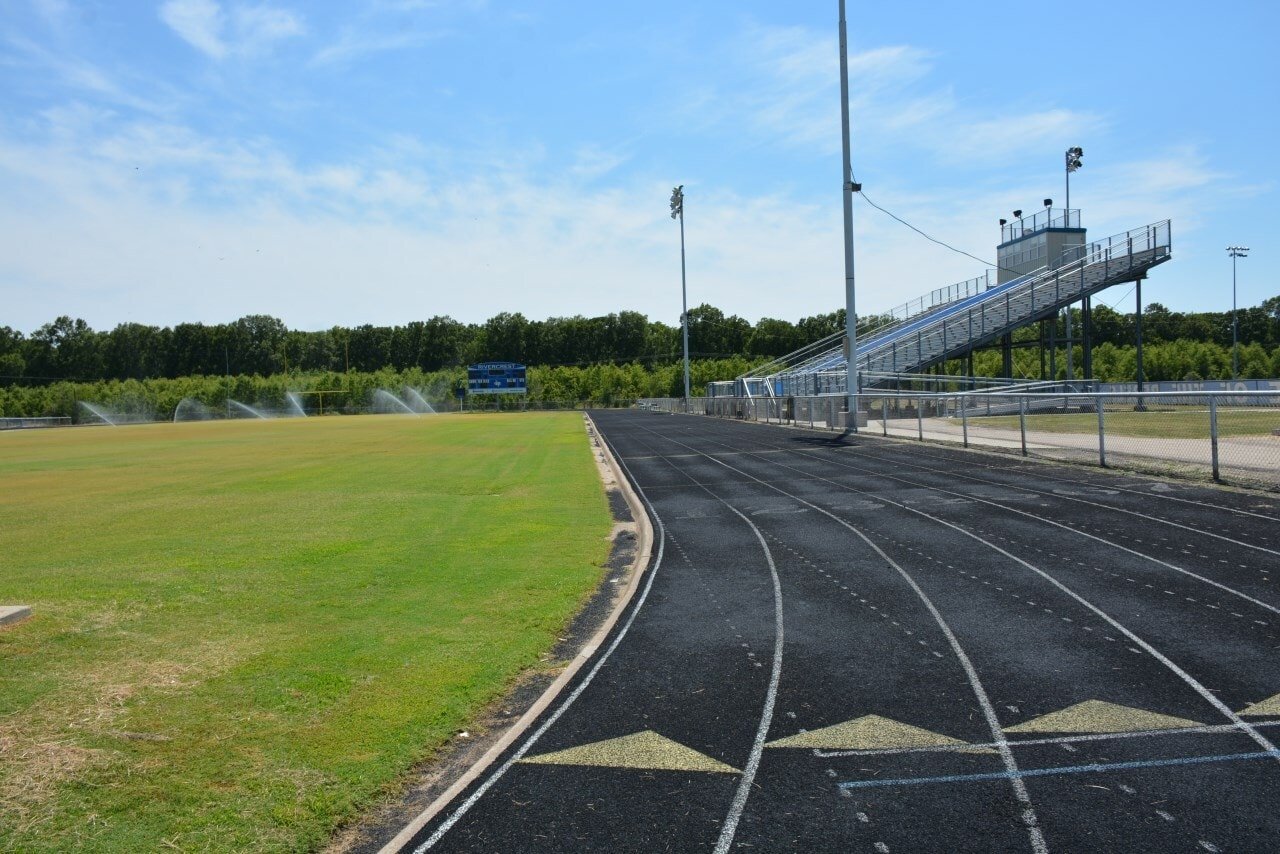
This is why resurfacing can fail early if drainage or base issues are ignored. A new surface may look great at first, then cracks, bubbling, or soft spots return because the underlying conditions never changed. If water management is wrong, everything else becomes temporary. Understanding these failure patterns helps facility managers make informed decisions about timing and scope, and that’s where professional assessment becomes critical.
Routine Running Track Maintenance: What Should Be Done Every Year
Monthly Visual Inspections
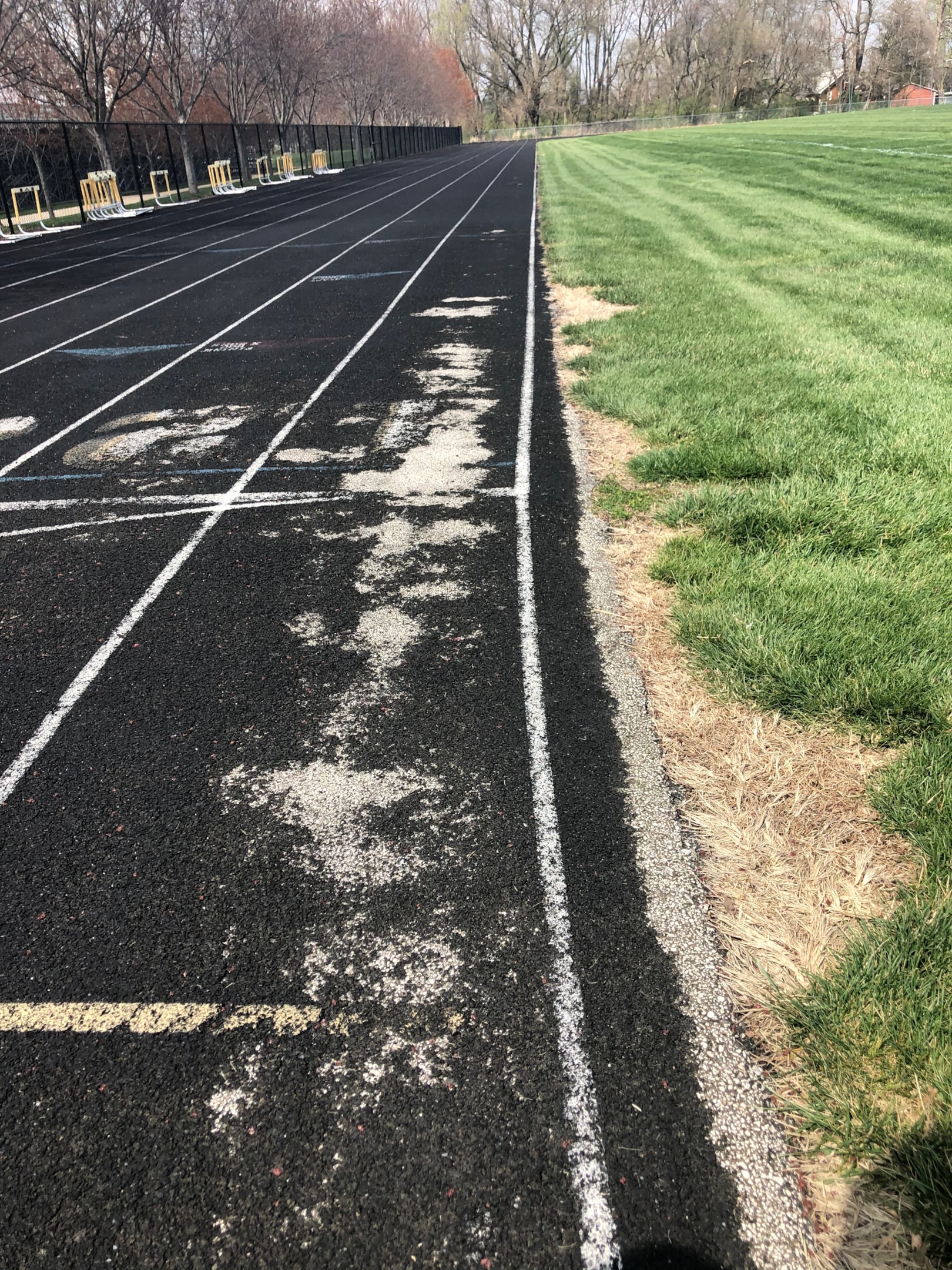
Regular inspections are the lowest-cost maintenance habit you can build. A monthly walk-through helps staff catch issues before they spread. During inspections, look for:
- Hairline cracks or widening seams
- Color fading or chalky residue
- Loss of rubber granules
- Soft or spongy areas underfoot
- Standing water after rainfall
- Raised edges, uneven patches, or trip points
Document findings with photos and dates. That track history becomes useful for budgeting, warranty conversations, and deciding whether a problem is stable or actively worsening.
Seasonal Maintenance Checklist
Spring
- Clear drainage systems of winter debris
- Inspect for freeze damage, heaving, and new cracking
- Remove accumulated dirt and organic matter along curbs and edges
- Address early weed growth around the perimeter before it spreads
Summer
- Monitor UV effects (surface hardening, chalking, fading)
- Increase inspections during peak usage
- Sweep debris from mowing and nearby fields
- Check high-wear zones more frequently: starts, exchange zones, inside curves
Fall
- Seal minor cracks before winter conditions arrive
- Remove leaves and organic buildup quickly (they trap moisture)
- Confirm drainage performance before freeze
- Clear sand migration from long jump areas
Winter (where applicable)
- Restrict access during freeze conditions
- Use rubber-edged tools for snow removal
- Avoid salt or harsh de-icers that can damage surfaces
Most facilities can handle routine inspections in-house. A professional assessment every 18-24 months can help identify base or drainage issues that are not obvious in a walkthrough. At Pro Track & Tennis, these assessments are complimentary and include written recommendations with cost estimates for any needed work.
Drainage Maintenance: The Most Important Part of Track Care
Why Drainage Failures Shorten Track Life Faster Than Anything Else
If one factor determines whether a track stays in good condition or deteriorates early, it is drainage.
Water breaks down binders, weakens asphalt, and creates pressure beneath the surface. Once moisture reaches the base, deterioration accelerates quickly. Drainage problems also turn small cracks into major failures. The pattern is predictable: water enters, the base softens, cracks widen, and surface separation follows.
How to Maintain Track Drainage Systems
Good drainage maintenance includes:
- Clearing slot drains and perimeter drains on a schedule (and after heavy storms)
- Removing debris trapped along curbing, rails, and edges
- Checking performance after rainfall
- Identifying low spots (“birdbaths”) early
If water remains more than 24 hours after rain, professional evaluation is warranted. If you are clearing drains repeatedly and the problem does not change, the issue is often slope, base condition, or subsurface drainage, not debris.
If drainage corrections require regrading or new drain installation, costs typically range from $20,000-$40,000 depending on scope. That investment protects a $120,000-$300,000 resurfacing from premature failure.

Red Flags That Require Immediate Action
- Standing water after normal rainfall
- Cracks that follow water flow paths
- Recurring soft spots in the same location
These conditions indicate structural risk and should not be delayed.
Crack Repair and Surface Repairs: What Works and What Doesn’t
Types of Track Cracks
Surface cracks affect only the top layer and can often be sealed if drainage is sound.
Fatigue cracks show up in high-stress areas and typically require targeted repair.
Structural cracks originate from base movement and cannot be solved with surface fixes alone.
When DIY Repairs Are Appropriate
Facility staff may handle:
- Isolated surface cracks (small, narrow, not spreading)
- Limited areas with no moisture issues
- Manufacturer-approved sealant applications
Always follow system-specific repair guidelines, because the wrong material can create hard spots or adhesion issues.
When Professional Repair Is Required
Professional services are needed when:
- Cracks exceed roughly 5mm, appear in patterns, or keep returning
- Bubbling, delamination, or soft areas are present
- Drainage-related damage is visible
- Repairs cover a larger area than a small spot fix
Professional crack repair using system like ARMOR ($20,000-$40,000 for comprehensive treatment) comes with a 5-year warranty and prevents cracks from telegraphing through new surfaces. The goal of professional work is to remove the conditions that keep recreating the crack.

Cleaning and Surface Care Best Practices
What Should Be Cleaned
- Organic debris (weekly during growing seasons)
- Dirt and fine particles from infields
- Sand migration from long jump pits
- Weed growth around the track perimeter
- Algae or mold in shaded or slow-dry areas
Use soft-bristle equipment and track-safe cleaning methods.
What Not to Do
- High-pressure washing at aggressive settings
- Harsh chemicals that degrade binders
- Stiff commercial brushes that scar the surface
- Sealing over contaminated or wet areas
Professional deep cleaning can improve traction and surface consistency when done correctly as part of a maintenance program.
Managing High-Wear Zones
High-stress areas include starting lines, curves in lanes 1-2, and relay exchange zones. Strategies that extend track life:
- Rotate practice start and stop locations during training
- Vary usage to reduce lane 1 overload
- Restrict vehicle access and require protective mats when equipment must cross
- Restrict non-athletic events that bring inappropriate footwear or heavy traffic
- Enforce spike and footwear policies based on your surface system
Repair vs Resurfacing vs Rebuild: Making the Right Call
This is the most important decision a facility manager makes about a track. Choosing correctly protects the base and keeps spending predictable.
When Repair Is Enough
Signs:
- Isolated cracks that are not spreading
- Base feels stable and firm underfoot
- Water drains within 24 hours
- Surface wear is limited to specific zones
Typical cost: $20,000-$40,000 for comprehensive crack repair with ARMOR system
Repairs work when drainage and the base are sound. They buy time and keep the surface safe.
When Resurfacing Makes Sense
Signs:
- Widespread surface wear, fading, chalking, or texture loss
- Minor cracking across multiple lanes
- Base remains stable and water still drains within 24 hours
Typical cost: $120,000-$300,000 depending on system choice
Resurfacing restores traction and performance while protecting the asphalt base underneath. A structural spray system runs approximately $120,000. Full scrape and new mat systems range $200,000-$300,000 depending on square yards.
The key is base integrity. If the base is compromised, resurfacing becomes a short-term cosmetic fix. Delaying resurfacing until base damage has progressed can turn a manageable project into a full reconstruction.
When Rebuilding Is Required
Signs:
- Water pools for days after rain
- Soft or uneven feel across multiple lanes
- Structural cracking through asphalt to base
- Visible heaving or settlement
- Drainage failure that cannot be corrected
Typical cost: $400,000-$800,000+ depending on site conditions
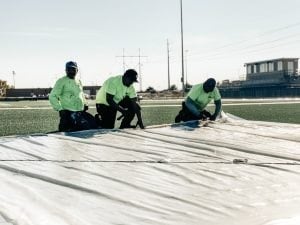
A rebuild is construction, not maintenance. It includes base work, drainage correction, new asphalt, and a new surface system. The most expensive mistake we see at Pro Track & Tennis: treating resurfacing as purely cosmetic. When facility managers delay because “it still looks okay,” they often discover the base has deteriorated beyond repair. That’s the difference between a $120,000 resurfacing and a $400,000+ rebuild.
Protecting Your Budget with Timely Action
Timing is not a minor detail in track maintenance. Resurfacing before base damage occurs is often the difference between a predictable project and an expensive escalation.
Why timing matters:
- Helps prevent water from reaching and damaging the base
- Reduces emergency closures and schedule disruptions
- Keeps planning aligned with seasons and bidding cycles
- Avoids compounding repair scope as cracks deepen
With proper maintenance coatings every five to seven years, a well-built track can continue performing for years. Routine walkthroughs, documented conditions, and drainage attention are what keep you ahead of major problems. Budget $1,000-$2,000 annually for preventive maintenance including inspections, minor crack sealing, and drainage care.
Maintenance Planning and Budgeting
Smart maintenance planning means knowing what to expect and building a simple cycle.
Annual tasks:
- Quarterly sweeping and debris removal
- Twice-yearly drainage checks (or more in heavy debris climates)
- Documentation of new cracks, soft spots, and ponding
- Minor spot repairs as needed
Multi-year planning:
- Evaluate crack patterns and base condition over time
- Schedule professional assessment before problems escalate
- Plan resurfacing during off-season weather windows
Planned maintenance stabilizes budgets and prevents emergency spending. A standard 400-meter resurfacing project takes 2-4 weeks depending on weather conditions, which means minimal disruption when scheduled properly.
Common Maintenance Mistakes to Avoid
Ignoring drainage issues. Drainage problems turn $20,000 repairs into $400,000+ rebuilds. Address drainage before any surface work.
Delaying small repairs. Early intervention on cracks costs hundreds. Waiting until they become structural failures costs tens of thousands.
Treating resurfacing as cosmetic. Resurfacing is base protection. When done on schedule, it prevents expensive reconstruction.
Allowing vehicle traffic without protection. Maintenance vehicles, lifts, and carts without protective mats compress the surface and create failure points.
Using non-track-specialist contractors. Track construction and maintenance requires specific expertise, materials, and equipment. General contractors often create more problems than they solve.
Neglecting routine debris removal. Small maintenance tasks prevent larger problems from developing.
Get a Professional Track Assessment
Not sure whether your track needs minor repairs, resurfacing, or reconstruction? Pro Track & Tennis provides complimentary on-site assessments that include:
- Surface condition testing
- Drainage and base evaluation
- Written repair vs. resurfacing recommendations
- Realistic cost scenarios for budget planning
Our team has completed 1,000+ track and court projects across 25+ states using ASBA in-house crews. We provide honest assessments and two-option plans so you can make informed decisions based on your facility’s actual condition, not assumptions.
Every quote includes a written scope, material specifications, and clear timelines. Using in-house crews means accountability and consistent quality from start to finish.

Bottom Line: Smart Maintenance Protects Performance and Budgets
Running tracks do not fail overnight. They show warning signs for years: small cracks, slow drainage, soft areas, surface hardening.
Facilities that respond early spend less, close less often, and protect both athletes and budgets. The smartest move is not guessing when your track will fail. It is knowing its condition today and planning accordingly.
Pro Track & Tennis — Serving 25+ states with 1,000+ completed projects. ASBA member contractors. Honest pricing. Surfaces that last.