Athletic Surfaces
Acrylic vs Cushioned Tennis Court: Complete Comparison Guide
Updated on
·
4 min read

Published by

Key Takeaways
Acrylic hard courts are the most common surface: firm, consistent bounce and a lower upfront cost.
Cushioned systems use the same acrylic top coats over rubber-filled layers, so the bounce is nearly identical but joints take less of the impact.
The cost difference is in the initial build, not the upkeep. Both follow the same maintenance schedule and resurface every 5 to 7 years.
Coatings need a surface temperature of at least 60°F to cure, which keeps the work season short in northern states.
Pro Track & Tennis installs Nova Sports acrylic and cushioned systems. Clay courts are not something we service.
The surface beneath a tennis player’s feet influences every aspect of their game, from confidence in aggressive shots to how their body feels after hours of play. Choosing the right tennis court surface is one of the most important decisions facility managers face, as it directly affects performance, comfort, safety, and long-term value.
With hard courts now accounting for over 60% of installations globally, the choice between standard acrylic courts and cushioned tennis court surfaces has become increasingly relevant. Recent industry data shows cushioned courts can reduce impact forces by up to 15%, helping prevent injuries and extend player longevity.
After completing more than 1,000 successful projects across 25+ states, our team has seen firsthand how surface choice affects player satisfaction and facility success.
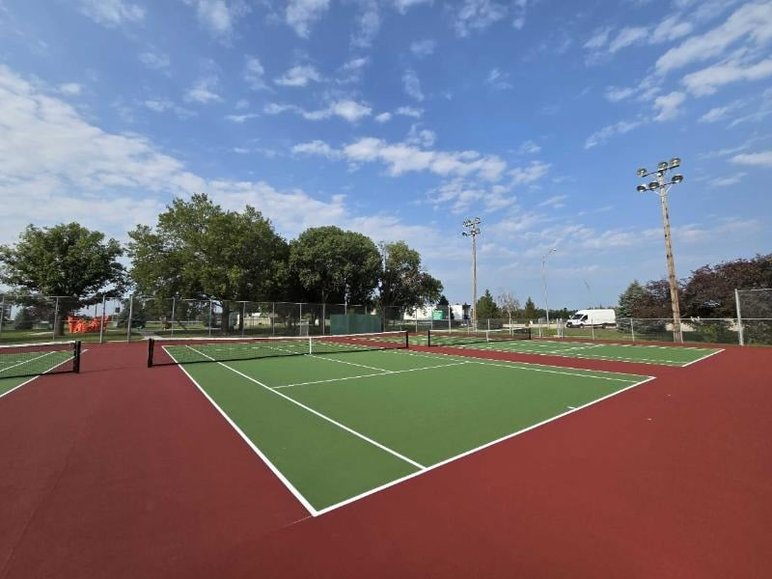
Ready to explore tennis court surface optionsfor your facility? Contact us for a free on-site assessment.
Introduction to Tennis Court Options
When planning a new tennis court or considering a resurfacing project, selecting the right surface is a crucial decision that shapes the entire playing experience. Options include grass, clay, and hard courts, but most modern installations in the U.S. are acrylic hard courts or cushioned acrylic systems.
Grass courts: Classic but high-maintenance.
Clay courts: Softer, common in the Southwest, but not serviced by Pro Track & Tennis.
Hard courts (acrylic): Durable, cost-effective, consistent play.
Cushioned hard courts: Add a layer of comfort and injury protection while maintaining performance.
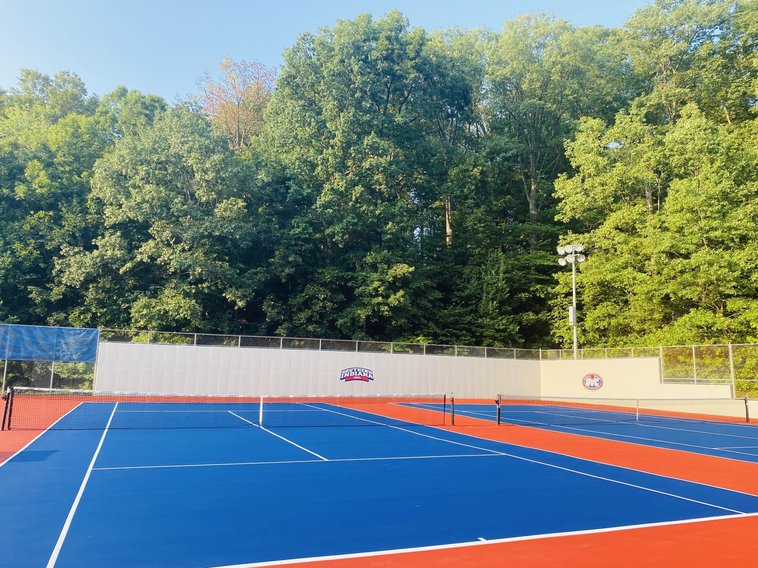
Understanding Acrylic Tennis Court Surfaces
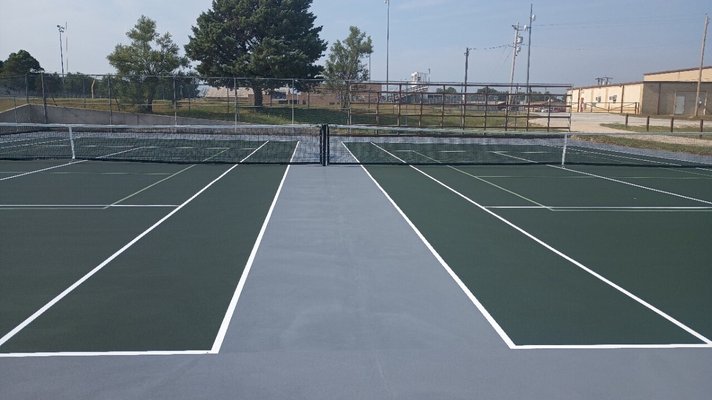
Acrylic tennis courts are the most common hard court surface, built with a concrete or asphalt base and finished with multiple layers of textured acrylic paint.
Key Characteristics of Acrylic Courts:
Firm Playing Surface: Consistent bounce and predictable play.
Direct Impact Transmission: Forces pass directly from the base to players’ joints.
Cost-Effective: Lower initial installation cost compared to cushioned alternatives.
Simple Maintenance: Routine sweeping, washing, and resurfacing every 5-7 years.
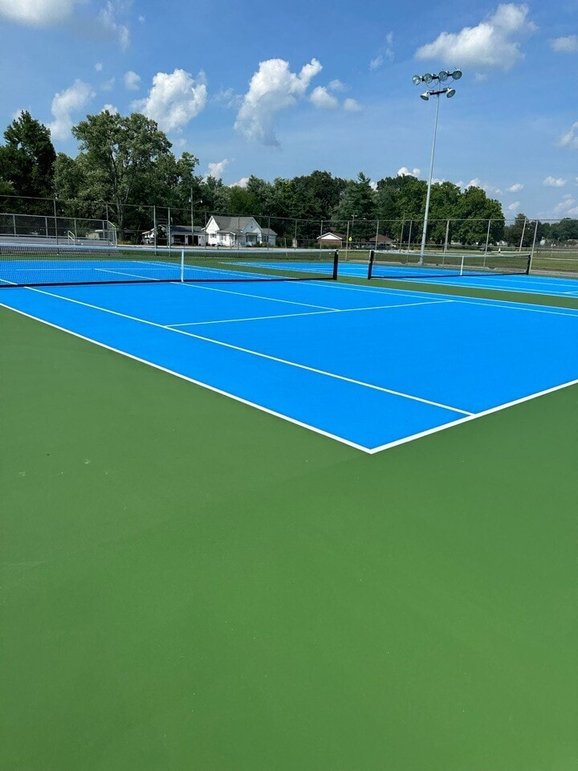
Understanding Cushioned Tennis Court Systems
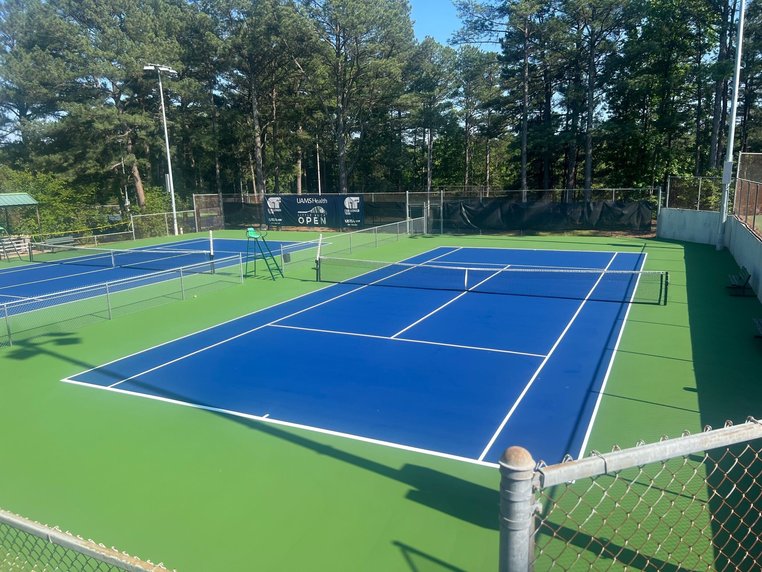
Cushioned tennis courts use the same acrylic paint system but incorporate rubber granules and elastomeric layers beneath the surface. This provides shock absorption while maintaining a true ball bounce.
At Pro Track & Tennis, we install Novacrylic® systems by Nova Sports USA, ITF-approved for tournament play and trusted nationwide.
Nova Cushioning Technology:
Novacushion® System: Multiple layers of acrylic mixed with fine EPDM rubber for shock absorption.
Nova Ultracushion® System: Enhanced comfort for high-use facilities and senior players.
Combination Surface® Finish: Top coats provide vibrant color and uniform texture without reducing cushioning benefits.
Performance and Playing Characteristics
Both acrylic and cushioned surfaces deliver reliable play, but with different player experiences:
Ball Bounce & Speed
Acrylic: Firm, fast, consistent bounce – ideal for aggressive baseline play.
Cushioned: Nearly identical bounce, but absorbs impact energy for improved comfort.
Player Comfort & Safety
Acrylic: Higher stress on joints during extended play.
Cushioned: Shock absorption reduces fatigue and lowers injury risk.
Cost Considerations
The main difference between acrylic and cushioned courts lies in upfront investment, not upkeep.
Acrylic Courts: Lower initial cost due to straightforward installation.
Cushioned Courts: Higher initial cost from premium materials and multi-layer construction.
Primer & Moisture Costs
In wetter climates, stronger primers may be required to prevent moisture issues.
Typical resurfacing: Around $20,000 every 5-7 years for both systems. A complete rebuild costs about $75,000.
Maintenance & Repair
Both acrylic and cushioned courts follow the same maintenance schedule:
Daily: Sweep debris.
Weekly: Power wash to prevent buildup.
Annually: Inspect for cracks, fading, and surface wear.
Every 5-7 years: Professional resurfacing.
Special Repairs: The ARMOR Crack Repair System
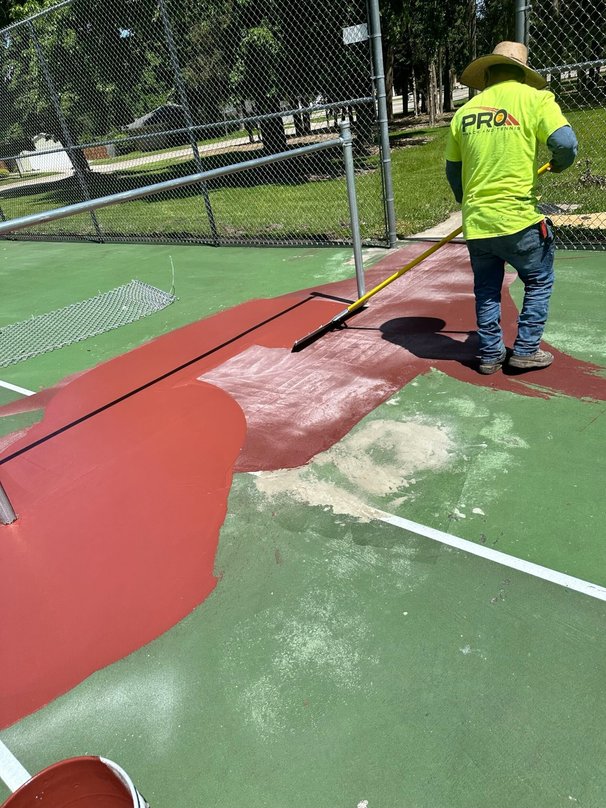
For courts with extensive cracking, Pro Track & Tennis offers the ARMOR crack repair system for tennis courts:
Fill cracks with repair mix.
Reinforce with ARMOR tape and fabric.
Apply primer and coatings.
Seasonal and Weather Considerations
Weather plays a key role in scheduling projects:
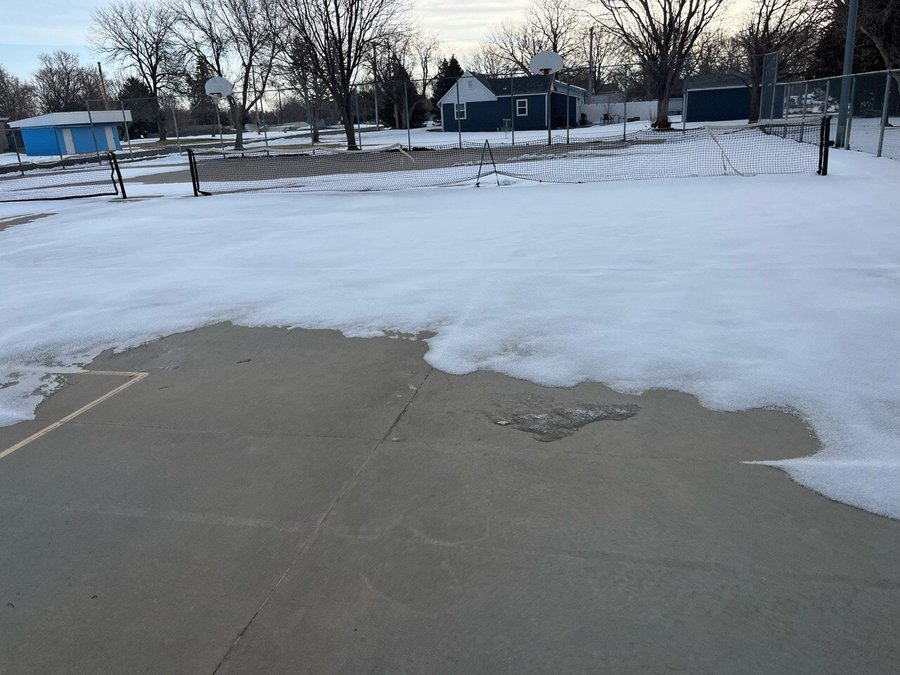
Surface Temperature: Minimum of 60°F required for coatings to cure.
Timing:
Base concrete work → summer through fall.
Surfacing & coatings → spring through warm fall.
Regional Impact:
Northern states = short work season (mainly summer).
Southern states = extended installation window.
Choosing the Right Surface for Your Facility
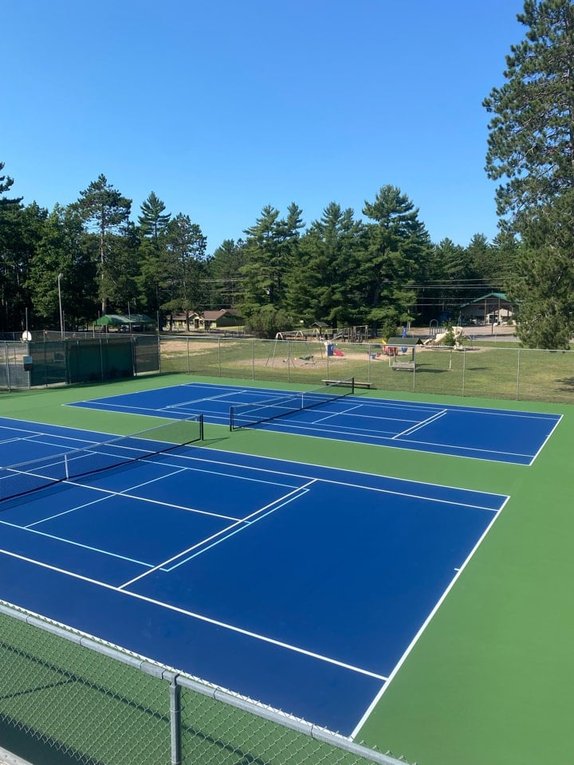
Recreational & Community Facilities: Acrylic offers affordability; cushion ideal for multi-use spaces.
Schools & Youth Programs: Cushioning reduces injury risk and improves safety for intensive use.
Pickleball Facilities: Cushioning strongly recommended for older player demographics.
Competitive Clubs: Cushioned systems provide premium comfort and member appeal.
Common Questions (FAQs)
Does a cushioned court take longer to install than acrylic?
No. Timelines are similar; cushion simply involves additional material layers.
Do cushioned courts require special maintenance?
No. Both share the same maintenance protocols.
Which surfaces can be resurfaced?
Acrylic and cushioned systems are applied over asphalt or concrete. Clay courts are not serviced by Pro Track & Tennis.
When should I rebuild instead of resurface?
If the base is very old, has extensive cracks, or structural leveling issues, a full rebuild is recommended.
Conclusion
Both acrylic and cushioned tennis courts deliver consistent, professional play. The right choice depends on your facility’s budget, usage, and player needs:
Choose acrylic for lower upfront cost and reliable durability.
Choose cushion for enhanced comfort, safety, and player satisfaction.
Not sure which surface is right for your facility? Contact Pro Track & Tennisfor a free assessment and customized recommendations.
Get a Free Assessment for Your Court or Track
Our in-house crews have completed 1,000+ projects across 25+ states. Tell us about your facility and we will inspect the surface and give you a straight plan and quote.
Get Free Assessment
»
About the Author
Marketing Manager, Pro Track & Tennis
Recent Blog Posts
Discover More →
•
8 min read
Plan your fall court and track resurfacing project: when to book, how budget cycles fit in, and how to sequence multiple surfaces.
•
8 min read
Your tennis court cracked again after resurfacing? Learn why reflective cracking happens and what actually stops an old crack from reappearing.
•
7 min read
Learn how tennis court resurfacing timing affects downtime, from weather windows to phasing multi-court facilities without closing everything at once.
•
7 min read
TYPTI vs. pickleball for clubs: court, equipment, and rules differences, plus a decision framework on adding TYPTI or switching entirely.
•
10 min read
How to host TYPTI at your club: equipment, court readiness, programming, marketing, and the revenue model, compared to pickleball benchmarks.