
Facility Maintenance
Running Track Cracks, Surface Issues, and Drainage Problems: A Complete Guide for Facility Managers
Updated on
·
6 min read

Published by

Small cracks, soft spots, and standing water might look like minor maintenance issues, but on a running track they are early warnings of far bigger problems. A hairline fissure in lane four could be a minor repair, or the first sign that water has reached the asphalt base, putting you on a path toward complete replacement.
For facility managers juggling tight budgets and liability concerns, understanding these warning signs is the difference between planned maintenance and emergency spending. This guide shows you how to read your track, spot problems early, and know exactly when repair, resurfacing, or rebuilding makes financial sense.
Why Running Tracks Crack: The Real Causes
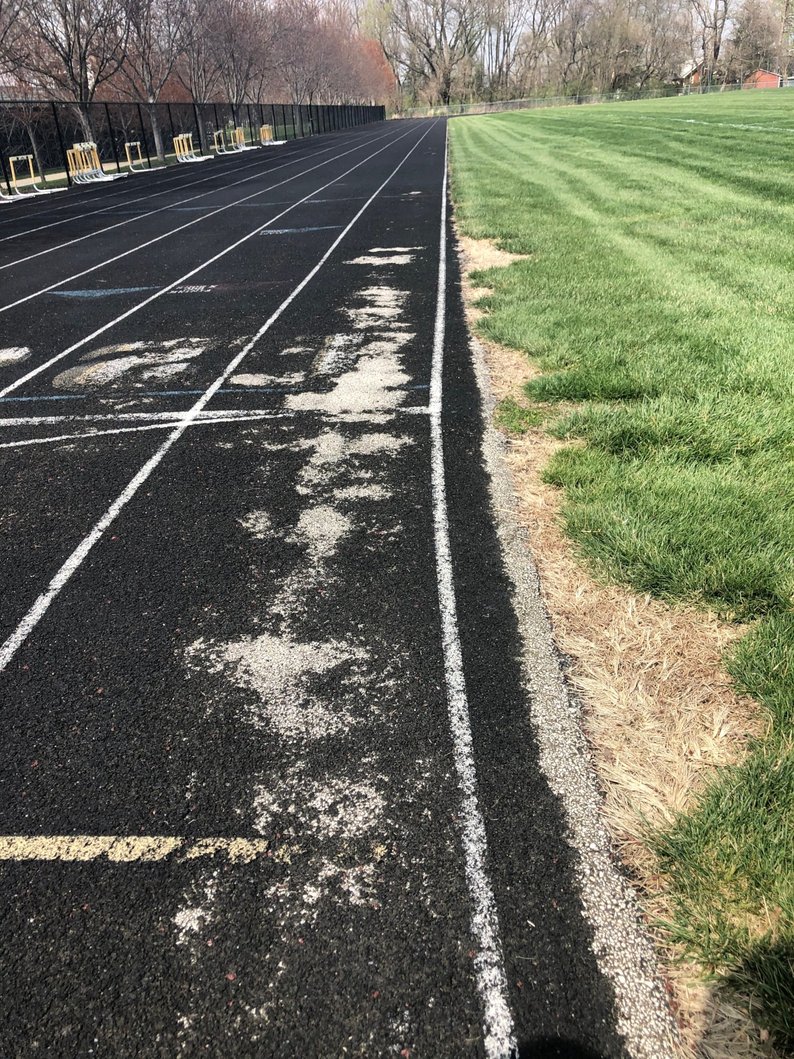
Cracks rarely appear “out of nowhere.” They’re almost always the result of climate stress, moisture intrusion, base movement, or wear patterns that have been developing for years. Understanding the cause helps you predict what happens next.
Climate and Temperature Stress
Tracks live outside, and the surface moves constantly with temperature changes. Expansion in summer, contraction in winter, over and over, slowly weakens the surface. In northern states, freeze-thaw cycles accelerate this process dramatically.
The surface stiffens as it ages, making it more vulnerable to tension lines that eventually become visible cracks. Installation timing matters too:
“We can’t install coatings below 60°F or on damp surfaces. For northern states, that means work windows are much shorter — mainly summer.” — Lance Laurent, Pro Track & Tennis
Water and Drainage Problems
Nothing destroys a running track faster than water. When drainage is poor:
Water pools in low spots
Moisture softens the binder
Freeze-thaw cycles widen cracks
Water eventually reaches the asphalt base
Once the base is compromised, the surface begins to bubble, separate, or sag. Drainage issues must be fixed first, or resurfacing is guaranteed to fail early.
Bottom line: If you see water sitting for more than 24 hours after rain, drainage assessment should happen immediately.
Surface Wear and Traffic
High-use zones take the most abuse. Starting lines, turns, and exchange zones see thousands of hard foot strikes. Over time:
Granules shed
Texture becomes smooth
Hairline cracks develop
Small fissures widen into visible lines
Even severely worn tracks can sometimes be saved:
“We’ve repaired some really, really ugly tracks. You can do a lot to repair a track.” — Lance Laurent, Pro Track & Tennis

Types of Running Track Cracks and What They Mean
Not all cracks signal the same severity. Identifying the type helps determine whether you need minor repair, major resurfacing, or complete rebuild.
Surface-Level Cracks
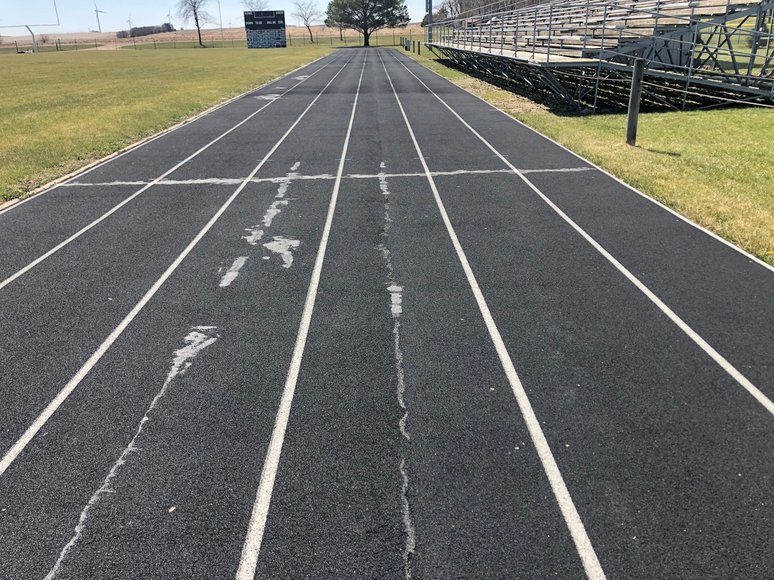
These are cosmetic or early-stage issues. Common indicators include:
Hairline cracks under 1 mm wide
Spiderweb patterns from UV aging
Linear cracks in high-traffic zones
These can often be addressed with targeted repairs:
“Sometimes we just come in and cut cracks out and do the armor and that could be 20, 30, 40,000.” — Lance Laurent, Pro Track & Tennis
Structural Cracks
Structural cracks tell a different story. These cracks often extend through the surface into the asphalt:
Deep cracks in lanes or turns
Edge separation where track meets curbing
Settlement cracks following base movement
When the damage goes deeper, more extensive work is needed:
“There comes a point where that half inch base mat that gets paved in place can be just wore out. I mean, it’s spider cracking, it’s dry, the rubber granules are really loose and migrating out of it.” — Lance Laurent, Pro Track & Tennis
Drainage-Related Failures
Drainage issues create patterns that are easy to identify:
Birdbaths or low spots
Wet lanes that never fully dry
Cracks forming along water flow paths
Standing water accelerates binder breakdown, widens cracks, and creates soft spots that eventually require removal and replacement.
How to Identify Track Damage Early
The fastest way to reduce costs is to spot problems before they become structural. Set a monthly 15-minute inspection schedule.
Visual Inspection Checklist
Inspect monthly (and after major weather events) for:
Granule loss or exposed black base
Loose granules on the surface
Color changes or chalking
Long cracks in turns or near starting areas
Water that stays longer than 24 hours
Bubbling or soft areas underfoot
Take photos with your phone and keep a simple log. Date, location, weather conditions. This documentation becomes invaluable when you need to make budget requests or evaluate contractor proposals.
When to Call a Professional
Bring in a track specialist when:
Cracks exceed 3-5 mm
Cracks run more than 12 inches
Bubbling or delamination appears
Soft spots expand
Water remains for days
A good co`ntractor will start by understanding your situation:
“When we go out and look at a running track, we first ask the owner, you know, what are you looking to do? What are you thinking?” — Lance Laurent, Pro Track & Tennis
Professional evaluation typically costs nothing (most companies offer free assessments).

The Hidden Cost of Ignoring Problems
Facility managers often don’t realize the cascade effect of delayed maintenance. What starts as a maintenance issue becomes much bigger:
“Sometimes the pain is they want the regional track meet back. They lost it because school X down the road put in a new track. Other people, we’ve had customers tell us, hey, our insurance said they’re going to cancel us and make us quit and shut down our track program if we don’t fix our track, because there’s tripping hazards out here.” — Lance Laurent, Pro Track & Tennis
Understanding Your Repair Options and Costs
What Different Repairs Actually Cost
Based on Pro Track & Tennis’s experience across 25+ states:
Minor repair: $20,000-$40,000 (crack repair with armor system)
Structural spray resurfacing: ~$120,000 (top layer replacement)
Full resurfacing: $200,000-$300,000 (complete surface replacement)
Premium systems: $300,000-$700,000 (Division 1 universities: $700,000-$1,000,000+)
Track size matters significantly:
“An average eight lane track is 5,000 square yards. The price goes up with the square yardage.” — Lance Laurent, Pro Track & Tennis
Why Contractor Choice Matters
“We use our own crews. Once you start subbing stuff out, you lose control.” — Lance Laurent, Pro Track & Tennis
Professional contractors with in-house crews ensure quality control and accountability that protects your investment.
When to Resurface vs. When to Rebuild
This is the most important decision you’ll make about your track.
Resurface If:
The base is solid (no soft spots)
Water drains within 24 hours
Cracks are shallow and not widespread
No large soft spots present
For tracks that just look worn but are structurally sound:
“A running track can be pretty wore out, but you can patch it, you can patch the cracks, and you can do what they call a structural spray. It’s like repainting your house. You’re repainting it, but you’re adding rubber to the paint coating.” — Lance Laurent, Pro Track & Tennis
Rebuild If:
Water stays on track for days
Cracks run through the asphalt
Soft or sunken areas appear
Multiple lanes show base failure
Drainage no longer works
Your Action Plan
Running track cracks, surface issues, and drainage failures follow predictable patterns. Here’s what each symptom tells you:
Small cracks: Address within reasonable timeframe
Large cracks: Assess immediately
Standing water: Fix drainage immediately
Bubbling: Professional evaluation now
Soft spots: Professional evaluation now
The key is simple: Don’t wait for obvious failure. Tracks rarely collapse overnight; they fail slowly, giving you multiple chances to intervene.
Immediate Steps:
Inspect monthly using this guide’s checklist
Document problems with photos
Get professional assessment when cracks exceed 3mm
Fix drainage immediately
Plan for timely resurfacing
“Our niche is repairing existing courts and tracks, and we’re really good at it.” — Lance Laurent, Pro Track & Tennis
Not Sure Where Your Track Stands?

Pro Track & Tennis provides free professional assessments. We’ll walk your lanes, test your base and drainage, and deliver a written assessment with clear options and transparent costs.
Pro Track & Tennis 25+ states • 1,000+ projects • In-house crews
Schedule your free assessment: 800-498-4395
Most assessments take 45-60 minutes. You’ll leave with a clear plan and budget numbers you can actually use.
Get a Free Assessment for Your Court or Track
Our in-house crews have completed 1,000+ projects across 25+ states. Tell us about your facility and we will inspect the surface and give you a straight plan and quote.
Get Free Assessment
»
About the Author
Marketing Manager, Pro Track & Tennis
Recent Blog Posts
Discover More →
•
8 min read
Plan your fall court and track resurfacing project: when to book, how budget cycles fit in, and how to sequence multiple surfaces.
•
8 min read
Your tennis court cracked again after resurfacing? Learn why reflective cracking happens and what actually stops an old crack from reappearing.
•
7 min read
Learn how tennis court resurfacing timing affects downtime, from weather windows to phasing multi-court facilities without closing everything at once.
•
7 min read
TYPTI vs. pickleball for clubs: court, equipment, and rules differences, plus a decision framework on adding TYPTI or switching entirely.
•
10 min read
How to host TYPTI at your club: equipment, court readiness, programming, marketing, and the revenue model, compared to pickleball benchmarks.