
Running Track Resurfacing Services
Running track resurfacing restores a worn track surface without rebuilding the base, and it typically runs well below the cost of full reconstruction. A track rebuild usually takes two to four weeks. Pro Track & Tennis has completed 1,000+ track and court projects across 25+ states, with 30+ years in the business and in-house crews on every job, no subcontracting. This page covers the surface systems we install, the standards a resurfaced track needs to meet, warranty coverage, what drives cost by project type, and what to expect from a free site evaluation.

ASBA Member
1000+ Projects
25+ States Served
Get Free Assessment
Why Schools & Facilities Choose Pro Track & Tennis
With 1,000+ successful resurfacing projects, Pro Track & Tennis delivers consistent results, professional execution, and equipment of our own design.

Proven Results
1,000+ successful resurfacing projects completed across all climates.
Consistency & Professionalism
No subcontractors – only our experienced in-house teams.
Specialized Equipment & Techniques
President Lance Laurent’s equipment eliminates guesswork, especially for high-performance latex track systems.
100% Encapsulated Surface
Install a seamless, elite-quality track surface with no dry spots or hollow sound.
ASBA Member
We’re ASBA member contractors meeting educational facility standards.
Get Free Assessment
Running Track Resurfacing
& Repair Services
Over time, running tracks experience wear and tear from heavy use and environmental exposure.
We specialize in resurfacing and repairing tracks to restore them to optimal condition and extend their lifespan. We’ll address common issues such as:
Cracking
Surface fading and color loss
Worn or peeling surface coatings
Hardening or roughness of the track surface
Improper drainage
Line fading or chipping
As expert running track contractors, we’ll make your track smooth, safe, and ready for athletes to perform their best.
President Lance Laurent’s specialized equipment ensures superior precision
ARMOR crack repair system prevents future issues
Our region-specific resurfacing solutions are built to last in your local climate

Repair, Resurface or Rebuild: Which Does Your Track Need?
Not every worn track needs the same fix. What matters is which layer has failed: the top coating, the rubber mat, or the asphalt base underneath. That one call decides whether the job costs $20,000 or $400,000 and up.
Surface Cracks Only: Crack Repair
$20,000 to $40,000
When cracking is limited to specific areas of an otherwise sound surface, we cut the cracks out and repair them with the ARMOR Crack Repair System. Cost depends on the linear footage of cracks. Repair fixes individual cracks, small damaged areas and trip hazards. It won’t fix wear across the whole track, delamination, or base and drainage problems, so treat it as a way to buy time while you plan for resurfacing.
Worn Surface, Sound Base: Structural Spray
Approximately $120,000
When the surface is faded, rough or worn but the mat and base are still sound, a structural spray adds a new coating with rubber granules across the whole track, along with crack repair and new striping. With maintenance coatings, a structural spray lasts 5 to 7 years.
Failing Mat: Full Scrape and New Mat
$200,000 to $300,000
When the mat itself is spider cracking, drying out or shedding loose rubber granules, a new coating won’t hold. We scrape off the old surface, install a new mat and restripe the track. The asphalt base and drainage stay in place, which keeps the cost well below a rebuild. With maintenance coatings every five to seven years, a new mat system can last upwards of 20 years.
Failed Base or Drainage: Rebuild
$400,000 to $800,000+
If water stands on the track long after rain, the surface feels soft or spongy, large sections are lifting, or cracks run through the asphalt base, the problem is underneath the surface. Resurfacing over a failed base won’t last. That track needs reconstruction, starting with the base and drainage.
“A running track can be pretty wore out, but you can patch it, you can patch the cracks, and you can do what they call a structural spray. It’s like repainting your house. You’re repainting it, but you’re adding rubber to the paint coating.”
Lance Laurent
President, Pro Track & Tennis
Whichever option fits, drainage problems have to be fixed before any new surface goes down. Our free site evaluation checks the base, drainage and slope, and you get a written condition report before we quote, so the recommendation matches what’s actually failing.
Running Track Resurfacing Cost by Project Type
Track project cost scales with how much of the structure you’re touching, not just square footage.

Minor repairs and crack repair sit at the low end. This is targeted work, addressing cracking or surface damage without touching the full surface, and it’s the fastest path back to a usable track.

Structural spray and restriping costs more than minor repair because it adds a full protective layer across the entire surface, plus new lane and event markings. It’s a middle-ground option for tracks with a sound base but a worn top layer.

Full scrape and new mat is a bigger investment than structural spray. This removes the existing surface entirely and installs a new mat system, which makes sense when the top layer has failed but the base underneath is still good.

Premium systems represent the top end of resurfacing work, using higher-performance materials for competition-level or university facilities.

New track construction, building a track from the ground up, is a different category again, because it includes base work and not just surface work.
Where your project lands depends on base condition, track size, and which system you choose. That’s exactly what the free site evaluation and written quote are for. No project gets priced from a phone call alone.

New Running Track Construction
For new track construction, Pro Track & Tennis offers complete, customized solutions tailored to your facility’s needs.
We serve athletic directors and facility managers across 25+ states, working with K-12 schools, universities, municipalities, and more.
From the initial site inspection and design to final surface installation, we handle every step with precision using our technology, delivering your track to meet the highest standards for performance and durability.
Get Free Assessment
»
Our President Lance Laurent has been resurfacing running tracks for decades, and he’s passionate about getting the job done with superior quality and precision.
Lance’s surface application machine systematically deposits exact amounts of rubber while spraying liquid latex for a continuous, even, and refined surface.

Eliminates Risk
100% encapsulated and seamless surface – no dry spots.

Precise Application
There’s no room for error in high-quality latex track systems.

Proven Results
Consistent and elite performance across 1,000+ projects.
Premium Running Track Surface Materials
As a proud partner of Polysport, we offer a variety of premium track systems.
These surfaces give athletes a balance of comfort, grip, and durability, making them suitable for all levels of competition.
Installed with our precision equipment, our track surfaces are engineered to withstand the rigors of daily use and extreme weather for long-lasting performance.
Available running track surface materials include:
Polyurethane Track
Rubberized Track
EPDM (Ethylene Propylene Diene Monomer)
Asphalt Track Coating
Latex Bound Track
Synthetic Track
High-Performance Latex Tracks
Custom color options are available for all surface types.
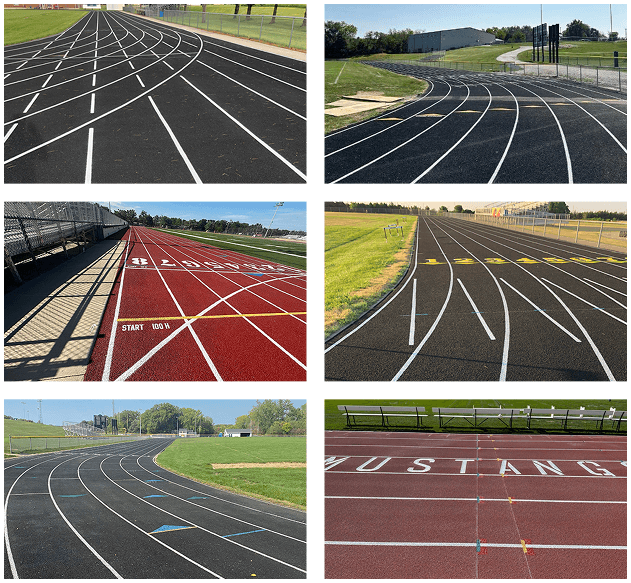

Running Track Solutions for Every Climate
Our experienced in-house running track contractor teams serve 25+ states, from the South and Midwest to the Mountain West.
We tailor our track surfaces for longevity in your local climate:
Midwest: Freeze-thaw resistant surfaces for harsh winters
South: UV-protection and heat-resistant materials
Mountain West: Engineered for temperature swings at altitude
When you’re thinking of resurfacing your running track, make sure you consider these climate factors:
Temperature extremes and weather patterns
Drainage requirements
Material selection for optimal performance
Seasonal installation timing




Running Track Standards: NFHS, ADA, and State Requirements

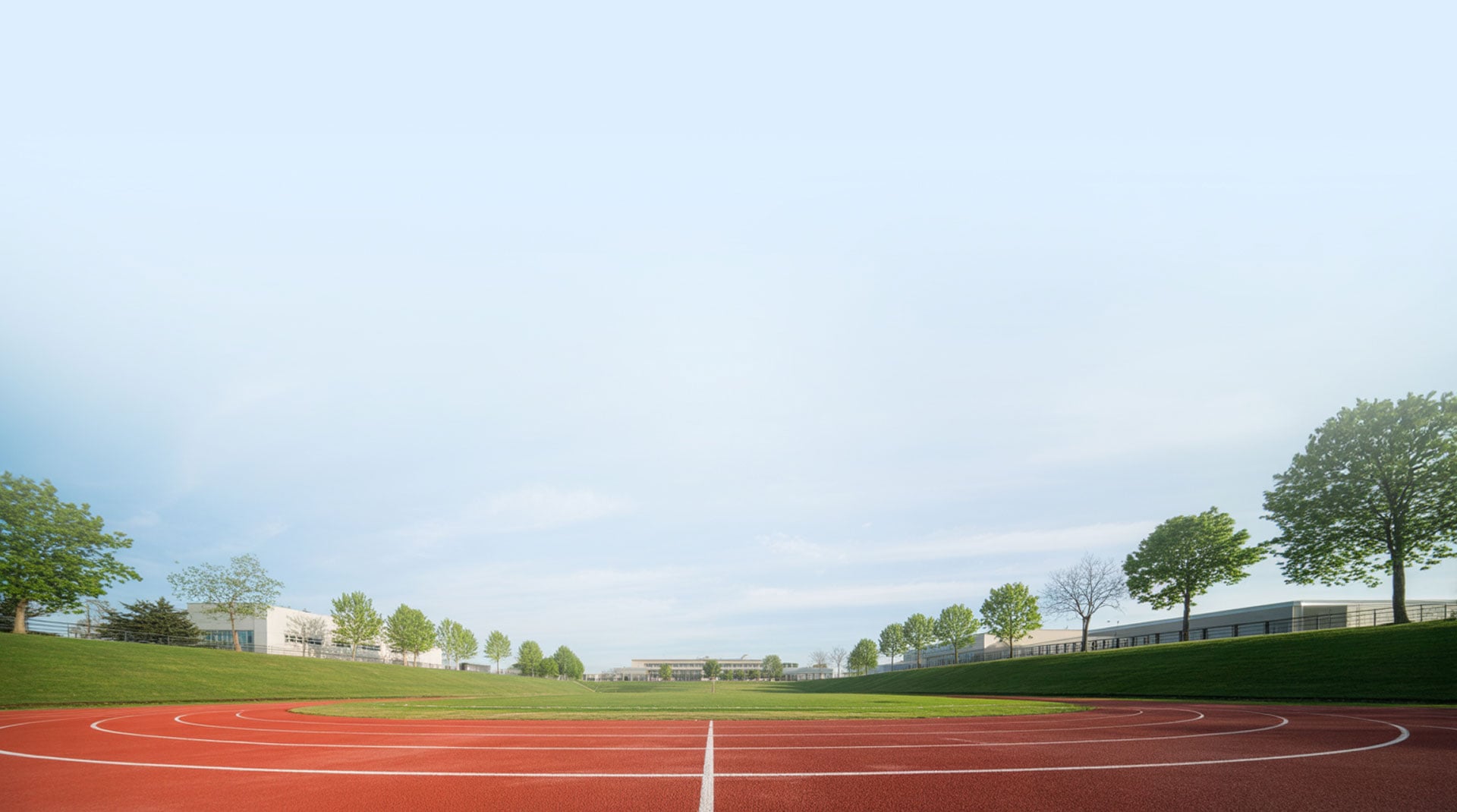
NFHS / 400-Meter Standard
Most U.S. high school tracks are built to the 400-meter standard used by the National Federation of State High School Associations (NFHS). Running a regulation 400-meter oval is what lets race times recorded at one school be compared with times from another regulation facility, and it protects a school’s ability to host sanctioned meets. World Athletics (formerly IAAF) certification is a separate surface standard that applies at higher levels of competition.

ADA Accessibility
Track facilities also need to account for ADA accessibility, covering accessible routes to the track, spectator and team areas, and adjacent restrooms. Accessible route requirements are project-specific and depend on your site’s grading and existing infrastructure, so we’d recommend reviewing the current ADA Standards for Accessible Design with your architect during planning, alongside our site evaluation.

State Requirements
State athletic associations may have their own requirements as well. If you’re planning a project in one of the states below, our state-specific pages cover local climate considerations.

Planning a Track Project in Your State?
Local climate, construction conditions, and athletic association requirements can affect how a track is designed and resurfaced. Explore our state-specific resources below.


Case Study: Ulysses High School Track Resurfacing, Ulysses, KS
Ulysses High School made the decision to move forward with track replacement later than expected, on a tight timeline around football and track seasons. Superintendent Corey Burton explained why the school chose PTT.
“They were great,” Burton said. “Communication was great. Timing for us was a little important, and they guaranteed us they could get in here right at the end of football season and still have us ready to go for track season.”
Corey Burton
Superintendent, Ulysses High School
The old surface had also deteriorated to the point of injury risk:
The surface on it was just shot. It was deteriorated. There were spots where it was basically gone, and over time, it had gotten really hard. Some of our kids were even fighting shin splints because of it.
Corey Burton
Superintendent, Ulysses High School
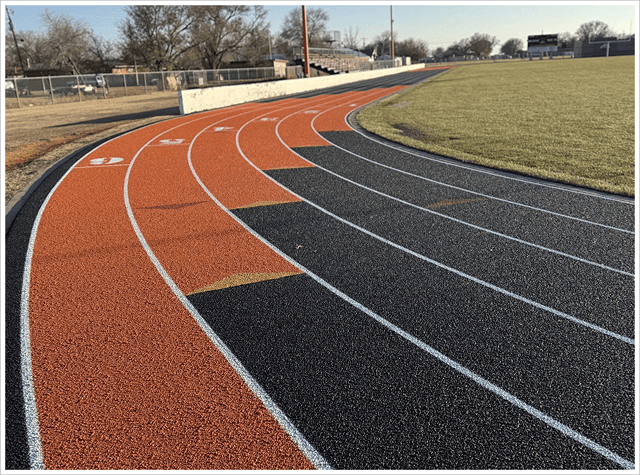
PTT removed the old rubber surface, confirmed the base was still sound, and installed a new surface with custom orange exchange zones matching the school’s colors, despite a week of unexpected rain during the project.


What Our Partners Say
“It looks great, it feels great. When you’re out walking on it, it’s way softer than our old surface. I know our coaches and kids are excited to be on it this spring.”

Corey Burton
Ulysses High School
Superintendent
“We had a great experience working with this track company. From start to finish, their team was professional, communicative, and clearly took pride in their work. The quality of the track turned out excellent, and it’s clear they paid attention to the details that matter.”
Luke Snyder
Google review
“Pro Track and Tennis completed a brand new track at our completely remodeled HS stadium. The work was and continues to be high quality. We are regularly complimented on the surface of our track. Is it build for both speed and comfort. We host both MS and HS meets as well practices during our spring seasons. I would highly recommend them for your surface needs.”
Karlton Hector
Google review
Running Track Resurfacing Is an Investment in Your Facility
Resurfacing isn’t an empty cost – it’s a long term investment that will extend your track’s lifespan, reduce future maintenance needs, and improve your facility’s reputation. Whether you need to win back the regional meet or satisfy insurance requirements, we design the right solution for your situation.

Interested in renewing and refreshing your facility?
Request Detailed Quote
Extending Your Track’s Performance Life
Proper installation from experts can extend your running track’s lifespan with years of high performance and minimal maintenance.
Pro Track & Tennis provides a 2-year workmanship warranty on general installation work. Material warranties come from the surface manufacturer and vary by product. Exact scope varies by project, and we’ll walk through specifics during your assessment. For full terms and what to negotiate in a warranty or maintenance contract, see our Running Track Warranty and Maintenance Contracts guide.
Get a Custom Quote
Call 800-498-4395
»

Running Track Construction & Resurfacing Contractors Serving Your Area

25+ States Served
Across the Midwest, South, and Mountain West

Climate Considerations
Built into every track surface

Travel Capabilities
We’ll come to you
Get in touch to start planning your next project.

Find Running Track Services in Your Area
Click below to view resurfacing and construction services by state.