
Two bids. Same 400-meter track. One quote is $180,000, the other $260,000. Both include latex or polyurethane, striping, and a warranty. Yet one surface will fail in five years while the other lasts a decade. The difference is the contractor you choose.
Few companies offer the complete expertise and field control required to deliver a long-lasting, high-performance surface.
Selecting the right running track resurfacing contractor determines whether your surface performs well for years or fails early and forces a rebuild. The right partner ensures safety, consistency, and predictable maintenance costs. They create a surface that keeps athletes performing confidently, season after season.
This guide breaks down how to choose a qualified contractor, what to watch for in bids, and how the right installation protects both your investment and your athletes.
Introduction to Running Track Construction
Building or resurfacing a running track isn’t just about applying a coating. It’s about designing a high-performance surface that holds its shape, drains correctly, and delivers consistent traction year after year.
Every phase impacts performance, safety, and longevity, from sub-base prep to line striping. That’s why running track construction is a specialty, not an add-on service.
Partnering with experienced track builders means your project is engineered and installed to proven standards used for competitive facilities nationwide. Experienced contractors understand how temperature, drainage, and binder chemistry affect performance. These are the details that separate a reliable resurfacing from a short-term fix.
Why the Right Running Track Resurfacing Contractor Defines Your Track’s Performance
Most early track failures come down to missed basics: trapped moisture under the surface, poor slopes, thin coats, missed cracks or rushed curing. A qualified contractor manages every variable so the surface bonds and performs as intended. From drainage correction and layer thickness to humidity and temperature windows.
A proper evaluation begins with understanding what the facility needs, what they want to accomplish, and what specific problems the current surface is causing.
Done right, resurfacing is predictable and cost-efficient. Done wrong, it leads to cracking, delamination, and a six-figure rebuild. Choosing a contractor who knows how to balance climate, material, and base condition is what keeps your facility in top shape for years.
Why Listen to Us
At Pro Track & Tennis, we’ve resurfaced more than 1,000 tracks & courts across 25 states for schools, universities, and municipal facilities.
“We use our own crews. Once you start subbing stuff out, you lose control.” — Lance Laurent, Pro Track & Tennis
We don’t outsource our work. Every project is completed by in-house crews trained specifically in athletic surfacing. That consistency ensures quality, accountability, and warranty integrity.
We’ve seen nearly every scenario. From freeze-thaw failures in the Midwest to UV breakdown in the South. We build each track system around those real-world conditions.
Pro Track & Tennis is a member of the American Sports Builders Association.
What Running Track Resurfacing Contractors Actually Do
A professional running track construction company handles each phase of resurfacing or rebuild with precision. Here’s what separates experienced contractors from general paving crews:
1. Site Evaluation and Base Assessment
- Core sampling, moisture checks, and slope analysis
- Drainage review, since most failures start with poor water flow
Even heavily deteriorated tracks can often be repaired successfully when the underlying base is still stable.
2. System Recommendation
Based on your track’s condition and budget:
A professional inspection starts with clarifying the facility’s goals and what they want the upgraded surface to achieve.
- Structural spray (~$110,000): “A running track can be pretty wore out, but you can patch it, you can patch the cracks, and you can do what they call a structural spray. It’s like repainting your house. You’re repainting it, but you’re adding rubber to the paint coating.” — Lance Laurent
- Full resurfacing ($180,000-$250,000): For when the mat needs complete replacement
- Premium systems ($300,000-$1,000,000): Division 1 university-level installations
3. Surface Installation
- Controlled mixing and uniform application for even texture
- Verified layer thickness at half-inch depth
- Proper temperature and humidity control for adhesion and cure
Coatings cannot be installed on damp surfaces or in temperatures below 60°F, which significantly shortens installation windows in northern states.
4. Striping and Compliance
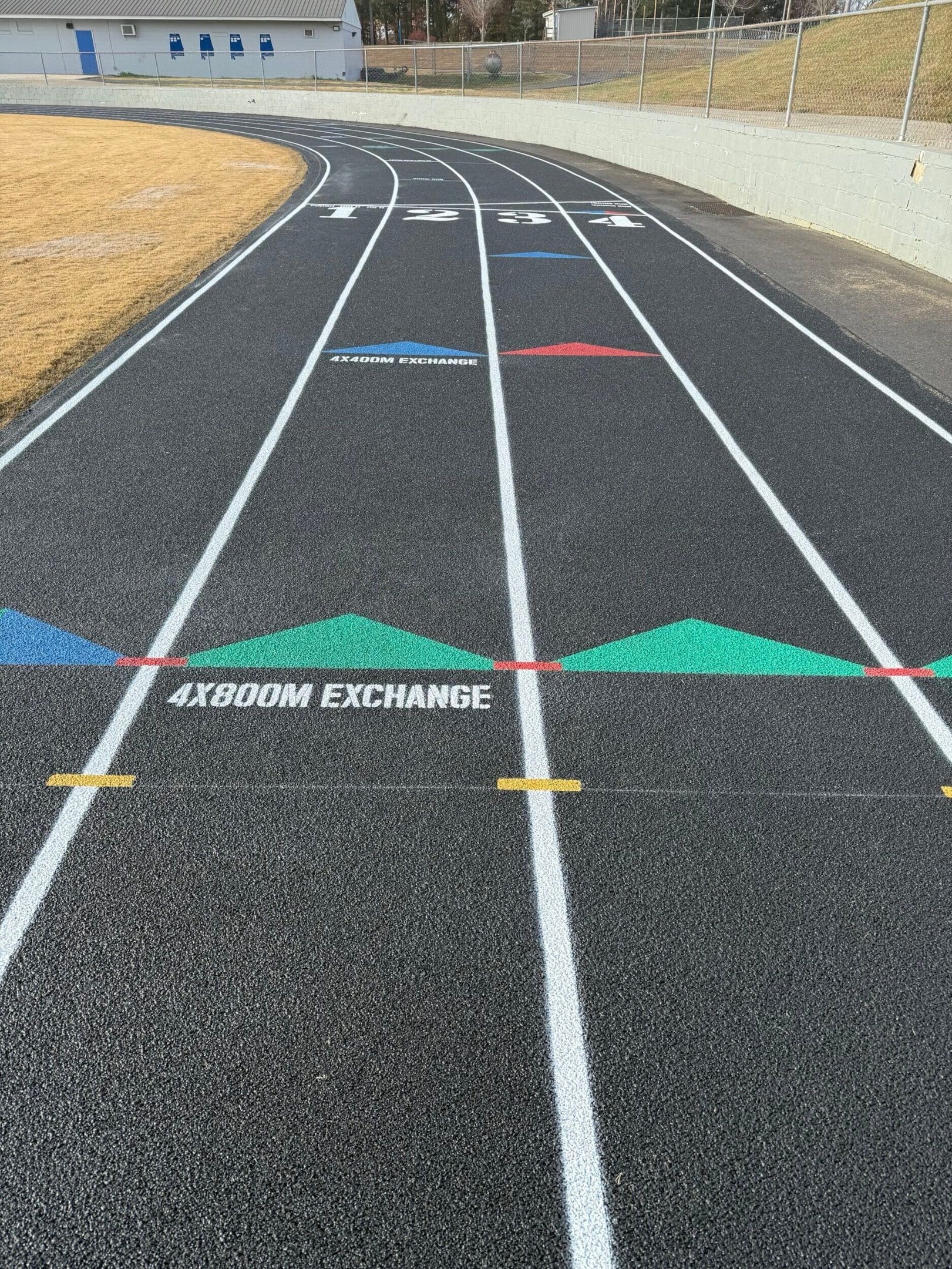
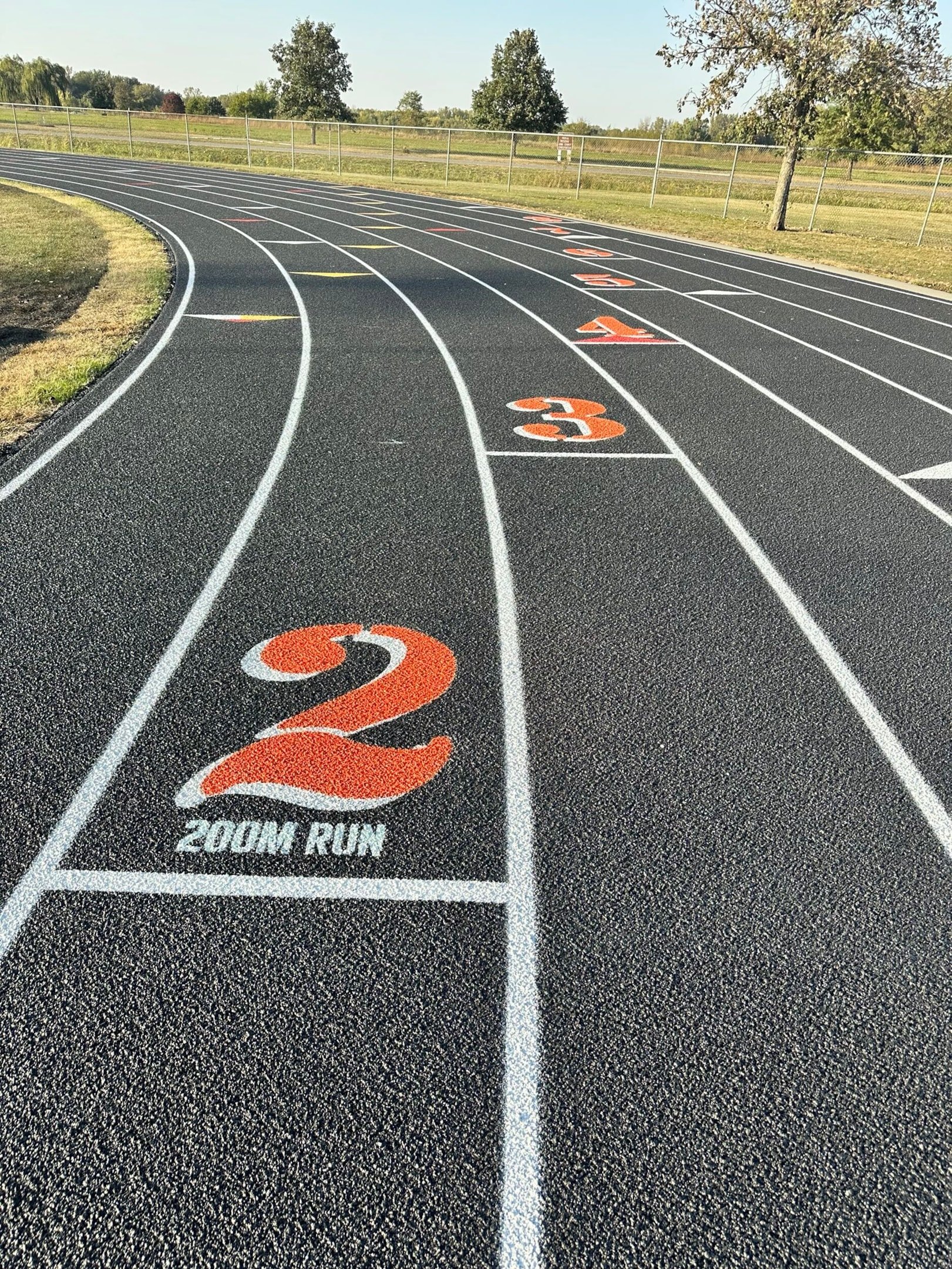
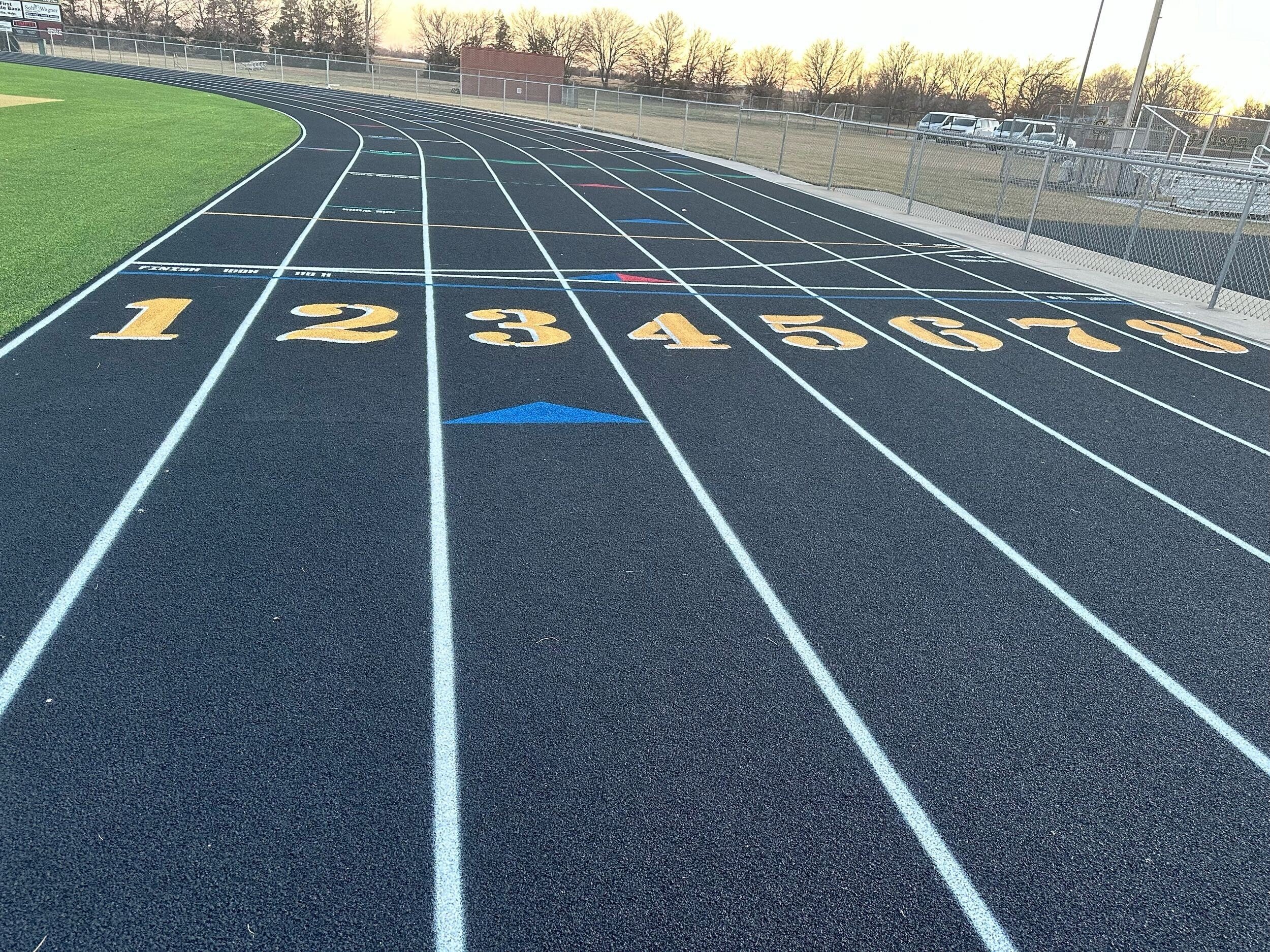
- Precision lane, event, and exchange-zone markings to regulation standards
- Complete restriping of all running events
5. Warranty and Support
- Written coverage for materials and labor
- Maintenance plan and inspection schedule
- Clear terms with no hidden exclusions
Materials perform only as well as the crew applying them. That’s where bids often differ the most.
Why Contractor Choice Matters More Than Material
Two tracks can use the same system and still age differently. The difference isn’t the product. It’s how it’s installed.
If drainage corrections are skipped or layer thickness is inconsistent, you’ll see issues within two seasons: cracks, soft spots, or separation. Experienced track resurfacing contractors focus on what you can’t see. The subsurface, slope, and cure timing. This ensures the surface holds together under real use.
“Our niche is repairing existing courts and we’re really good at it.” — Lance Laurent, Pro Track & Tennis
That attention to detail is what turns a five-year fix into a long-term asset.
What to Look for in a Running Track Contractor
1. Proven Experience
- Specializes in athletic surfacing, not general asphalt or paving
- References from recent, similar facilities (schools, universities, or parks)
- Experience with structural spray, full resurfacing, and crack repair systems
- Full project capability from site prep to warranty handoff
2. In-House Crews
- Trained track builders on staff
- Minimal reliance on subcontractors, ensuring quality and communication
3. Clear Specifications and Warranty
- Written base-condition report before quoting
- Defined system type, total thickness, and installation process
- Warranty covering both labor and materials with clear terms
Partnering with an athletic track construction company that provides this level of documentation guarantees accountability and performance.

Red Flags When Comparing Contractors
Watch for warning signs like:
- No base evaluation, slope test, or moisture report
- Vague proposals missing details on system or thickness
- Heavy subcontractor use instead of in-house crews
- Lack of ASBA membership or references
- Warranties limited to materials only or buried exclusions
Good running track resurfacing companies own their work from start to finish. No shortcuts, no surprises.
Understanding Customer Pain Points
“Sometimes when you walk up to the school, the pain is they want the regional track meet back. They lost it because school X down the road put in a new track. Other people, we’ve had customers tell us, hey, our insurance said they’re going to cancel us and make us quit and shut down our track program if we don’t fix our track, because there’s tripping hazards out here.” — Lance Laurent, Pro Track & Tennis
Understanding what drives your decision helps contractors deliver the right solution. Whether it’s hosting meets, insurance requirements, or athlete safety, the right contractor addresses your specific needs.
The Track Construction Process: What to Expect
Standard Process
- Site evaluation and base testing
- Written quote with clear pricing
- Base repair and drainage correction
- Surface installation with verified layer thickness
- Curing, line striping, and inspection
- Warranty handoff and maintenance schedule
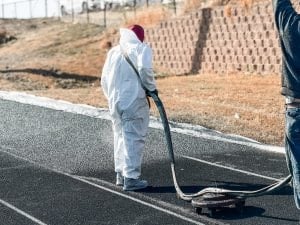
Resurfacing involves mixing granulated rubber with polyurethane binder, loading it into a paving unit, and applying it at a controlled depth, a process similar to placing asphalt.
Typical Timelines
- Resurfacing: 2-4 weeks (weather dependent)
- Full rebuild: 4-6 weeks
Where Quality Is Won or Lost
Most problems occur during base and drainage correction. That’s where qualified running track resurfacing contractors separate themselves from general paving crews.
How Contractor Choice Impacts Long-Term Value
Running track resurfacing represents a significant investment in your facility. The contractor you choose directly impacts both the surface performance and your total cost of ownership.
Understanding Your Options
“A structural spray runs about 110,000. Sometimes we just come in and cut cracks out and do the armor and that could be 20, 30, 40,000, but a structural spray and restriping the lines and all the running events is about 110,000. If we’re going to scrape it all off and start over that can go 180 to 250 depending on how many square yards there is.” — Lance Laurent, Pro Track & Tennis
Minor Repairs: $20,000-$40,000
- Crack cutting and armor system
- Spot fixes for limited damage
Structural Spray: ~$110,000
- Budget-conscious solution
- Adds years to existing track
Full Resurfacing: $180,000-$250,000
- Complete surface replacement
- When the mat is worn out
Premium Systems: $300,000-$1,000,000+
- Division 1 university level
- Maximum performance and durability
A standard eight-lane track typically covers about 5,000 square yards.
Maintenance and Long-Term Support
The best contractors don’t disappear after installation. They help protect your investment through:
- Annual inspections for seams, slopes, and moisture issues
- Lane remarking every two to three years
- Early crack repairs before water infiltration
- Maintenance schedules suited to your region and usage
Most premature failures occur between resurfacing cycles, not during installation. Proactive maintenance paired with proper resurfacing timing prevents small issues from turning into structural failures.
At Pro Track & Tennis, we offer ongoing maintenance plans, inspection reports, and priority repair scheduling for resurfaced facilities.
The Bottom Line
A running track resurfacing contractor isn’t just a vendor. They’re a long-term partner in safety, performance, and budget control.
Choose a contractor with:
- Proven experience in athletic track resurfacing and construction
- In-house trained crews
- Documented base assessments and detailed specifications
- Warranties covering both labor and materials
- A portfolio of similar successful projects
The difference between a low-bid contractor and a qualified one appears in three places:
Performance: Quality work vs. constant repairs
Warranty claims: Predictable vs. unexpected issues
Total cost: Scheduled resurfacing vs. emergency rebuild
Handled correctly, resurfacing remains a planned maintenance project, not an unexpected rebuild. The right running track construction company keeps your surface competition-ready and your budget protected.
Get a Written Assessment
Not sure whether your track needs resurfacing or a full rebuild? Or if your current bid is accurate?
We’ll walk your lanes, evaluate the base and drainage, and provide a written two-option plan with clear scope and timelines.
Pro Track & Tennis 25+ states • 1,000+ projects • ASBA member with in-house crews
Schedule your free assessment or call 402-761-1788