


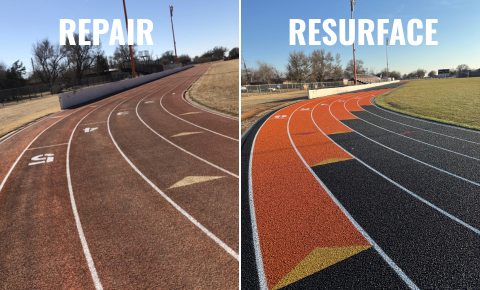
Your track is showing its age. But does it need a $40,000 repair, $120,000 resurfacing, or complete rebuild? Choose wrong and you’ll either waste money on band-aids or spend unnecessarily on replacement. This guide shows exactly how to tell the difference.
Water pooling in lane three. Cracks spreading near the exchange zones. Your track is not failing quietly; it is sending invoices you cannot ignore.
Most facilities spend between $20,000 for minor repairs to $300,000 for full resurfacing of a standard 400-meter running track. Knowing which option fits your situation can save your budget and your season.
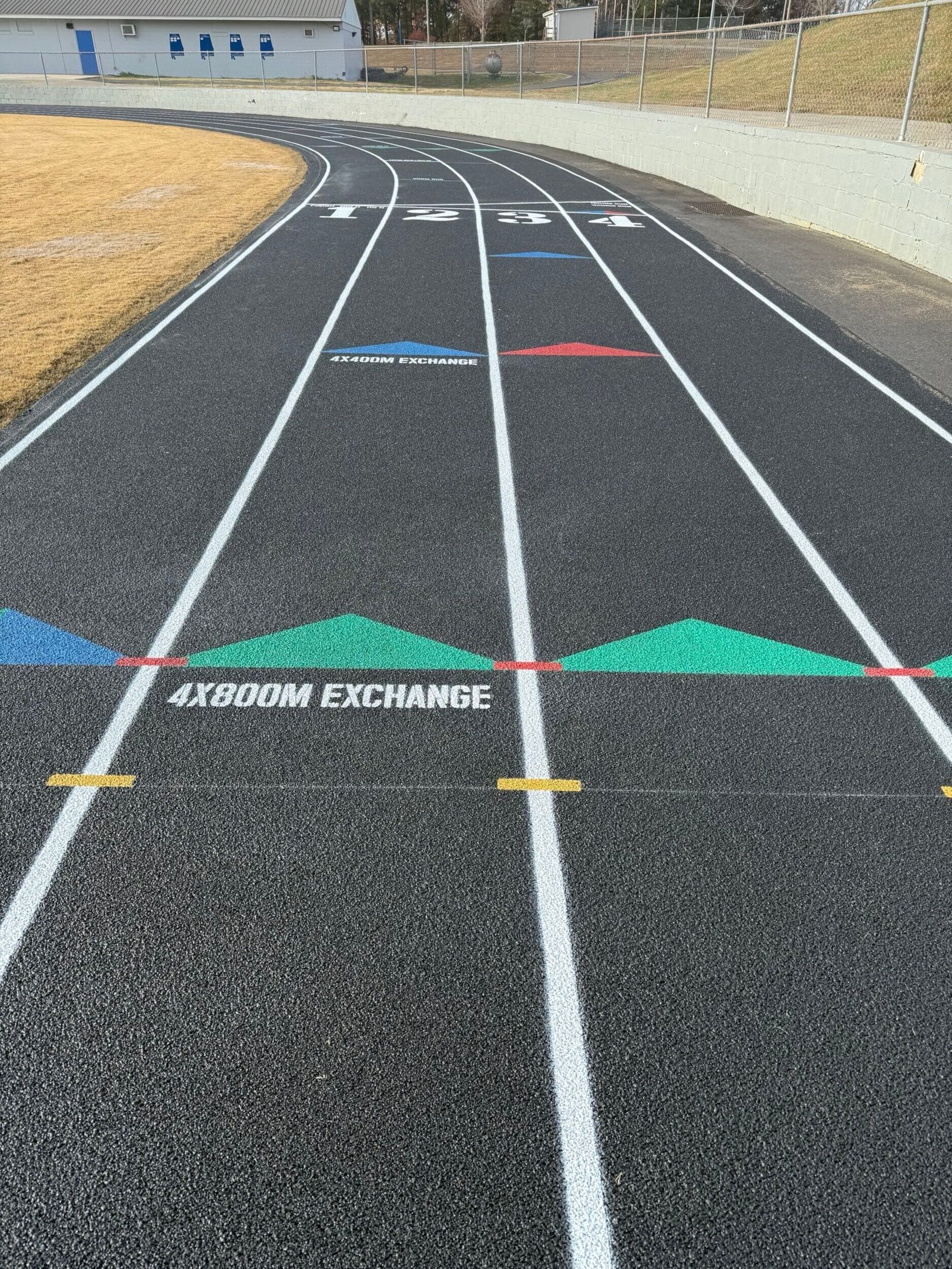
Quick Decision Matrix: Repair vs. Resurface vs. Rebuild
|
Issue |
Solution |
Cost |
When to Choose |
|---|---|---|---|
|
Surface cracks only |
Repair |
$20,000–$40,000 |
Need 2–3 more years, budget is tight |
|
Worn surface, sound base |
Resurface (Structural Spray) |
$120,000 |
Need 5–7 more years, cosmetic issues |
|
Mat is failing |
Full Resurface |
$200,000–$300,000 |
Complete surface replacement needed |
|
Base failure, drainage issues |
Rebuild |
$300,000–$1,000,000+ |
Structural problems, safety concerns |
Track Repair: The Budget-Conscious Option
When your track has minor issues but your budget is limited, targeted repairs can buy you valuable time.
“Sometimes we just come in and cut cracks out and do the armor and that could be 20, 30, 40,000.” — Lance Laurent, President, Pro Track & Tennis
When Repair Makes Sense:
- Limited surface cracking in specific areas
- Budget constraints preventing full resurfacing
- Need 2-3 more years before major work
- Preparing for a bond referendum or budget cycle
- Emergency fixes during season
What Repair Can Fix:
- Individual cracks and joints
- Small areas of surface damage
- Minor trip hazards
- Isolated wear patterns
- Temporary cosmetic improvements
What Repair Cannot Fix:
- Widespread surface failure
- Base or drainage problems
- Overall surface deterioration
- Multiple areas of delamination
- Systematic cracking patterns
Repair is a smart choice when you need to extend track life temporarily while planning for comprehensive resurfacing. However, repairs are temporary. Plan for full resurfacing within 2-3 years.
Track Resurfacing: The Preventive Fix
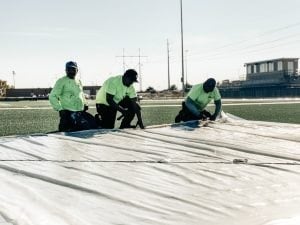
Resurfacing restores your track’s performance without the cost of complete reconstruction. It protects the valuable asphalt base while renewing the surface athletes actually use.
“A running track can be pretty wore out, but you can patch it, you can patch the cracks, and you can do what they call a structural spray. It’s like repainting your house. You’re repainting it, but you’re adding rubber to the paint coating.” — Lance Laurent, Pro Track & Tennis
Two Resurfacing Options:
1. Structural Spray (~$120,000)
- Best when the surface is worn but structurally sound
- Adds new coating with rubber granules
- Includes crack repair and restriping
- Extends track life 5-7 years
2. Full Resurfacing ($200,000-$300,000)
- Complete removal of old surface
- Installation of new half-inch rubber mat
- New striping and markings
- Addresses more serious wear issues
“If we’re going to scrape it all off and start over that can go 180 to 250 depending on how many square yards there is.” — Lance Laurent, Pro Track & Tennis
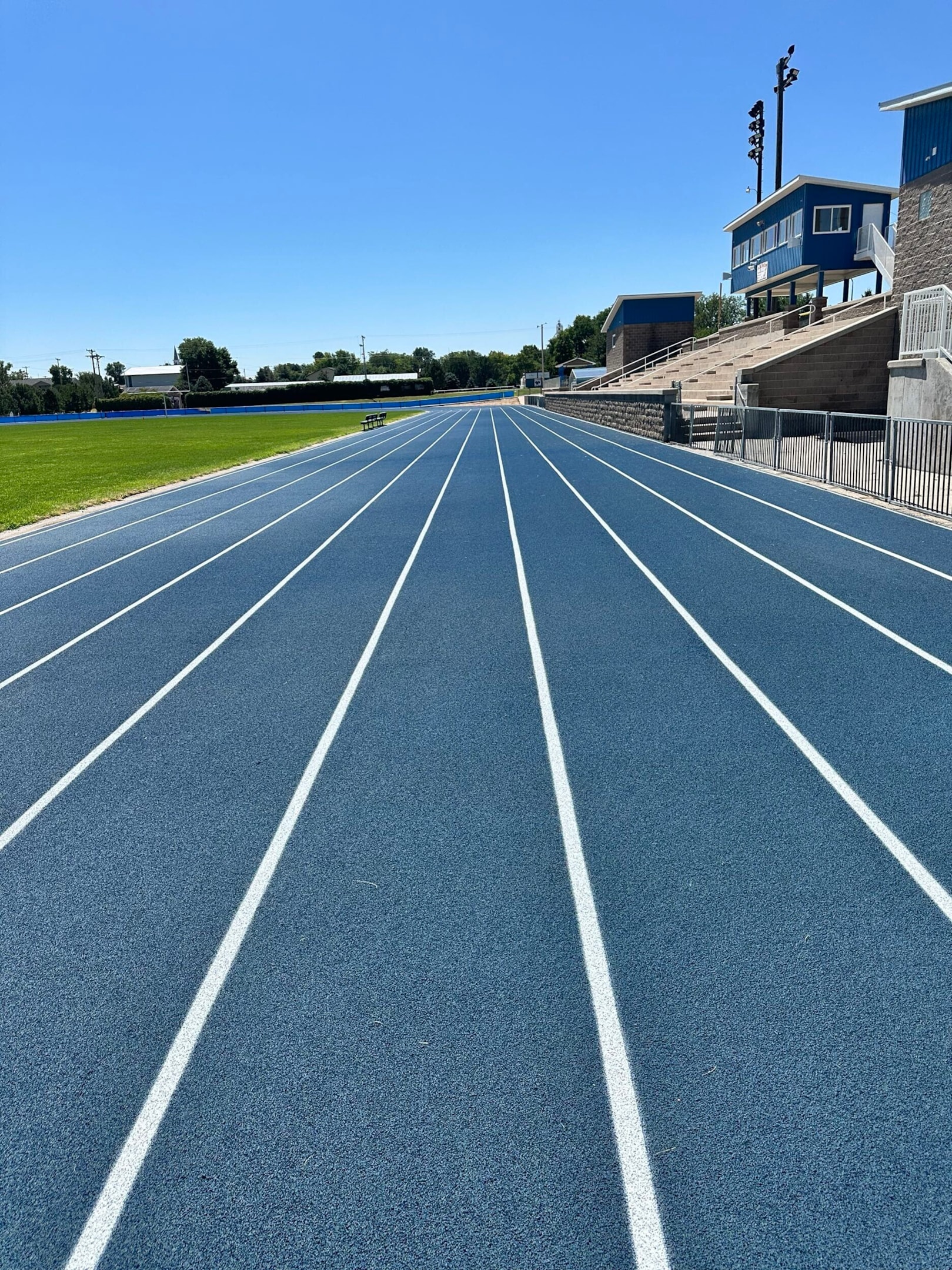
Resurfacing Benefits:
- Preserves existing base and drainage
- Restores safe, consistent surface
- 2-4 week project timeline
- Maintains athletic schedules
- Costs fraction of rebuild
Resurfacing Will Not Fix:
- Base settlement or heaving
- Drainage failures
- Structural cracks through asphalt
- Widespread base moisture issues
Track Rebuild: When Starting Over Makes Sense
“There comes a point where that half inch base mat that gets paved in place can be just wore out. I mean, it’s spider cracking, it’s dry, the rubber granules are really loose and migrating out of it. And there comes a point where that just needs to be scraped off.” — Lance Laurent, Pro Track & Tennis
Complete reconstruction becomes necessary when the foundation has failed. This isn’t maintenance; it’s starting fresh.
Signs You Need a Rebuild:
- Water stands for days after rain
- Surface feels spongy or uneven
- Large sections lifting or separating
- Base cracks visible through surface
- Drainage system has failed
Rebuild Investment Ranges:
- Basic reconstruction: $300,000-$400,000
- Premium university systems: $400,000-$700,000
- Division 1 facilities: $700,000-$1,000,000+
“We just finished a college track up in Sioux City, Iowa. It was 7,600 square yards. That was a $370,000 track. That same system on a little six lane track probably would have been maybe 180, 200,000.” — Lance Laurent, Pro Track & Tennis
The Hidden Costs of Waiting Too Long
Delaying necessary work creates cascading problems:
“Sometimes when you walk up to the school, the pain is they want the regional track meet back. They lost it because school X down the road put in a new track. Other people, we’ve had customers tell us, hey, our insurance said they’re going to cancel us and make us quit and shut down our track program if we don’t fix our track, because there’s tripping hazards out here.” — Lance Laurent, Pro Track & Tennis
Beyond repair costs, consider:
- Lost hosting rights for meets
- Insurance liability concerns
- Athlete recruitment challenges
- Emergency repair premiums
- Cancelled seasons
5 Factors That Affect Your Cost
1. Current Condition
When assessing a running track, the first priority is understanding what the facility is trying to achieve and what problems they’re experiencing. The evaluation starts with clarifying the owner’s goals, concerns, and expectations before recommending any resurfacing or rebuild approach.
2. Track Size
A standard eight-lane running track typically covers about 5,000 square yards, which directly affects material needs, labor, and total project cost.
3. Regional Climate
Coatings cannot be installed below roughly 60°F or on damp surfaces, which means northern states have shorter work windows and more weather-related scheduling constraints compared to warmer regions.
4. System Choice
System selection ranges from cost-efficient structural spray to full latex resurfacing and higher-end polyurethane systems. Each option performs differently based on climate, expected traffic, and long-term maintenance goals, so choosing the right system is one of the biggest drivers of both upfront cost and lifespan.
5. Drainage Issues
Any drainage problems must be corrected before resurfacing begins. Standing water, poor slope, or clogged outlets allow moisture to reach the base, which leads to bubbling, cracking, and premature failure. Fixing drainage first ensures the new surface bonds correctly and lasts its full expected service life.
How to Make the Right Decision
Step 1: Assess Your Track
Check for repair candidates:
- Individual cracks under 1/4 inch
- Isolated wear areas
- Minor cosmetic issues
Check for resurfacing indicators:
- Widespread fading or chalking
- Multiple cracks but firm base
- Surface texture loss
- 5+ years since last major work
Check for rebuild indicators:
- Spongy or soft areas
- Standing water after 24 hours
- Visible base damage
- Systematic failure patterns
Step 2: Consider Your Timeline
- Need 2-3 years: Repair
- Need 5-7 years: Resurface
- Need 10+ years: Rebuild if base is failing
Step 3: Get Professional Assessment
A professional assessment starts by understanding what the facility needs, what they want to accomplish, and what specific issues are causing the most problems. Determining these factors guides the right resurfacing or repair recommendation.
Regional Considerations for Midwest and Beyond
Pro Track & Tennis serves facilities across 25+ states, with extensive experience in challenging climates:
Midwest Challenges:
- Freeze-thaw cycles requiring flexible repair systems
- Short installation windows (June-August)
- Snow plow damage considerations
Southwest Challenges:
- Extreme UV requiring resistant coatings
- Heat affecting installation timing
- Thermal expansion issues
Southeast Challenges:
- Humidity and moisture management
- Year-round use demands
- Hurricane and storm damage
Common Mistakes That Cost Money
1. Using Wrong Contractors
“We use our own crews. Once you start subbing stuff out, you lose control.” — Lance Laurent, Pro Track & Tennis
2. Ignoring Early Warning Signs
Small problems become big expenses when ignored
3. Choosing Based on Price Alone
The cheapest bid often costs more long-term
4. Poor Timing
Missing optimal weather windows increases costs
Your Action Plan
Even heavily damaged tracks can often be restored. With the right repair approach, many surfaces that look beyond saving can still be brought back to safe, usable condition.
- Annual Inspection: Document changes with photos
- Budget Planning: Allocate funds before emergency strikes
- Professional Assessment: Get expert evaluation early
- Strategic Timing: Plan work during optimal weather
- Choose Quality: Select experienced contractors with in-house crews
Frequently Asked Questions
Q: How much does running track repair cost?
A: Minor repairs cost $20,000-$40,000 for crack repair and patching. Structural spray resurfacing costs approximately $120,000. Full resurfacing ranges from $200,000-$300,000. Complete rebuilds can exceed $300,000.
Q: How do I know if my track needs repair or resurfacing?
A: If cracks are limited and surface-level with good drainage, repair may suffice. If the surface is worn but the base is sound, resurface. If the base feels spongy or water pools for days, you need a rebuild.
Q: How long does track resurfacing take?
A: A standard 400-meter track resurfacing takes 2-4 weeks, weather permitting. Repairs can often be completed in days. Full rebuilds require 4-6 weeks.
Q: Can you resurface a track in sections?
A: While possible, it’s not recommended. Resurfacing in sections can create inconsistent surfaces and typically costs more than doing the entire track at once.
Q: What’s structural spray?
A: Structural spray is a cost-effective resurfacing method that applies new coating with rubber granules over existing surface. As Lance explains: “It’s like repainting your house. You’re repainting it, but you’re adding rubber to the paint coating.”
The Bottom Line
Your track’s condition determines your options. Minor damage needs repair. Worn surfaces need resurfacing. Failed bases need rebuilding.
“Our niche is repairing existing courts and we’re really good at it.” — Lance Laurent, Pro Track & Tennis
The key is acting before small problems become expensive emergencies. Whether you need a $40,000 repair or $300,000 resurfacing, timing makes the difference between planned maintenance and budget crisis.
Get Your Free Track Assessment
Not sure whether your track needs repair, resurfacing, or rebuild? Pro Track & Tennis provides free professional assessments across the Midwest and 25+ states nationwide.
We’ll evaluate your track and provide:
- Written condition assessment
- Cost options for repair vs. resurface vs. rebuild
- Realistic timelines
- Budget planning assistance
Pro Track & Tennis Serving schools and facilities across 25+ states In-house crews • Honest assessments • Surfaces that last
📞 Call 800-498-4395 for your free assessment