
Your athletic courts are one of your facility’s most valuable assets—but they don’t last forever. Over time, even the best-built tennis courts, pickleball courts, and multi-use courts wear down due to weather, age, and heavy play.
If you’ve been wondering whether your court needs attention, here are the three clearest signs it’s time to schedule a professional resurfacing.
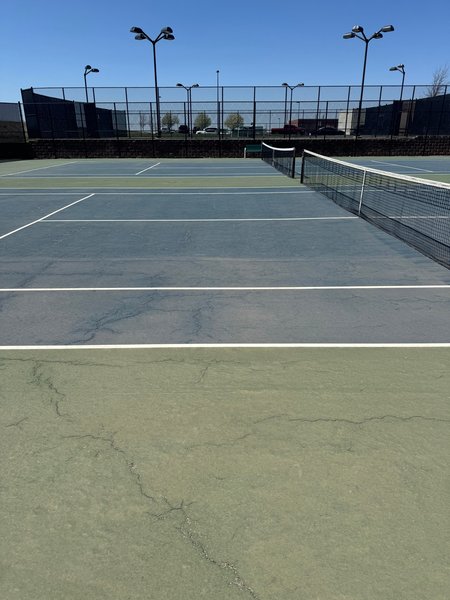
1. Cracks, Surface Damage, or Uneven Texture
One of the most obvious signs it’s time to resurface your court is visible cracking. This can happen due to:
Freeze-thaw cycles (especially in the Midwest and South)
Moisture penetrating the base
Heavy usage over time
Failing coatings or improper past repairs
Small hairline cracks may not seem urgent, but they’re often the first warning sign of deeper structural issues. If you’re seeing wide cracks, alligatoring (crack patterns that resemble scales), or loose surface particles, resurfacing is not just a cosmetic upgrade—it’s a safety necessity.
Pro Tip: If water starts seeping into cracks, it can quickly escalate to base damage and costly repairs.
2. Fading Lines or Worn-Out Surface Coating
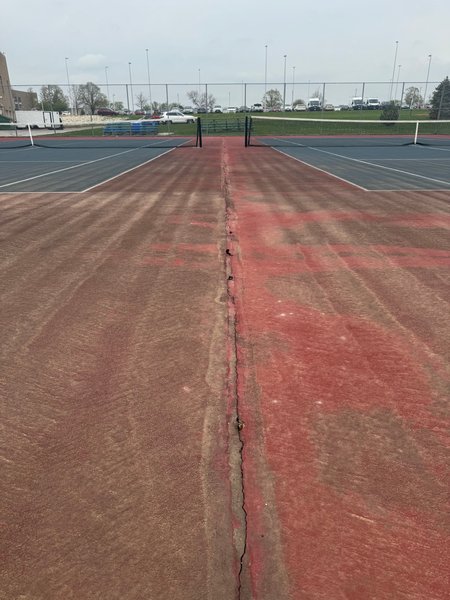
Line visibility is critical—not just for gameplay, but also for safety and clarity. If your court’s striping has faded or the surface color is dull, chalky, or uneven, you’re overdue for new coatings.
A worn surface can also lose its:
Slip resistance
UV protection
Cushioning properties
Visual appeal
This affects player experience and can lead to uneven ball bounce or fatigue from harder surfaces. Fresh coatings and striping do more than look great—they help your court play better and last longer.
3. Drainage Issues or Pooling Water
If water sits on your court longer than a few hours after it rains, it’s a red flag. Poor drainage can lead to:
Uneven playing surfaces
Water damage beneath the surface
Moss, algae, or mold growth
Increased wear in puddling zones
Standing water wears down coatings, erodes the base, and accelerates surface cracking. If you notice low spots, water pooling, or players consistently avoiding certain areas, it’s time to take a closer look.

Why Resurfacing Matters
Improves safety for athletes and recreational users
Extends the life of your court and protects your investment
Restores performance and visual appeal
Keeps your facility competitive and community-ready
At Pro Track and Tennis, we specialize in resurfacing and repairing tennis, pickleball, basketball, and multi-use courts. Whether you need tennis court crack repair, pickleball line striping, or a complete resurfacing, we deliver high-performance results you can trust.
Not Sure If It’s Time? Get a Free Assessment
The best way to know if your court needs resurfacing is to bring in a pro. We offer free, no-obligation surface assessments to help you decide what’s next and how to protect your investment.
Schedule yours today: Contact – Pro Track & Tennis
Get a Free Assessment for Your Court or Track
Our in-house crews have completed 1,000+ projects across 25+ states. Tell us about your facility and we will inspect the surface and give you a straight plan and quote.
Get Free Assessment
»

About the Author
Marketing Manager, Pro Track & Tennis
Recent Blog Posts
Discover More →
•
8 min read
Plan your fall court and track resurfacing project: when to book, how budget cycles fit in, and how to sequence multiple surfaces.
•
8 min read
Your tennis court cracked again after resurfacing? Learn why reflective cracking happens and what actually stops an old crack from reappearing.
•
7 min read
Learn how tennis court resurfacing timing affects downtime, from weather windows to phasing multi-court facilities without closing everything at once.
•
7 min read
TYPTI vs. pickleball for clubs: court, equipment, and rules differences, plus a decision framework on adding TYPTI or switching entirely.
•
10 min read
How to host TYPTI at your club: equipment, court readiness, programming, marketing, and the revenue model, compared to pickleball benchmarks.